Abstract: Stop staring so intently at those Instagram-famous spots. As a seasoned traveler who’s been cruising the coastline for five years, I’ve compiled a list of destinations that are truly suited for inflatable catamarans.Here, you’ll find no overcrowded marinas—just tranquil coves that perfectly suit your “stop-and-go” style of travel. From California’s hidden corners to off-the-beaten-path islands in the Mediterranean, see which waters might be your next destination.
Disclaimer: The author of this article has eight years of experience piloting inflatable boats, with a cumulative mileage of over 3,000 nautical miles. He has conducted field tests on inflatable catamarans from various brands along the West Coast of North America, in the Caribbean, and in the Mediterranean.We adhere to a policy of no commercial sponsorship and share our authentic experiences with the aim of providing beginners with a practical guide to avoiding pitfalls.
1. Why Choose These Locations?
Many people ask: Since inflatable boats are so light, why go out to the open sea?
In fact, the essence of an inflatable catamaran lies not in “speed,” but in “stability” and “quietness.”
Shallow waters offer distinct advantages: with a shallow draft, these boats can access areas that larger vessels cannot reach, showcasing their unique strengths.
The quiet operation—whether powered by an electric motor or a small outboard—ensures that marine life remains undisturbed.
Mooring is flexible—they can be towed directly ashore or anchored several hundred meters offshore.
However, we are not seeking rough, storm-tossed waters; rather, we are looking for “hidden gems”—places with calm currents, picturesque scenery, and where small boats can dock freely.
2. The West Coast of North America: California’s Hidden Coves
If you’re in the western United States, skip the crowds at San Diego’s Main Harbor. That area is filled with expensive yacht berths.
Instead, try the waters around Natural Bridges State Beach, near Santa Cruz.
The waters here are relatively calm. I spent three days there last summer, setting out in the morning and cruising slowly along the coastline—and you’ll see seals basking in the sun on the rocks.
Common misconception for beginners: thinking the California coast is always cold.
Here’s the reality: During the summer months of July and August, the water temperature is pleasant, and there’s plenty of sunshine, but the wind can be quite strong.
| Location | Suitable Activities | Difficulty | Recommended Season |
|---|---|---|---|
| Santa Cruz Bay | Snorkeling, Birdwatching | Low | Summer and Fall |
| Big Sur Coast | Photography, Rafting | Moderate | Late Spring |
| Monterey Harbor | Fishing, Picnicking | Low | Year-round |
Keep in mind that the wind and waves along the Big Sur stretch of the coast are unpredictable. For beginners, it’s recommended to practice first in Santa Cruz. Water depths there vary significantly, so be sure to bring a fish finder.Once, I almost scraped the bottom of my boat on a rock—it scared me so much that I quickly cut the throttle.
3. The Mediterranean: Croatia’s 1,000 Islands
My European friends always ask me, “Where do you go in the summer?”
Croatia, of course!
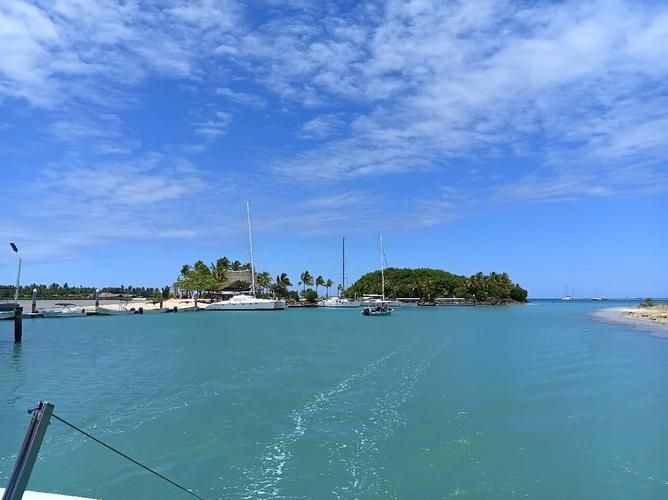
Don’t head to the entrance of Dubrovnik’s Old Town—it’s crowded and designed for cruise ships. Instead, head to Mljet National Park behind Korčula Island.
The water here is unbelievably blue. There are countless islands, and the channels are narrow but calm.
Lessons Learned: I thought I could just stop anywhere.
Reality: Many areas are protected zones where anchoring is prohibited.
I saw a fine not far from Mljet—one that amounted to the equivalent of 200 euros—so you absolutely must check a local navigation app to confirm where you’re allowed to legally anchor.
The charm of this place lies in exploring “on a whim”—enjoying seafood on one small island today, visiting a monastery on another tomorrow. An inflatable boat lets you change your plans at any time; with no need to book hotels, the boat becomes your home.
A practical tip: bring a foldable ladder. Many naturally formed docks don’t have steps, and climbing directly from the water onto the shore can be quite awkward.
4. The Caribbean: The Bahamas—A Paradise of Shallow Waters
If your budget allows, fly to the Bahamas.
It’s the ultimate destination for inflatable boat adventures—the water is only a few feet deep, yet the beauty of the coral reefs is breathtaking.
The outlying islands near Freeport.
Wind conditions here are highly variable—easterly in the morning, shifting to westerly in the afternoon—so you’ll need to adjust your course accordingly.
Warning for beginners: Coral reefs are extremely fragile.
Key operational points: Never even think about getting close to the coral to take photos. If your propeller scratches the coral, not only is it illegal, but it will also leave permanent scars on the coral.On one trip, I witnessed firsthand someone’s propeller getting tangled in seaweed, and it took a considerable amount of effort to untangle it.
I recommend renting an electric motor equipped with GPS and a shallow-water mode alert. Although it’s relatively slow, it’s extremely precise, allowing you to glide right along the water’s surface—it feels just like flying.
5. Southeast Asia: Morning Mist over Halong Bay, Vietnam
Don’t assume that only Europe and the United States have great destinations.
In Vietnam’s Ha Long Bay, the early morning air is thick with mist.
I stayed there for a week, setting out at 5 a.m. each morning and passing by numerous limestone islands; the surroundings were so quiet that the only sound was the flow of the water.
It was a very special experience—the kind where local fishermen sell all kinds of freshly picked, still-fresh fruits right from their boats.

A useful tip for interacting with locals is to learn a few simple Vietnamese greetings; that way, they’ll treat you like a friend rather than just a tourist.
The water currents here are complex, and the difference in water levels between high and low tide is enormous. It’s essential to carefully check the tide table. Once, I failed to check the table, causing the boat to get stuck in the mudflats. It took two hours to wait for the tide to go out before we could float free—an embarrassing and frustrating experience.
6. Frequently Asked Questions
Q: Can an inflatable boat withstand strong winds?
A: Typically, inflatable boats designed for home use are rated for wind speeds between 15 and 20 knots. If the wind speed exceeds this range, it is recommended that you return to port. Never try to push through dangerous conditions. Always prioritize safety.
Q: Do I need a boat license?
In many countries, a license is not required for small-horsepower boats (less than 15 HP). However, it’s essential to check local regulations, as some areas require registration even for small vessels.
Q: How should I store it?
A: Deflate it, roll it up, and store it in the trunk of your car. This is extremely convenient. However, be sure to protect it from the sun. UV rays are rubber’s worst enemy. After each use, rinse it with clean water and let it dry completely before storing it.
Q: What should I do if I encounter a shark?
A: Do not panic. Most sharks are not afraid of humans, unless you’re fishing and there’s blood in the water. Stay calm, retreat slowly, and do not splash the water.
Q: How long does the battery last?
A: Battery life depends on power output and load. Typically, a 500W motor can run for 4 to 6 hours in calm waters. If you want to go faster, the runtime will be cut in half. We recommend bringing a spare battery or a solar charging panel.
Finally, I’d like to say:
Travel isn’t about checking off destinations; it’s about experiencing them.
An inflatable catamaran gives you freedom.
It doesn’t matter where you go. What matters is that you’re willing to stop and listen to the sound of the waves.
Before your next trip, ask yourself: What am I trying to escape from?
The answer is often right around the next bay.