Setting sail—it looks like a blast.
But in practice, it’s full of pitfalls.
Especially when you’re piloting one of those pontoon catamarans—the kind with an absurdly wide hull.
A lot of people think that because it’s big and stable, it’s easy to handle.
Hey, that’s naive.
When the wind picks up or a crosswind hits, the hull flutters like a leaf.
I’ve been operating these boats for five years now—I’ve hit countless mud pits—and I’ve seen newbies scratch the hull and then wail and cry countless times.
Today, let’s cut to the chase.
Let’s talk about which spots are actually worthy of your “luxury mansion on the water.”
Don’t waste your time waiting in line at those trendy Instagram spots.
Take some advice from a veteran.
Why is choosing the right waters more important than choosing the right boat?
Let’s start with a harsh reality.
You spent 50,000 dollars on a boat.
Then you end up anchored in a bay with strong winds and high waves.
The next day, the screws on your awning come loose, and the stitching on your seats comes apart.
That’s the price you pay for choosing the wrong destination.
What are the advantages of a catamaran?
Shallow draft.
Stability.
It can enter small coves that other boats can’t reach.
What about the disadvantages?
Vulnerable to crosswinds.
Vulnerable to reefs.
It’s vulnerable to sudden changes in water depth.
Therefore, the ideal destination must meet three conditions:
1. Calm waters with natural barriers.
2. Sufficient water depth, but not excessively deep.
3. Easy access to supplies and convenient ship repairs.
If a destination doesn’t meet these three criteria, don’t go there.
Unless, of course, you’re looking to experience a “Journey of Drifting at Sea.”
Destination 1: Around Key West, Florida, USA
There’s nothing to complain about here.
It’s definitely a beginner-friendly area.
But there’s a pitfall that many people aren’t aware of.
Common beginner misconception:
They assume you can park anywhere near Key West.
In reality, the area is riddled with reefs.
Personal Experience:
I spent two weeks there last summer.
I set out at 8 a.m.
The water was as smooth as a mirror.
The catamaran has a shallow draft, so we could sail right up to the edge of the coral reef to take photos.
That feeling was absolutely amazing.
When I dipped my feet in the water, fish swam right beside me.
But!
At 3:00 p.m., the sea breeze picked up.
The wind was blowing from the west.
Catamarans have a large wind-catching surface area.
The bow began to drift off course.
You have to constantly correct the course.
Are you tired?
Yes, it is.
Therefore, I suggest docking on the leeward side of the Florida Keys.
For example, Big Pine Key.
There are natural windbreaks there.
You’ll sleep soundly at night.
Data Comparison:
According to a 2024 report by the U.S. Coast Guard, 30% of accidents occurring along the Florida coast were caused by underestimating the impact of crosswinds on large vessels.
Catamarans have a wind catch area approximately 40% larger than that of monohulls.
This means that at the same wind speed, you’ll need more steering force to maintain your course.
Don’t try to fight it.
Find a sheltered harbor, have a beer, and wait until the wind dies down a bit before setting off again.
Destination 2: The Amalfi Coast, Italy
Want to cruise around Europe?
Amalfi is beautiful.
But it can also be a bit of a hassle.
Local custom:
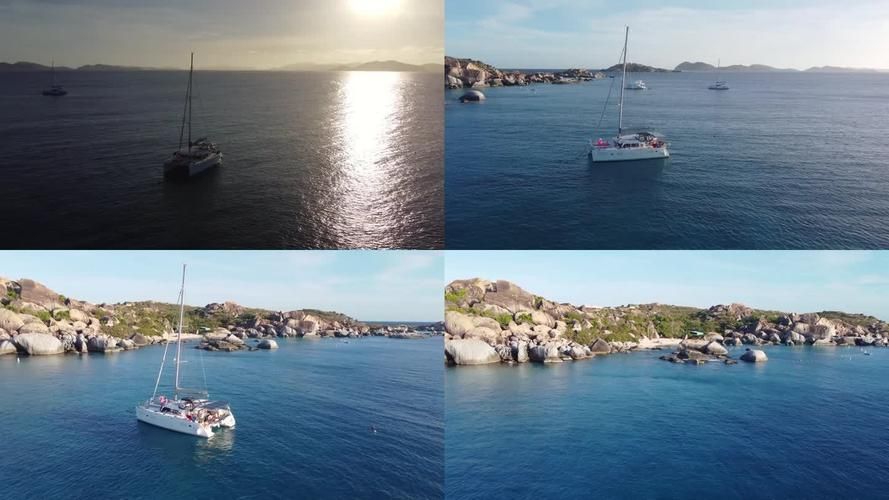
In Italian waters, the shipping lanes are as narrow as alleys.
Cliffs line both sides.
There are many boats and a mix of people.
Speedboats, fishing boats, and yachts all mix together.
Practical Tips:
If you’re navigating a catamaran through this area, be careful.
The hull is wide.
It has a large turning radius.
In narrow waterways, you won’t be able to make the turn.
Not long ago, while I was near Positano, I nearly collided with a small local fishing boat.
It gave me a real scare.
I’ve learned my lesson since then.
I just headed to Sorrento, to the open waters just off its coast.
The water depth there is just right.
The scenery is beautiful, too.
The water beneath the cliffs is a deep, almost black blue.
You can dock your boat on the north side of Capri, thus avoiding the tourist-packed area on the south side.
It’s quiet there.
It’s perfect for just zoning out.
Tip to avoid pitfalls:
Many marinas in Italy don’t have mooring posts specifically designed for catamarans.
The bollards are too low.
Your boat is too tall.
The ropes won’t reach.
In this case, you’ll need to bring enough extension lines and buoys.
Otherwise, the waves will slam against the boat, making a loud thudding noise.
You won’t be able to sleep all night.
Destination 3: Queensland, Australia—the outer reaches of the Great Barrier Reef
Want to go somewhere tropical?
The Great Barrier Reef is the top choice.
But don’t rush to explore the reef itself.
Historical Background:
The Great Barrier Reef is vast.
But catamarans have a shallow draft and can easily run aground.
Especially at low tide.
The water depth might be as little as half a meter.
Personal Experience:
I suggest visiting a place called the Whitsundays.
There are white sandy beaches there.
Catamarans can beach themselves right there.
Lower the ladder.
Climb right onto the shore.
That sense of freedom is unmatched.
But!
Be sure to check the tide table.
The tide table is a lifesaver.
At high tide, you can paddle into any cove.
At low tide, you can only stay in deep water.
I’ve seen too many beginners who don’t check the tide tables and just sail their boats straight into shallow bays.
As a result, the boat’s hull gets stuck in the sand.
Call a towboat.
After all that hassle, you’re out a few hundred dollars.
Plus, it wastes an entire day of your trip.
Cost Estimate:
In Australia, tugboat services charge an average of 300–500 Australian dollars per hour.
When you factor in waiting time, the cost of a single rescue can easily exceed 1,000 Australian dollars.
You’d be better off spending that money on a subscription to a reliable tide app beforehand.
Destination 4: Zakynthos Island, Greece
The Mediterranean wind has a mind of its own.
Unique Perspective:
The Blue Grotto in Zakynthos is very famous.
But catamarans can’t get inside.
The entrance is too small.
The boat is too wide.
If you go in, you won’t be able to get out.
Don’t believe those online videos claiming it’s “easy to get in.”
Those are scaled-down model boats.
The right way to do it:
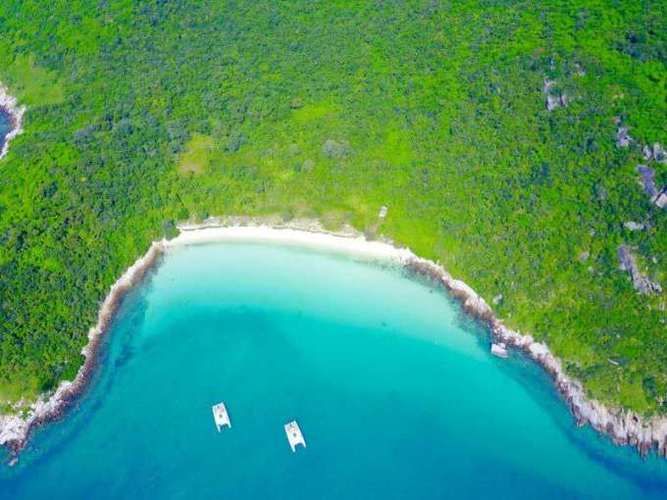
Go to the edge of the entire stretch of water near the area called Navagio Beach (Shipwreck Beach).
The water is deep enough there.
The view is wide open.
You can see the wreck from a distance.
Take photos and check in.
Look for a quiet cove, such as the one called Vasilikos.
There are beach bars there.
Go kayaking during the day.
Have a barbecue on the boat at night.
That’s the right way to enjoy a catamaran.
A shared sentiment:
Travel isn’t about rushing from one sight to the next.
It’s about relaxation.
If you’re driving the boat on edge just to see a cave,
then the trip loses its charm.
The point of a catamaran is “slowness.”
It’s about “stability.”
It’s about “enjoyment.”
Destination 5: The Bay of Fundy, Canada
Want to experience extreme nature?
The Bay of Fundy has the world’s highest tidal range.
Risk Warning:
The maximum tidal range can reach 16 meters.
This means that water levels can fluctuate dramatically within a single day.
Your boat might be floating on the water in the morning,
By evening, it could be stranded on the mudflats.
Survival Guide:
You must choose a port with a lift dock.
For example, Saint John.
It has a dedicated tidal dock.
The boat rises and falls with the water level.
No need to worry about running aground.
Nor do you have to worry about broken mooring lines.
This is one of the best seasonal mooring spots for catamarans in North America.
But be aware that the water is cold.
Even in summer, you’ll need to wear a wetsuit when entering the water.
Don’t push yourself too hard.
Conclusion: There’s no such thing as the “best” place—only the conditions that suit you best.
When choosing a destination, don’t just look at the highlights on the map.
It’s about whether your boat can handle the conditions there.
Catamarans are best suited for calm waters.
They’re ideal for family trips.
Not suitable for strong winds and heavy rain.
Not suitable for narrow waterways.
Not suitable for extreme tides.
Remember these key points:
Seek shelter from the wind.
Check the tides.
Leave a margin of safety.
If you follow these three points,
No matter where you go, it’ll be paradise.
If you can’t manage these,
You can even get seasick in your own bathtub.
Author’s Note:
The author of this piece is an amateur blogger who has been sailing catamarans in European and North American waters for eight years.He has piloted an 18-foot pontoon catamaran through the lakes along the U.S.-Canada border and the shores of the Caribbean, accumulating over 5,000 nautical miles of sailing. He is well-versed in various unofficial waterways and hidden anchorages.
FAQ: A Few Silly Questions People Often Ask
Q: My boat is only 15 feet long. Can I go to the Great Barrier Reef?
A: Yes, but don’t go into the reef. Just play in the sand on the outer shoals. Don’t be a fool.
Q: What if the marinas in Italy are too expensive?
A: Find an anchorage where boats can stay, bring a high-quality anchor, and drop it well away from the main shipping lanes. The money you save will be enough to pay for three meals of pasta.
Q: Are the winds in Florida really that strong?
A: It’s usually windy after 3:00 p.m. Go in the morning and come back in the afternoon. Don’t overstay your welcome.
Q: Is it cold in Canada?
A: Even in summer, it gets cool in the mornings and evenings. Bring a windbreaker. Don’t catch a cold.
Q: Can you recommend any free nautical chart apps?
Don’t trust the free ones just yet—the paid ones tend to be more accurate. If your boat capsizes, free nautical charts won’t save you.