Abstract: Which direction should a catamaran actually sail in? This article is the result of my five-year journey—during which I changed boats three times and faced countless setbacks—and represents my honest conclusions. From the Caribbean to the Mediterranean, and then from Southeast Asia to the South Pacific, I’ll provide a detailed analysis of which destinations beginners won’t regret visiting, and which places—though seemingly beautiful—can cause extreme headaches when it comes to mooring your boat. I’ve also included real-world cost comparisons, seasonal recommendations, and the subtle pitfalls to avoid that only locals know about.
First, let me tell you a bit about myself
I’ve been sailing catamarans for five years. I started with a 35-foot used Lagoon, then upgraded to my current 42-foot Leopard. My total mileage across the Caribbean, the Mediterranean, and Southeast Asia has reached nearly 20,000 nautical miles.I wouldn’t exactly call myself a veteran, but the mooring fees I’ve paid, the anchor maneuvers I’ve performed, and the wind conditions I’ve waited out—these experiences alone are enough to fill a booklet.This content is based purely on personal experience and has not received any funding from boat manufacturers or tourism boards, so feel free to read it with confidence.
I. Why a Catamaran, Not a Monohull?
You might ask, “Aren’t monohulls more stable for long-distance voyages?”
In theory, yes.
But the experience a catamaran offers is truly one of a kind. In shallow waters, you can boldly sail right up to the shore; once you’ve moored by the sandy beach, you can take a leap into water that’s waist-deep.With a monohull, on the other hand, just try it—if you were to run aground even once, the cost of repairing the hull would be enough to fly you back home.
What’s more, the deck of a catamaran is a true, full-fledged “backyard.”My wife set up a hammock on board; our child does homework in it while I sip coffee at the helm—a scene a monohull simply can’t offer you.
What are the downsides? When sailing into the wind, the boat gets extremely bumpy. Plus, you simply can’t pick up any speed.Once, on a trip from St. Maarten to Anguilla, the headwind reached 25 knots—it felt just like riding a stubborn, unruly donkey. You have to learn to plan your route carefully and never try to fight the wind.
II. The Caribbean: The Best Place for Beginners to Avoid Mistakes
This destination is ideal for first-time catamaran charterers, those traveling with family, and anyone who wants to avoid excessive hassle.
I’ve been to the Caribbean three times now, and every time I go, I discover something new. However, when it comes to the best area for catamaran sailing, it’s got to be the British Virgin Islands—or the BVI.
Why?
The distances between the islands are short. If you set sail from Norman Island in the morning, you can reach Jost Van Dyke by noon, and in the afternoon, you can even take a dip in a natural rock cave. The entire trip feels completely unhurried, and the pace is wonderfully relaxing.
Furthermore, most anchorages here are equipped with buoys—that is, mooring buoys—so you don’t have to drop anchor yourself.I was a novice when I first arrived here. During my first year anchoring in these waters, it took me three attempts to get the anchor to hold firmly. An experienced captain who happened to be nearby couldn’t bear to watch me struggle, so he swam over to help me find a more suitable spot.For beginners in the British Virgin Islands, this eliminates that pressure altogether.
However, there’s one catch: during peak season (which runs from December through April), the buoys are often completely full.If you don’t arrive until after 3:00 p.m., you’ll basically have to rely on yourself to find a place to anchor. So, from then on, I set out at 7:00 a.m. every morning to beat everyone else to it.
As a reference for the BVI peak season, renting a 42-foot catamaran for a week costs approximately $4,500 to $6,000; please note that this does not include fuel or food expenses.Chartering a boat here during the off-season is about 30 percent cheaper, though hurricanes occasionally make an unwelcome appearance in the area, so be sure to read the policy terms carefully when purchasing insurance.
3. The Ionian Sea, Greece: Gentle breezes, crystal-clear waters, and few crowds
If the BVI is a bustling party, then Greece’s Ionian Sea is a tranquil afternoon.
This region offers a stark contrast to the Aegean Sea; in the Aegean, often reach force 6 in the summer; beginners heading there are essentially locked in a fierce battle against the wind. The Ionian Sea, however, is quite different: for most of the summer, wind speeds range from force 2 to 3, and the water is as calm as a swimming pool.
At that time, we set sail from Corfu and headed south, passing Megalisi, Ithaca, and Kefalonia along the way—a journey that took ten days.
What surprised me most was the abundance of anchorages here, many of which had sandy bottoms—a condition that allows the anchor to hold exceptionally firmly.This is different from some other places where the seabed appears to be sandy on the surface but is actually just a layer of sand covering rocks—in such places, when the anchor is dragged, it feels just like plowing a field!
Something beginners often overlook is that many marinas in Greece use the “Med mooring” method, where the stern faces the dock and the bow is secured with an anchor.The first time I tried this, I nearly knocked the flag off the boat next to me. I recommend watching a few instructional videos on YouTube beforehand, or simply renting a boat with a captain to get some hands-on practice first.
In terms of costs, the Ionian Sea is much cheaper than the BVI. During the off-season, weekly expenses range from 3,000 to 4,000 euros, while during peak season, they’re about 500 euros higher. If you’re buying your own groceries, prices in Greece are relatively reasonable by European standards.
4. Thailand’s Andaman Sea: The King of Value for Money—But Don’t Rely on the Off-Season
Thailand is the best value-for-money catamaran destination I’ve ever seen.
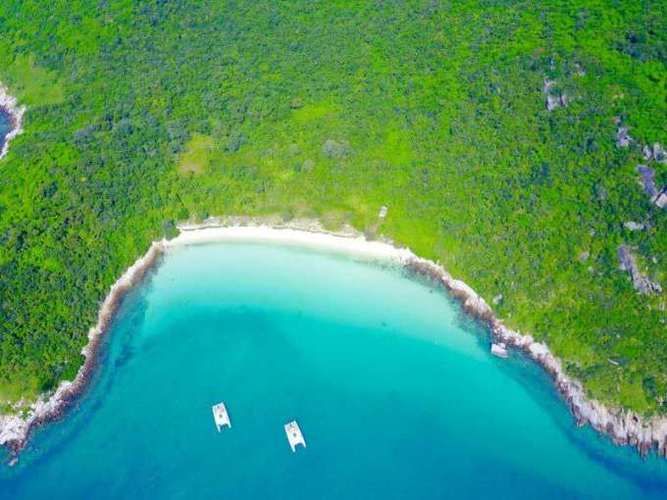
Setting sail from Phuket, you can head north to Phang Nga Bay, south to the Phi Phi Islands and Lanta Island, and even further to Koh Lipe. The sea there is such a vivid shade of green that it almost seems unreal.
However, I want to point out something that goes against common intuition: many people believe Thailand offers great value for money and that it’s fine to visit at any time of year, but this view is mistaken.
From November through April of the following year is the dry season, when the sea is relatively calm and visibility is excellent.May through October is the rainy season. I’ve witnessed some of the most extreme winds and waves in the Andaman Sea—waves as high as three meters, making the boat feel like a roller coaster. We were eating on the deck at the time, and all our plates flew off the table.
The locals’ approach is to navigate into the limestone islands of Phang Nga Bay at high tide, as the boats would run aground at low tide—so it’s essential to check the tide tables.Once, we didn’t pay attention, and at low tide, the boat’s hull was only 20 centimeters above the sand—it scared me so much I broke out in a cold sweat.
Cost: During the off-season (which coincides with the rainy season), a week costs between $2,500 and $3,500; during peak season, the cost doubles. However, during the rainy season, I really don’t recommend taking the longer routes—you’re best off just exploring the surrounding areas.
5. Croatia: The Most Scenic Spot in the Mediterranean—But Avoid the High Season
Croatia’s Dalmatian Coast is truly a place that looks as if “God had spilled his paint palette.”
Starting from Split, head south to the island of Hvar, then on to Korčula, and finally to Dubrovnik. Along the way, you’ll encounter ancient towns, pine forests, and the Blue Cave—every view is like a postcard.
But I have to be honest: in July and August, it’s not so much a vacation here as it is a trip to a crowded market. The docks are so packed they might as well be parking lots—if you arrive even a little late, you won’t be able to find a spot to dock.One year in Hvar, it took us forty minutes to find a spot to squeeze into, and the skipper next to us even complained that I was mooring too close.
The best times to visit are from late May through early June, or mid- to late September. During those periods, the weather is still around 27–28 degrees, the water is warm enough for swimming, but the number of visitors is cut in half, and prices drop by about 30 percent.
Beginners should note that many marinas in Croatia have concrete quays, so it’s absolutely essential to use fenders when docking. The first time I tried to secure the fenders, I didn’t position them properly, causing the boat’s side to scrape against the quay and leave a scratch. I ended up paying 300 euros in compensation—a lesson that really stung.
6. French Polynesia: Far, but Worth It
If you have at least three weeks, French Polynesia is the ultimate destination for catamarans.
In the Society Islands, starting from Tahiti, heading to Moorea, then to Huahine, followed by Raiatea, and finally arriving at Bora Bora—each leg of the journey isn’t particularly long, yet the scenery is incredibly dense.
What makes this place truly special is that the water in these lagoons is the most magical I’ve ever seen. The colors transition from deep blue to light green and then to crystal clear, with distinct layers that resemble a painter’s palette. When you look down from the boat, you can see right through to the sandy bottom ten meters below.
But there’s a catch: it’s expensive. And not just a little expensive.
Food is expensive, marina fees are high, and even fresh water comes at a premium. We topped off our water supply once at Ruiya Ti, which cost us $60. In the Caribbean, that amount would have been enough for three refills.
There’s also a very real issue: when traveling from China, most flights require two layovers, and a one-way trip alone takes more than twenty hours.Traveling by boat is even more complicated—you’d either have to charter a local vessel or find a “bareboat charter,” which starts at $8,000 per week and has no upper limit.
My suggestion: if you’re on a tight budget but really want to go, you could opt for a “flotilla” (group sailing) arrangement, where you travel alongside other boats under the guidance of a lead vessel. This offers a higher level of safety and is also more affordable.
7. The Bahamas: A Paradise of Colors, but Navigate with Caution
The color of the water in the Bahamas is indescribable.
Setting out from Nassau and heading south toward the Exuma Islands, where one shoal follows another, the water’s color gradually shifts from light blue to deep blue—an incredibly beautiful sight that defies description.
Novice sailors are particularly prone to running aground here. With so many shoals and water that’s so crystal-clear, the seabed may appear deep, but in reality, it might be only 1.5 meters deep.During that trip to the coral reef area in Exuma, I witnessed a monohull run aground right ahead of us, and I still vividly remember the expression on the owner’s face as he stood on the deck.
To avoid these pitfalls, purchase a local navigation chart—specifically Navionics—and do not use the default nautical chart. Also, stick to existing channels as much as possible rather than charting your own course. The routes used by locals have all been tested and proven safe.
Here’s another pitfall: as you may know, mooring fees in the Bahamas aren’t exactly cheap. There are some small islands that charge $80 to $100 for a single night’s stay, and the facilities they offer are only average at best.Later on, I gained some experience and wised up: I made sure to stock up on water and electricity on board in advance, and I tried to save money wherever possible.
8. Turkey: A Hidden Treasure on the Eastern Shore of the Mediterranean
There’s a stretch of coastline that runs from Bodrum, Turkey, all the way to Marmaris—a region I’ve only recently discovered and explored over the past two years.
This area has several advantages: prices are relatively low, the port facilities are brand-new, and the locals are exceptionally friendly toward crew members.
We refueled in Bodrum, where the price was nearly 40 percent cheaper than in Greece. Groceries were also affordable; by buying fresh seafood, vegetables, and fruit at the market, we cut our weekly food expenses in half compared to Greece.
However, there is one cultural difference to be aware of: dock workers in Turkey will occasionally offer to help you tie up the mooring lines, and then hold out their hand for a tip. While this isn’t mandatory, if you don’t give one, the next time they approach you, they’ll likely be the type to give you the cold shoulder. We usually give five to ten euros to keep things on good terms.
The pace of the voyage unfolded as follows: along this stretch of coastline, the distances between islands were slightly greater, and sometimes we have to sail nonstop for four or five hours. Yet the scenery along the way never grows monotonous: at times, we’re treated to views of hills covered in pine forests; at other times, the ruins of abandoned ancient cities come into view; and at other times, the scenery of small fishing villages tucked away in coves.
IX. Data Comparison: Which Destination Is Best for You?
| Destination | Best Season | Weekly Rental (42-foot catamaran) | Sailing Difficulty | Ideal for |
|---|---|---|---|---|
| BVI | December–April | $4,500–6,000 | Low | Beginners, Families |
| Ionian Sea, Greece | May–September | €3,000–4,000 | Very low | Beginners, Relaxed Pace |
| Andaman Sea, Thailand | November–April | $2,500–3,500 | Low to medium | Limited budget, diving enthusiasts |
| Croatia | May–June, September | €3,500–5,000 | Medium | History and culture enthusiasts |
| French Polynesia | May–October | $8,000+ | Medium | Experienced Travelers, Long Vacations |
| The Bahamas | November–April | $5,000–7,000 | Low | Families, Snorkeling Enthusiasts |
| Turkey | May–October | €2,500–3,500 | Low to medium | Those on a tight budget, foodies |
10. Direct Answers to Frequently Asked Questions
Q: It’s my first time chartering a catamaran—which destination is the safest bet?
A: The British Virgin Islands (BVI) or the Ionian Sea in Greece. There’s only one reason: the winds are lighter, the distances are relatively short, and the infrastructure is well-established. Don’t start by tackling the Bahamas or French Polynesia—those places are beautiful, but they’re not very beginner-friendly.
Q: When chartering a boat, should I purchase full insurance?
A: Yes, you should. Be sure to carefully review the deductible.Some companies have a deductible of $5,000; if you even slightly scratch the hull, you’ll have to cover that amount yourself. Many people try to save a few hundred dollars on insurance premiums, only to end up paying several thousand in claims. Don’t take that risk.
Q: Should I bring a satellite phone on board?
A: It depends on how far you’re traveling. In the Caribbean and the Mediterranean, cell phone coverage is generally comprehensive, so there’s no need to bring one. However, if you’re heading to French Polynesia or the outlying islands of the Bahamas, it’s recommended that you rent one.We once had a situation in the Bahamas where our cell phones had absolutely no signal; we couldn’t reach the marina, and we eventually had to rely on a VHF radio to find someone.
Q: At what age are children old enough to go on a boat?
A: Our child went on a boat when he was three years old. The key is to ensure that safety measures are fully in place—guardrails, life jackets, and non-slip mats—none of which can be overlooked.In addition, it’s best not to plan a too-tight itinerary; limit daily sailing time to no more than three or four hours to give children plenty of time to play in the water, watch dolphins, and collect seashells.
Q: I’m on a tight budget—how can I save money?
Well, here are three ways. First, choose the off-season, which can reduce prices by 30 to 50 percent. Second, look for “last-minute deals,” as some cruise lines offer discounts one or two weeks before departure.Third, cook your own meals—don’t always head to the restaurants near the pier. Just like during our trip to Greece, we spent only 300 euros on groceries for a week of home-cooked meals, whereas a single meal out starts at 50 euros.
Now for the final point. Catamarans may seem glamorous on the surface, but what truly leaves a lasting impression on you are often those unexpected moments—like the instant you dive into the water on some obscure little island in the British Virgin Islands, where the sea is so crystal-clear it makes you forget you’re even breathing.Or perhaps it’s standing on the deck at dusk, watching the sun slowly sink below the horizon, while your child asks excitedly, “Are we going swimming again tomorrow?”
Choose the right destination, and moments like these will multiply. Don’t try to cram too much in, don’t force the pace—take it slow. The ocean will always be there.