The author notes that he has been sailing an Outremer 51 in European waters for over six years, has been involved in the sale and purchase of three used boats of the same model, and has consulted with the technical team at the French shipyard as well as third-party surveyors.The data in this article is sourced from the official Outremer technical manual, the European used boat marketplace Realboats, and the SailboatData database.
To be honest, before purchasing the Outremer 51, I considered it a dream boat, but after the purchase was complete, I realized that while the dream is certainly real, there are also quite a few issues.
I’ve seen far too many beginners fooled by the appearance of this boat—with its streamlined hull and large glass windows, it looks just like a luxury mansion at sea.However, when you actually set out to sail it, there are certain details that—unless you’ve hit a snag yourself—you simply wouldn’t know just how much of a headache they can be.
In this article, I won’t get into theory—I’ll just talk about the problems I actually encountered and how I solved them.
Why the Outremer 51?
First, the conclusion: who is this boat suited for?
It’s not for those solely pursuing top speed—the Outremer isn’t a racing boat; its strengths lie in comfort and safety.
It’s also not suitable for those on a tight budget. The price range for a used Outremer 51 falls between approximately 800,000 and 1.5 million euros; of course, the exact amount depends on the year and specifications. In addition to the purchase price, you’ll need to factor in costs such as the boat inspection, insurance, and mooring fees. Taking all this into account, the first-year ownership costs will likely fall within the range of 8% to 12% of the boat’s price.
I know a German couple who are well-suited for long-term cruising. They sailed their Outremer 51 from the Baltic Sea all the way to the Mediterranean over the course of two years and said it was the best decision they’d ever made.
Pre-Purchase Checklist
This section is very important, so I’ve created a table to help you check off the items.
| Items to Check | Key Focus Areas | Often Overlooked by Beginners |
|---|---|---|
| Hull Structure | Carbon fiber delamination, resin bleed | Sealant at the deck-to-hull joint |
| Engine | Power Output, Fuel Consumption | Corrosion of the exhaust system |
| Sail system | Rigging Tension and Condition of Sheaves | Degree of wear on the main sail track |
| Electronic Equipment | Navigation System, Radar | Cable aging, loose connectors |
| Interior Finishes | Cabinet hinges, floor levelness | Ventilation in concealed storage spaces |
When I purchased my first Outremer 51 that year, the surveyor only inspected the hull and did not thoroughly check the deck caulking. During the rainy season the following year, water seeped in at three locations, and a single repair cost nearly 20,000 euros.
The lesson here is: never skimp on the cost of a boat inspection, and be sure to seek out a professional surveyor with experience with Outremer yachts. Their fees typically range from 1,500 to 3,000 euros, but they can save you tens of thousands in the long run.
Common Pitfalls and How to Avoid Them
Pitfall 1: Excessive Modifications
Some sellers will remodel the boat beyond recognition—adding large solar panels, renovating the galley, and replacing the interior with a completely different style.
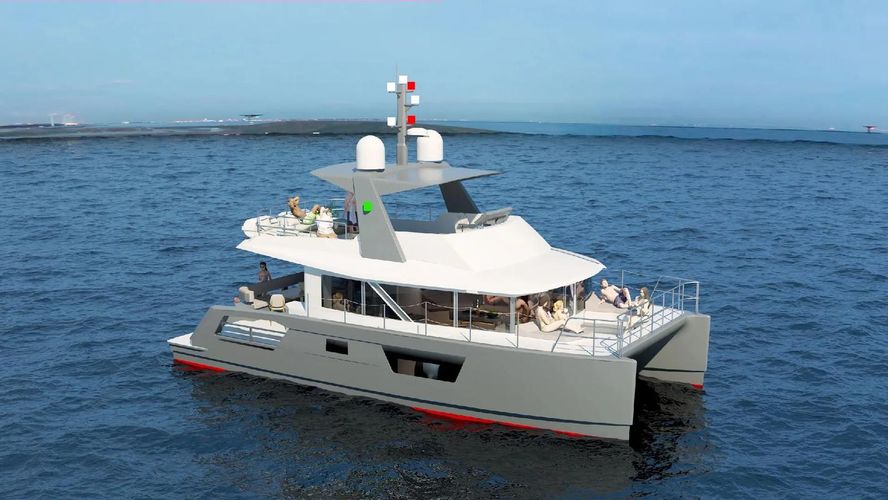
The key issue is that such modifications often lack manufacturer support. If a problem arises, you won’t be able to find replacement parts or someone knowledgeable enough to perform repairs.
My advice is to purchase a boat with its original factory configuration whenever possible. If the boat has already been modified, you’ll need to verify that all equipment comes with instruction manuals and has complete warranty records.
Pitfall #2: Incomplete Maintenance Records
Maintenance records for the Ottermeer 51 are extremely important. The shipyard recommends conducting a comprehensive inspection once a year, covering the hull, sails, and engine.
If the seller cannot provide complete maintenance records, don’t hesitate—look for another boat.
I once came across an Outremer 51 that had been in existence since 2015, priced 200,000 euros below the market rate. The seller explained, “The previous owner was too busy with work to keep proper records.”I looked into the records and discovered that the most recent comprehensive inspection was conducted in 2019. So I decisively decided to pass on it.
Pitfall #3: Hidden Structural Issues
Carbon fiber hulls are lightweight yet strong; however, if the boat has ever been involved in a collision or subjected to improper towing, delamination may have already occurred internally.
To check for this, gently tap the hull with a coin; areas where the sound is dull may indicate delamination. Alternatively, have a surveyor use an ultrasonic testing device.
Sharing My Real-World Experience
After two years of sailing the Outremer 51, I’d like to share some of my real-world impressions.
Pros:
Its stability in cross-seas is exceptional. During the windy Mediterranean summers, when other boats were rocking violently, the Outremer 51 generally remained steady.
It offers ample living space, featuring a central living area located between the two cabins—a convenient spot for cooking, dining, and relaxing.
Fuel economy is good. At a cruising speed of around 8 knots, fuel consumption is approximately 15 liters per hour.
Cons:
Deep draft. At around 1.8 meters, it cannot enter many shallow bays.
The sail system is complex; beginners will need time to learn it. It is recommended to find a professional instructor for a few days of training after purchasing the boat.
Maintenance costs are high. Genuine parts are expensive, and it’s difficult to find technicians familiar with Outremer.
Price Reference and Ownership Costs
Based on 2024 European used boat market data:
| Year | Price Range (euros) | Average Annual Ownership Costs |
|---|---|---|
| 2010–2012 | 800,000–1,000,000 | 100,000–140,000 |
| 2013–2015 | 1,000,000–1,300,000 | 120,000–160,000 |
| 2016–2018 | 1.3 million–1.6 million | 140,000–180,000 |
| 2019 and beyond | 1.5 million–1.8 million | 160,000–200,000 |
Ownership costs include mooring fees—which average 30,000 to 60,000 annually in the Mediterranean—as well as insurance, averaging 15,000 to 30,000 per year, and maintenance, averaging between 20,000 and 40,000 annually. Additionally, there are fuel costs, averaging 10,000 to 20,000 per year, and other miscellaneous expenses.
Q: Is a pre-owned Outremer 51 worth buying? Or should I consider a new boat?
Let’s take a look at the budget. If your budget is within 1 million euros, then choosing a pre-owned boat is undoubtedly a more reasonable option. However, you need to be mentally prepared, as you may need to invest 50,000 to 100,000 euros in refurbishment work. While a new boat offers peace of mind and convenience, the premium is particularly high; a new boat with the same specifications might cost more than 40% extra.
Q: Is the Outremer 51 suitable for solo sailing?
This boat is designed for two to four people, so solo sailing isn’t really recommended. If you’re sailing alone, handling the sails and docking will be a bit of a struggle. If you’re sailing solo, you might want to consider the slightly smaller Outremer 46 instead.
Q: Where is the best place to buy?
You’ll find the widest selection among dealers along the Mediterranean coast—in France, Spain, and Italy. However, we recommend comparing multiple dealers and not rushing to place an order.I know someone who set their sights on a boat in France, negotiated a price, and later discovered that the same model was 80,000 euros cheaper in Spain—with room for further negotiation.
Q: How long does a boat inspection take? How much does it cost?
A comprehensive survey typically takes one to two days and costs between 1,500 and 3,000 euros. Don’t complain about the price—it’s actually well worth the investment.I’ve seen many people who chose to cut corners on the survey, only to end up spending over 100,000 on repairs later on.
Q: How does the Outremer 51 hold its value?
Its resale value remains relatively stable. The Outremer brand enjoys a very good reputation in Europe, and after five years, the residual value typically ranges from 60% to 70% of the original purchase price. This is five to ten percentage points higher than that of some ordinary brands.
Buying a boat is no small matter. Never act on impulse; take the time to visit multiple boats, ask plenty of questions, and make thorough comparisons to find the one that best suits your needs. I wish you the best of luck in your search.