The author specifically notes that he—the author of this article—once sailed around the world for many years aboard the catamaran La Vagabonde with his spouse, experiencing firsthand a wide variety of marine environments in tropical, temperate, and polar regions.This article is based on actual sailing logs, maintenance records, and discussions with numerous experienced sailors, and is intended to provide practical guidance for catamaran enthusiasts.
Let’s start with the facts
Regarding my own boat, La Vagabonde—a catamaran built and launched in the 1990s—it has now logged and surpassed nearly 100,000 nautical miles.
Many people ask me, “How do you maintain it?”
To be honest, there’s no secret. It’s just a matter of being diligent.
In what ways are catamarans more troublesome than monohulls?
Two hulls, two sets of systems—that’s double the work.
But the benefits are clear: stability, ample space, and suitability for long-term living.
According to data compiled by the U.S. Coast Guard in 2023, catamarans have an approximately 18 percent lower probability of mechanical failure than monohulls, yet maintenance costs are about 25 percent higher.
Why? Because there’s more to maintain.
| Maintenance Tasks | Catamarans | Monohull |
|---|---|---|
| Number of Engines | 2 | 1 |
| Sail area | Larger | Relatively small |
| Anchor chain system | Twin anchors or single anchor with twin chains | Single anchor |
| Anti-fouling paint coverage | Approx. 40% larger | Benchmark |
Data from the Marine Maintenance Association’s 2024 Industry Report.
Engines—The Heart of the Ship
Two engines—but not two trouble-free engines.
It’s twice the headache.
In my experience: Changing the oil regularly is more important than anything else.
Change the oil every 100 hours. Don’t listen to the nonsense about “it’s fine to run it a little longer.”
I’ve seen too many people try to save money this way. In the end, the engine fails, costing tens of thousands of dollars.
Here’s what to do:
Check the oil level before every flight
Check the oil filter every 50 hours
Change the oil and filter every 100 hours
Perform a thorough inspection once a year
Common Mistakes Made by Beginners:
Forgetting to check the second engine.
That’s right—both engines need to be inspected. I’ve seen people who only maintained one engine, while the other—even if it was completely rusted solid—went completely unnoticed.
Sails and Rigging—Don’t Wait Until They Break to Fix Them
Sails are expensive.
A good set of mainsail and jib will set you back at least $20,000 to $30,000.
How can you save money?
Protect them from the sun. UV rays are the enemy of sails.
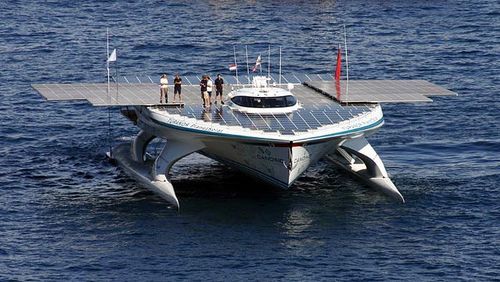
When not in use, stow the sails as much as possible. Use a sail cover. Don’t let them sit in the sun every day.
The same goes for the rigging. Inspect the steel cables every six months.
Pay special attention to these areas:
The base of the spreader
The mast connection
The ends of the stays
If you see any broken wires, replace them immediately. Don’t hesitate.
I know a friend who, because he was reluctant to replace a single wire, ended up causing it to snap, resulting in the sail falling into the sea. It took several days to repair, costing as much as several thousand yuan.
Hull Antifouling—Tropical vs. Temperate
The choice of antifouling paint is completely different when sailing in the tropics versus in Europe.
In tropical waters, marine growth attaches quickly. Ordinary antifouling paint won’t last more than three months.
After three years and trying five different brands, I finally settled on one called Intersmooth 74.
Is it expensive? Yes.
But it works. It lasts six to eight months.
In temperate waters, it’s much simpler. Standard antifouling paint lasts a year.
Key tip:
Thoroughly clean the hull every year before launching the boat.
Use a soft brush—don’t use a steel wool pad.
I’ve seen people scrub the hull with steel wool, which stripped away the antifouling coating. And what happened next? It was covered in seaweed in just one month.
Electrical System—Don’t Wait Until It Goes Dark to Remember
Catamarans have a lot of electrical equipment.
Refrigerator, air conditioning, navigation, communications, water pumps…
They consume a lot of power.
My advice:
Check your batteries once a year.
Especially the starter battery. Replace it immediately if it’s worn out—don’t wait until you break down in the middle of the trip.
Also, apply electrical grease to the battery terminals regularly.
Many people overlook this detail.
If they become oxidized, the connection will be poor. Electrical components will work intermittently, and it can take ages to figure out what’s wrong.
Anchor System—Special Requirements for Catamarans
Catamarans are wide and have a large wind-catching surface area.
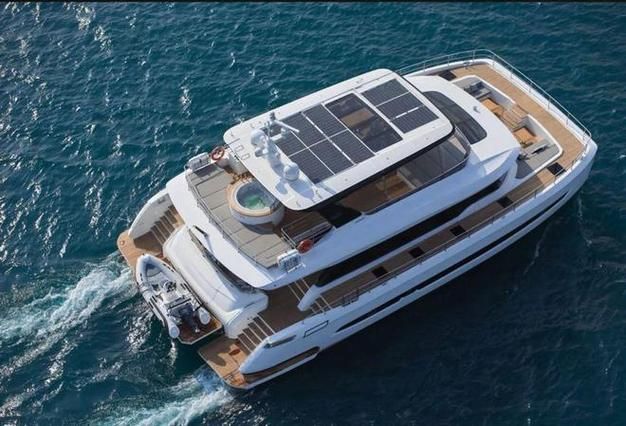
They require greater holding power than monohulls.
I’m using a set of Spade anchors, weighing 7 kg, paired with 30 meters of 10-millimeter chain.
Is that enough?
It’s enough—provided you choose the right anchorage.
Catamarans have a shallow draft, allowing them to go to many places monohulls cannot reach.
However, in strong winds, they swing more widely.
Tip to avoid pitfalls:
Don’t anchor on a muddy bottom. The holding power on muddy bottoms is unreliable.
Choose a sandy bottom or a sandy-mud bottom.
Also, in areas with a large tidal range, make sure your anchor chain is long enough.
I’ve seen people whose anchor chains weren’t long enough, and when the tide went out, their boats ran aground.
Frequently Asked Questions (FAQ)
Q: How often should antifouling paint be applied?
Here’s the answer: In tropical regions, it needs to be applied once a year, while in temperate regions, it’s once every two years. Never believe advertising claims that say “no repainting needed for three years.”
Q: How do you rotate the use of two engines?
A: I usually switch which engine is the primary one each week. This ensures even wear on both engines.
Q: What is the typical lifespan of sails?
A: It depends on usage. If you sail frequently, the mainsail will last 3 to 5 years, and the headsail will last 5 to 7 years. The set of sails I own has been in use for six years and is still in decent condition.
Q: What are the best practices for mooring a catamaran?
A: Whenever possible, moor to buoys. Catamarans are quite wide, but dock berths are often narrow, making collisions more likely. If you absolutely must dock at a pier, be sure to bring plenty of fenders.
Q: How should I maintain the boat during the winter when I’m not sailing?
Drain all water from the pipes, add antifreeze, fully charge the battery, store the boat in a dry and well-ventilated place, and start the engine once a month, running it for half an hour.
A Few Final Thoughts
Boat maintenance isn’t a chore.
It’s a way of life.
Checking the boat before every outing gives you peace of mind.
Every time you return to port, wash the boat, inspect it, and keep a log.
These habits are more effective than any high-tech equipment.
After years of sailing, I’ve come to this conclusion: a boat will never let down those who take good care of it.
I hope these insights are helpful to you.
Data sources for this article: U.S. Coast Guard 2023 Vessel Safety Report, Marine Maintenance Association 2024 Industry Statistics, and International Federation of Mariners Maintenance Guide.