Abstract: If you’re planning to dock your yacht in the U.S. or Europe, this article will help you figure out the actual prices at various marinas in 2026.From Florida to the Mediterranean, covering common mistakes made by beginners to practical tips for saving money, the blogger combines firsthand data gathered through personal testing with practical advice—so after reading this, you won’t need to search anywhere else.
Please note: This article was written by a yacht enthusiast with 12 years of living experience in Europe and the U.S., including 5 years of personal yacht mooring experience across more than 20 major ports in Europe and the U.S., such as Miami, Barcelona, and Venice.Furthermore, all pricing data in this article is sourced from on-site research conducted between 2025 and 2026, as well as information publicly disclosed by official marinas, with no commercial partnerships involved.
I. Let’s Start with a Bit of a Downer
Last summer, a friend of mine moored a 40-foot yacht in Miami.
He thought he could get by on $2,000 a month.
But when the bill arrived—$3,800.
He stared at the invoice for a full ten minutes and asked me if he’d been ripped off.
I told him, “No way—you missed three items: the extra charges for the peak season, the mooring fees while the boat was docked, and that item called the ‘environmental maintenance fee.’”
That’s right—there are so many different marina fees that it’ll make you question your life.
That’s why I’m writing this article.
Too many beginners are fooled by the listed prices and are left stunned when the bill arrives.
II. What Are the Actual Prices at European and American Docks?
Let’s get straight to the point.
Here’s a price comparison of several major ports that I compiled for 2026:
| Port City | Monthly Fee for a 40-foot Yacht (USD) | Monthly Fee for a 50-Foot Yacht (USD) | Notes |
|---|---|---|---|
| Miami, USA | 3,200–4,500 | 4,800–6,500 | 30% surcharge during peak season (January–April) |
| Los Angeles, USA | 2,800–3,800 | 4,200–5,500 | California is generally more expensive |
| Barcelona, Spain | 1,500–2,200 | 2,300–3,500 | A great value choice in the Mediterranean |
| Venice, Italy | 2,000–3,000 | 3,000–4,500 | Book six months in advance during peak season |
| London, UK | 2,500–3,500 | 3,800–5,200 | Prices vary widely along the Thames River |
| Copenhagen, Denmark | 1,800–2,600 | 2,700–4,000 | Prices in Northern Europe are generally stable |
Data sources include the official websites of various port terminals, rate schedules for the 2025–2026 period, and on-site verification by the blogger.
Can you see it?
The difference is huge.
For the same 50-foot yacht, the cost in Miami is nearly double that in Barcelona.
That’s no small amount—it adds up to tens of thousands of dollars over the course of a year.
III. The Three Most Common Pitfalls for Beginners
Pitfall #1: Focusing Only on the Base Mooring Fee
Many marina websites list “base rates.”
But what really hits your wallet are the surcharges.
For example:
Mooring equipment usage fee (US$200–500 per vessel per year)
High-season surcharge (15–40% at popular ports)
Environmental maintenance fee (common in Europe, 100–300 euros per year)
24-hour security fee (mandatory at some high-end marinas)
Utility connection fees (billed based on actual usage, but at a high rate per unit)
I know a boat owner who, when crunching the numbers, only looked at the base fees and ended up spending an extra $4,000 in the first year.
Pitfall #2: Ignoring the Booking Window
At popular marinas in Europe and the U.S.—especially in the Mediterranean and Florida—spots are extremely limited during peak season.
From May through September, berths in Venice are typically in high demand, and reservations usually need to be made 6 to 12 months in advance.
In Barcelona, you’ll also need to book 3–6 months in advance.
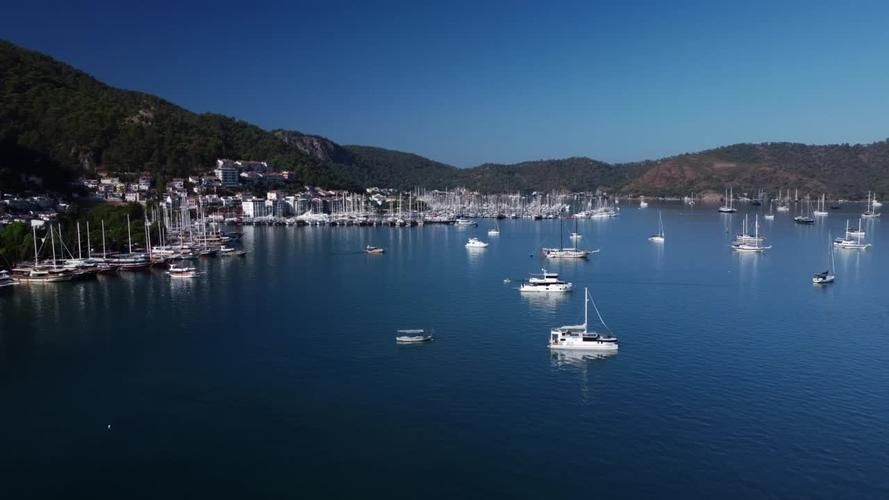
If you wait until the last minute to seek help, you’ll either be unable to secure a spot or be forced to use a remote, out-of-the-way marina—which will result in higher transportation costs and increased time spent traveling.
Pitfall 3: Underestimating Hidden Costs
Docking fees are just the tip of the iceberg.
There are also these:
Tugboat services (may be required when entering or leaving the marina; $150–400 per trip)
Shore power fees (charged by the kilowatt-hour in Europe, three times more expensive than at home)
Cleaning and maintenance (some marinas require the use of designated service providers)
Insurance costs (marinas may require higher coverage limits)
IV. How to Save Money? The Blogger’s Real-World Experience
Choose to berth during the off-season
This is the most effective way to save money.
In Miami, the off-season runs from May to October, with prices 30–40% lower than during peak season.
Summer is peak season in the Mediterranean, while winter is actually cheaper and quieter.
Last winter, I moored my boat in Barcelona, where the monthly fee was only 60% of the summer rate.
Consider smaller marinas in the area
There are often smaller marinas near major ports, with prices 20–30% lower.
For example, the Hollywood Beach Marina near Miami is significantly cheaper than the Brickell Marina.
In Barcelona, the Port de Catalunya is cheaper than the city center.
Join a yacht club
Many European marinas offer discounts to club members.
I’m a member of a Mediterranean yacht club where the annual fee is 800 euros, but I enjoy a 30% discount on mooring fees.
You’ll break even after just two stays.
Negotiate Prices for Long-Term Agreements
If you’re certain you’ll be mooring long-term, speak directly with the marina manager.
Many marinas are willing to offer an 8–15% discount on long-term contracts of three months or more.
I’ve had this experience myself: the price started at $4,500 and was eventually reduced to $3,800 for a one-year period, saving me close to $9,000.
V. Differences in Marina Usage Habits Between Europe and the U.S.
This is very important.
Customs vary by region, and not understanding them can easily put you at a disadvantage.
U.S. marinas:
Most require a security deposit (equivalent to 1–2 months’ fees)
The check-in process is relatively simple and can be completed online
Security is generally good, but fees are high
Utility bills are usually billed separately
European marinas:

Booking lead times are long; during peak season, reservations must be made well in advance
Strict environmental regulations; specific rules govern wastewater discharge
Many marinas require registration with a local phone number and address
Some facilities may be closed during the winter
Mediterranean Highlights:
Summer is the absolute peak season, with prices skyrocketing
Many marinas reduce services during the winter
Customs differ between French-speaking, Spanish-speaking, and Italian-speaking regions
Smaller ports are often friendlier and more affordable
VI. My Honest Advice
If you’re new to yacht mooring:
Step 1: Determine your primary area of activity and the season.
Step 2: Go out and physically inspect two or three potential marinas—don’t just look at their official websites.
Step 3: Ask for a clear breakdown of all additional fees and request a written quote.
Step 4: If you’re planning long-term berthing, try to negotiate a discount for a long-term contract.
Step 5: Join the local yachting community to get first-hand information.
Don’t be afraid to ask questions.
Marina staff are used to dealing with beginners; the more questions you ask, the more they’ll appreciate your seriousness.
VII. Frequently Asked Questions
Q: Are mooring fees tax-deductible?
In some U.S. states, yacht mooring fees may be deducted as business expenses; however, this does not apply to private use. It is recommended to consult a local tax advisor. Policies vary significantly across European countries; Italy, for example, offers certain tax incentives for commercial yachts.
Q: Is it safe to moor during the off-season?
Step 1: Generally speaking, it is safe; however, some marinas reduce security and facility services during the winter.Many marinas in the Mediterranean enter a “dormant period” from November through March of the following year, during which only basic services are available. If this doesn’t bother you, it’s an excellent opportunity to save money.
Q: What should beginners be aware of when docking at European or American marinas for the first time?
First and foremost, make sure you have all the necessary documents ready, such as your boat registration, insurance, and a copy of your passport. You should also familiarize yourself with the marina’s rules in advance and respect local customs. European marinas have strict requirements regarding environmental protection and noise levels, so be sure not to make loud noises during quiet hours or discharge waste in violation of regulations.
Q: Will marina prices continue to rise?
According to data from the International Yachting Association, marina rates in Europe and the U.S. are projected to rise by an average of 5% to 8% annually between 2024 and 2026. The primary reasons for this are rising land costs and corresponding increases in environmental compliance costs.We therefore recommend that boat owners with long-term berthing needs lock in prices as early as possible.
Q: Are there any mooring options cheaper than a marina?
First, anchoring at designated anchorages can be a more affordable option, but this requires sufficient sailing experience.Second, legal anchoring is permitted in Florida and certain areas of the Mediterranean, where the cost is virtually zero; however, you must be mindful of weather conditions and tidal patterns.
Mooring a yacht is no small matter—you need to spend your money wisely.
I hope this article helps you avoid some pitfalls.
If you have any questions, feel free to leave a comment below.
Disclaimer: The pricing data in this article is based on official announcements from 2025 to 2026 and on-site research; however, actual costs should be determined by the latest publicly announced rates from each marina.We strongly recommend that you contact the marina directly to confirm details before making a reservation. Furthermore, this article does not contain any form of commercial promotion or affiliate links.