Abstract: Many people think sailing trips are only for the wealthy, but that’s not necessarily the case. This article is my firsthand account of a two-year journey through Greece, Turkey, Croatia, and Italy—as an ordinary worker in Europe and the U.S.From buying the boat to daily mooring, and from food and drink to maintenance, I’ll break down all the costs for you. No exaggeration, no bashing—just data and facts. If you’re thinking of getting into this, you’ll still have time to make a decision after reading this.
Just to clarify: my name is Marta. I work full-time as a remote designer and have been sailing as a hobby for six years. I started with my first small 28-foot sailboat and have since upgraded to a used 38-foot boat, sailing through more than a dozen countries across the Mediterranean along the way.I’ve never hired a skipper along the way—I’ve learned everything on my own and sailed the boat entirely by myself. In this article, all the costs listed are real money I’ve actually spent; there are no brand sponsorships or affiliate links, so feel free to read on with confidence.
First, let me answer the question I’m asked most often—
“Is sailing really that expensive?”
My answer is: It depends on how you do it.
Some people spend enough in a year to buy a house, while others—like me—spend no more than it would cost to maintain a BMW. The key lies in which path you choose.
I’ve seen countless beginners who, in a moment of impulsiveness, bought a brand-new boat. And what happened next? Boats depreciate faster than cell phones—losing more than half their value in just three years. Then the mooring fees, maintenance costs, and insurance bills come one after another. Eventually, the boat sits quietly at the dock, gathering dust, while the owner is left on shore paying off the loan.
What a tragedy.
The alternative path I chose was a used boat. It’s fine if it’s a bit older, but you absolutely must thoroughly inspect the boat’s actual condition to ensure it’s genuine and free of any misrepresentations. In 2019, I purchased this 38-foot Bavaria, which was launched in 2004. At 15 years old, it wasn’t exactly new, and after negotiations, the price was set at 62,000 euros. At the time, a new boat of the same model was quoted at over 180,000—well above that figure.
The money I saved was enough to cover my fuel costs for several years.
The cost of buying the boat is just the beginning; the real expenses come later.
Many people focus solely on the purchase price and overlook one fact: you may be able to afford to buy a boat, but you may not be able to afford to maintain it.
I’ve compiled my actual expenses over the past twelve months—all while cruising the Mediterranean—to provide a reference for everyone.
| Category | Annual Expenses (Euros) | Notes |
|---|---|---|
| Mooring Fees (Winter + Summer) | 4,800 | Annual rental for a winter berth in Greece; occasional anchoring during the summer |
| Insurance (Comprehensive) | 1,200 | Insurance premiums are relatively low for older boats |
| Maintenance | 2,300 | I do most of the work myself, which saves me quite a bit |
| Diesel | 900 | Rely on the wind most of the time |
| Equipment upgrades | 1,500 | Replaced the electronic charts and added solar panels |
| Food and supplies | 3,600 | Enough for two people; mostly cooked by ourselves |
| Miscellaneous expenses (visas, transportation, etc.) | 800 | Round-trip airfare between the ship and home |
| Total | 15,100 | Approximately 117,000 RMB |
There’s no doubt that this annual cost of 15,000 euros is roughly equivalent to what I spent on rent in Berlin. The difference, however, is that when I wake up, I’m greeted by the sight of the sunrise over the Aegean Sea.
But don’t get too excited just yet. There are a few pitfalls here—I’ve fallen into them myself, and I don’t want you to make the same mistakes.
Mooring Fees: The Most Easily Underestimated Hidden Cost
When I first traveled to Greece, I thought anchoring was free and that I could drop anchor anywhere. It actually is free—but that’s only during the summer.
Once November rolls around and the north wind picks up, it becomes completely impossible to stay at anchor.Your only option is to find a marina. However, winter marina fees on Greece’s popular islands range from 40 to 60 euros per night. Before you know it, a month has passed, and over 1,000 euros have vanished.
If you plan to live on the boat long-term, you must negotiate an annual lease in advance. I know a French couple who secured an annual lease on Crete for 2,800 euros, which included utilities. Compared to monthly payments, this saved them nearly half the cost.
Furthermore, mooring fees in Turkey are much cheaper than in Greece. There are several marinas around Marmaris where annual rent is around 2,000 euros. However, the winds and waves can be quite rough there in winter, so it’s not recommended if your boat isn’t sturdy enough.
What about Croatia? Prices are high. At marinas around Split, the fee for a single night in the summer can exceed 80 euros. The upside, however, is that the facilities are excellent, with hot showers, laundry facilities, and a supermarket right on the waterfront. You get what you pay for.
Doing My Own Boat Repairs Saves Me 2,000 Euros a Year
When I first bought the boat, I knew absolutely nothing. The water pump was leaking, so I called someone to fix it—the labor cost was 60 euros per hour, plus the cost of parts. Replacing the water pump’s gasket alone cost me 180 euros.
After that, I got the hang of it. I watched videos on YouTube, asked experienced sailors on forums, and gradually started doing things myself. Now, whether it’s replacing a water pump, cleaning the hull, or changing the engine oil, I do it all on my own.
One detail that beginners most easily overlook: the anodes on the hull.
These zinc anodes are designed to sacrifice themselves to protect the hull, yet many people aren’t even aware they exist.I didn’t check them during my first year, so my propeller ended up covered in pitted and uneven marks from electrolytic corrosion—replacing it cost me 400 euros.
The anode block itself only costs 30 euros. That was a huge loss.
Also, you absolutely must read the engine maintenance manual. I use a Volvo Penta engine, which requires an oil and filter change every 100 hours. If you buy the parts yourself, it costs 40 euros each time; if you go to a boat yard for maintenance, it starts at 150 euros.
That’s how the cost gap widens.
Food and Drink: Cooking on Board Saves Money, but Don’t Skimp Too Much
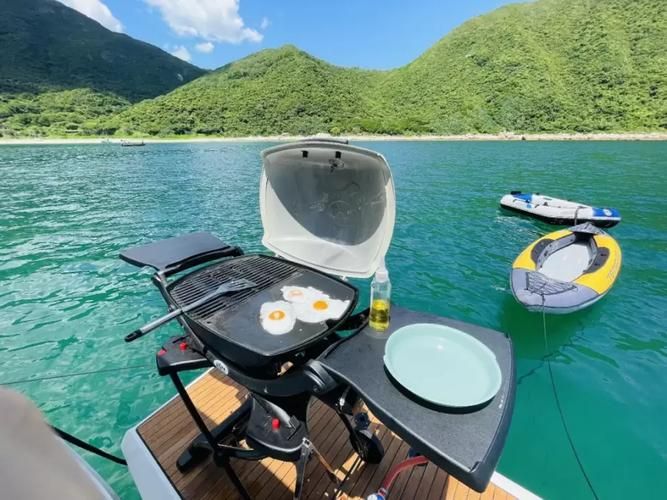
Along the Mediterranean coast, dining ashore is one of the biggest expenses. At the kind of small restaurants you’ll find in Greece, a meal for two typically costs between 25 and 35 euros per person. In Italy, prices are even more expensive— in places like Venice, you’re guaranteed to spend at least 50 euros per person just for a casual bowl of seafood pasta.
Most of the time, I cook for myself on board. I buy fresh bread, local cheese, and olives ashore in the early morning, have a light lunch, and prepare a proper hot meal for dinner.
Our monthly food budget was about 300 euros for two people. If we had eaten out for every meal, that figure would have at least tripled.
However, my advice is not to skimp too much. When you arrive at a new place, you should at least try the local specialties once. Isn’t the whole point of a sailing trip to experience a different way of life?
Gas prices have gone up, but sailing is still much more economical than a motor yacht
By 2025, diesel prices are projected to rise by about 18% compared to 2023. I looked up average fuel prices along the Mediterranean coast: in Greece, it’s roughly 1.7 euros per liter, while in Italy, it’s 1.9 euros per liter.
My boat’s fuel tank holds 200 liters, and filling it up costs about 340 euros. When sailing under pure engine power, it can cover roughly 150 nautical miles. However, under normal sailing conditions—as long as I’m not in a hurry—I mostly rely on wind power. My monthly diesel expenses are around 80 euros.
By comparison, a friend of mine who sails a motor yacht of the same size along the same route spends between 800 and 1,000 euros a month on fuel—that’s no small difference.
So if you’re concerned about expenses, a sailboat is definitely the smarter choice.
Insurance: This is not an area to skimp on
I know some people skip insurance to save money—especially with older boats, which they feel aren’t worth the cost.
But I have to say, this is the most foolish way to save money.
In 2023, I was docked at a marina in Turkey during a storm. A boat next to me had its mooring line snap, causing it to crash into the bow of my boat, which bent the railing and scratched the hull.The other party didn’t have insurance, and we argued back and forth for three months. In the end, I filed a claim through my own insurance to cover the repairs.
Repair cost: 2,600 euros. My deductible: 300 euros.
If I hadn’t had insurance, I would have had to pay the full 2,600 euros out of pocket.
The annual premium is 1,200 euros, which doesn’t exactly seem like a bargain. However, it’s only when an accident actually happens that you realize whether it’s truly worth it.
The Five Most Common Mistakes Beginners Make
Buying a boat that’s too big to handle on a daily basis. I once witnessed a couple who purchased a 46-foot boat, but they were completely flustered when it came to actually operating it.When they arrived at the harbor to dock, the man was shouting instructions from the stern, while the woman at the bow looked completely clueless and at a loss.In the end, they had no choice but to hire a skipper to take the helm, which cost 80 euros per session. The original purpose of buying a boat was to gain freedom, not to bring this kind of misery upon oneself.
As for the freshwater system, my tank holds 300 liters. If the two of us use it sparingly, it can last ten days. However, many people don’t realize that the freshwater supply must be disinfected regularly.Every three months, I flush the tank with food-grade citric acid, which costs less than 10 euros. If I don’t do this, the water starts to smell bad, and a biofilm builds up on the inside walls of the tank.
I tried to anchor without having mastered the technique. The first time I anchored in Greece, I went for a swim before making sure the anchor was securely set. As a result, the boat slowly drifted away, so I swam 300 meters to catch up with it.Ever since then, every time I drop anchor, I dive down to check its position. It takes an extra five minutes, but it saves me tens of thousands of euros in headaches.
I didn’t check the weather forecast. Although the Mediterranean seems pretty calm during the summer, but once the Meltemi winds set in, force 7 winds are extremely common. I’ve installed Windy and PredictWind on my phone and check them once in the morning and once in the evening. As soon as the wind speed exceeds 25 knots, I stay safely docked.
Don’t forget to bring spare parts. For the boat—pumps, belts, and spark plugs—these inexpensive yet crucial components must be kept on hand. I was on a small island in Croatia when the engine belt snapped.There were no replacement parts available on the island, and the nearest shipyard was in Split—a round trip that took three days. After that, I learned my lesson and now always keep a set of commonly used parts on board, which costs less than 200 euros in total.
Cost Comparison of Different Routes
If you’re planning to sail the Mediterranean, here are three options based on my experience:
Option 1: Greek Aegean Sea (Suitable for Beginners)
Duration: 3 months (summer)
Total Cost: Approximately 8,000 euros
Features: Dense cluster of islands, short daily sailings, and plenty of sheltered harbors—ideal for gaining experience
Option 2: Turkey–Greece Island Hopping (Best Value)
Duration: 5 months
Total Cost: Approximately 11,000 euros
Features: Low cost of living in Turkey, affordable mooring fees, but popular summer destinations can be overcrowded
Option 3: Italy–Croatia (Experience-Focused)
Duration: 4 months
Total Cost: Approximately 13,500 euros
Highlights: Stunning scenery, but mooring fees and dining costs are on the high side
There are three itineraries. All three include fuel costs, mooring fees, and food expenses, and all account for insurance costs; however, none of them include depreciation of the boat itself.
A harsh truth about boat depreciation
It’s a fact that a new boat depreciates the moment it’s delivered.
According to data from Boat Trader in 2024, a brand-new boat typically depreciates by an average of about 30 percent during its first five years.This means that if you purchased this new boat for 180,000 euros, its value would likely drop to 126,000 euros after five years.
So where’s my old boat? I bought it for 62,000 to begin with, sailed it for five years, and now its market value is around 55,000—a loss of just 7,000?
When you factor in annual maintenance costs, my total cost of ownership is actually much lower than that of someone who buys a new boat.
So, my advice is very clear: for your first boat, buy a used one. Once you’ve honed your skills and know exactly what you need, then consider upgrading to a new one.
Who is sailing suitable for?
To be honest, this lifestyle isn’t for everyone.
You have to be able to tolerate tight quarters—my boat is 38 feet long, which is just right for two people, but if you’re used to a spacious house, you might feel claustrophobic once you’re on board.
You need to be able to embrace uncertainty. When the weather turns bad, you’ll have to adjust your plans—sometimes you might be stranded on a small island for three days, during which time you won’t be able to do anything.
You must be able to be at peace with yourself. There’s no takeout on board, no Netflix, and no shopping malls in sight. But you’ll have time to read, time to fish, moments to just zone out, and moments to gaze at the stars.
However, if you can embrace all of this, a sailing trip will give you a sense of freedom unlike anything you’ve ever experienced. And that feeling is something no amount of money can buy.
Q: I don’t know how to sail. Can I learn? How long will it take?
Yes. Among the people I know, the fastest one obtained a coastal sailing license in just one month. however, obtaining a license and actually being able to sail are two fundamentally different things. I recommend first going on a few trips with an experienced skipper before setting out on your own. In Europe, the cost of the RYA Coastal Sailing course ranges from approximately 800 to 1,200 euros, and this includes the practical exam.
Q: Is it safe to sail alone?
I’ve met quite a few solo sailors, including a 65-year-old German woman who sailed all the way from the Baltic Sea to Greece by herself. However, solo sailing requires greater rigor and caution, especially when navigating at night or encountering severe weather conditions.I recommend first gaining at least 500 nautical miles of sailing experience with others on board before considering sailing alone.
Q: Is there enough electricity on board?
It depends on how you use it. My boat is equipped with a 300-watt solar panel, and with the engine providing additional charging, it’s more than enough for daily lighting, navigation, and charging cell phones. However, if you use the air conditioner, microwave, and electric toilet, it won’t be enough.My advice is to keep life on board as simple as possible and reserve power for what’s most essential.
Q: How do you handle visa issues?
This is indeed a hassle. The Schengen Area limits stays to just 90 days per year, so many sailors who spend extended periods cruising the Mediterranean choose to stop over in non-Schengen countries like Turkey, Montenegro, or Albania to reset their Schengen stay count. My approach is to spend the summer in Greece, head to Turkey in the fall, return to Germany for work in the winter, and set sail again in the spring. This way, I avoid visa restrictions and escape the harsh winter weather.
Q: What is the most expensive single expense?
For me, it’s mooring fees, which come to nearly 5,000 euros a year. However, if you primarily anchor, this cost can be reduced to under 1,000 euros. That said, anchoring comes with risks—such as the anchor not holding firmly, sudden weather changes, and the inconvenience of resupplying from shore. all of which come at a cost. My advice is to anchor primarily during the summer and find a marina for a long-term lease during the winter—this strikes the best balance.
Let me address this final point. Sailing is not an activity reserved exclusively for the wealthy, but it does require careful and thoughtful planning of every expense.If you’re willing to learn, eager to get hands-on, and open to accepting that things won’t always be perfect, then the journey won’t be as expensive as you might imagine.
I hope this breakdown provides some useful guidance. The scenery at sea is well worth seeing for yourself.