On a tight budget but still hoping to enjoy boating? This article will help you understand the key strategies for buying and renting affordable yachts.From avoiding pitfalls when buying a boat to saving money through yacht rentals, and from hidden costs to common misconceptions—reading this will help you steer clear of unnecessary detours. It serves as a useful reference for first-time boaters and those just starting out in the yachting world.
Author’s Note: The author lived on the south coast of England for eight years, during which time he purchased and operated two used recreational yachts. His charter experience spans the Mediterranean and the Caribbean. The views expressed in this article are based on actual transaction experiences and industry discussions and do not represent the views of any platform.
I. Where Exactly Are “Cheap” Yachts “Cheap”?
Let’s be honest—it’s only natural to get excited at the sight of the word “cheap.” However, behind a low price often lie several hidden pitfalls.
The first boat I owned was a 2004 Bavaria 37, which was originally listed for sale at just 17,000 pounds.Sounds ridiculous, doesn’t it? Right? I later found out that the previous owner was desperate to sell the boat because he’d discovered severe wear and tear on the underwater components—specifically, the propeller shaft and Z-drive—and estimated the repair costs at around 25,000.However, I ended up buying the boat for 23,000 pounds. It wasn’t until I brought it home and prepared to repair it that I realized the total cost of those so-called “minor issues” was nearly as much as the boat itself.
So, first, let’s get one thing straight: when it comes to inexpensive yachts, there are generally two scenarios—either you’ve truly found a bargain, or there’s a trap waiting for you to fall into.
The way to tell the difference is actually simple:
Check the boat’s age, usage record, and maintenance history.
If you come across a boat that’s less than ten years old and priced at more than 30 percent below the market average, don’t rush to make an offer. First, check whether the hull has a history of sinking or serious collisions.
II. Key Considerations During the Buying and Selling Process
2.1 Don’t Skimp on the Vessel Survey
I know many people feel it’s a waste to spend several hundred or even a thousand pounds on a professional surveyor.
However, I can say with confidence that the cost of a single survey is roughly one-tenth of what you’ll spend on repairs down the line.
Last year, I helped a friend inspect a Sun Odyssey 349 listed for charter; the asking price was nearly 40,000 yuan lower than I had initially estimated.The surveyor boarded the boat and inspected it for less than two hours, immediately pointing out two signs of water ingress below deck and a slight crack in the hull. Afterward, we checked the records and found that the boat had indeed run aground in the past, though the repairs had been done quite discreetly and were hard to detect.
My friend decided not to buy it, saving at least 80,000 pounds in subsequent repair costs.
2.2 Buying a Boat vs. Renting One: How to Choose
I struggled with this question myself for quite some time.
Here’s a simple framework for comparison:
| Factors to Consider | Buying a Boat | Chartering |
|---|---|---|
| Initial Investment | High (tens of thousands to hundreds of thousands of pounds) | Low (a few hundred to a few thousand pounds per week) |
| Maintenance Costs | Fully self-funded | Covered by the landlord/company |
| Flexibility | Low (fixed mooring fees and insurance) | High (can change locations at any time) |
| Long-term costs (5 years) | Approx. £8,000–12,000/year | Approx. £3,000–6,000/year (video rate) |
| Ideal for | People who live permanently on the coast, have a berth, and enjoy tinkering | Those who go out to sea occasionally and don’t want the hassle of maintenance |
Data is based on a statistical report published in 2023 by the UK’s Boatowners’ Mutual Association (BMA), as well as a survey by Charter World on industry-average expenses.
III. How to Save Money on Boat Rentals Without Running Into Pitfalls
3.1 Renting a Boat During the Off-Season Is a Great Deal
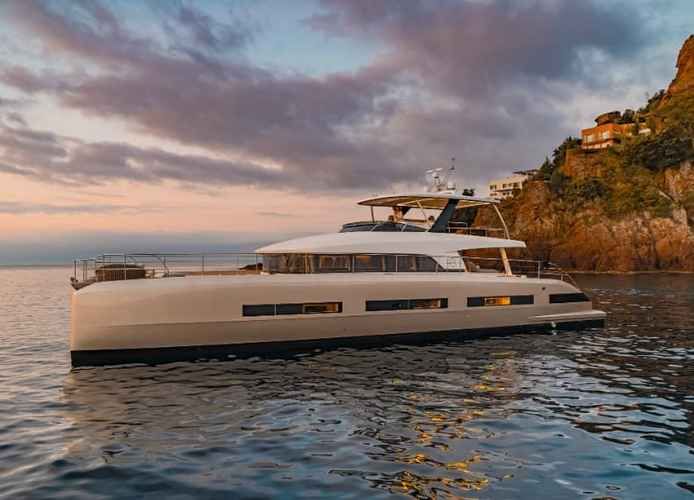
In the Mediterranean, July and August are peak season. For a sailboat over 35 feet in length, the base rental rate can soar to between £1,500 and £2,500 per week.
But if you schedule your trip for May, or September through October, the price for that same boat can drop by 30 to 50 percent.
Back in early October, I traveled to Zakynthos, Greece, where the weather was simply indescribably beautiful. Yet, for the same Beneteau Oceanis 37, the price had dropped from £2,100 to £1,200 per week, the crew size was cut in half, and the water was even clearer.
3.2 Don’t Overlook Hidden Costs
The most easily overlooked aspect of chartering a boat is the additional fees:
Regarding crew costs, in some regions there is an unwritten requirement for a skipper, and the associated fees typically range from €100 to €150 per day.
Final cleaning fees can vary, sometimes ranging from £150 to £300; you can save some money by cleaning the boat yourself.
Diesel and gas are billed based on actual consumption; during peak season, prices can fluctuate significantly.
The security deposit is generally between £500 and £2,000; when processing the refund, the hull must be inspected to check for any new scratches.
Once, when I rented a boat in Croatia, the security deposit was €1,500. Upon returning the boat, the captain insisted there was a brand-new scratch on the stern and demanded a deduction from the deposit.I then dug out the photos taken at the start of the trip to compare them, and it turned out the scratch had been there all along—though I hadn’t taken close-up photos at the time. The lesson learned: Before setting out, take comprehensive photos and videos, focusing on the four corners of the hull and the deck.
3.3 Direct Rental vs. Platform Rental
Here’s a little-known fact that many people aren’t aware of.
Renting a boat through a platform (such as Boatbookings or Click&boat) is convenient, but the commission charged by these platforms typically ranges from 10% to 20%. If you have the time, contacting the boat owner directly can be a more cost-effective option.
For example, I have several regular boat owner contacts in the south of France. By contacting them directly, I save about 15% compared to booking through a platform, and communication is much smoother—meaning the boat owners will let you know which bays are worth visiting and where you need to be mindful of the tides.
IV. Common Mistakes Made by Beginners
① Underestimating Mooring Costs.
Many people only factor in the cost of the boat—that is, the rental fee—when doing their calculations, but completely overlook the cost of a berth. At a private marina in Southampton, UK, a berth for a 40-foot boat costs approximately £2,000–4,000 per year, and fees at some popular Mediterranean ports are even higher.
② Insufficient insurance coverage.
Some insurance quotes for used boats may seem low at first glance, but when you take a closer look at the coverage limits and exclusions, the differences become apparent.If you plan to charter out your boat, many standard policies do not cover commercial use; in the event of an accident, you’ll likely not receive a single penny in compensation.
③ Failing to review the logbook.
When purchasing a used boat, the logbook serves as the most straightforward “health check report.” Has the engine oil been changed regularly? Has the ballast water system undergone maintenance? Are there any unauthorized electrical connections? All such details are clearly documented in the logbook.
④ Overestimating your own abilities.
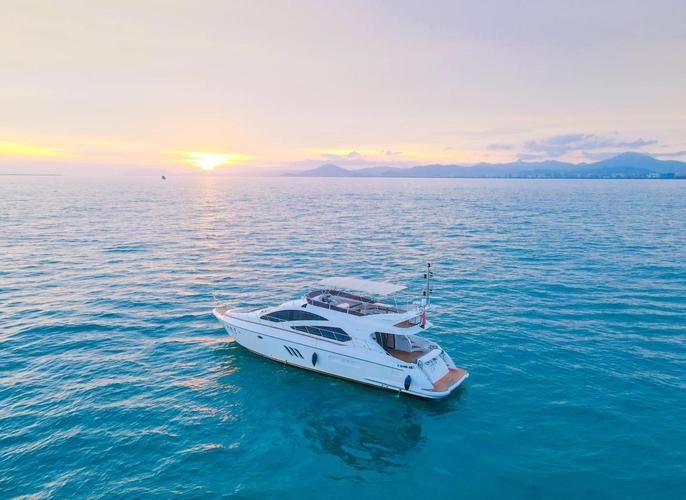
Many beginners rent large boats only to find they don’t know even the most basic sailing maneuvers, leaving them stuck in the harbor, too afraid to set sail. Before renting a boat, spend a few days learning the basics. Many places offer short-term RYA or ASA training courses, and you can become familiar with these operations in just a few days.
V. A Summary of Practical Money-Saving Tips
Traveling during the off-season (May, October) offers the lowest prices and the best value for money
Long-term rentals (one month or longer) usually qualify for a 10%–20% discount
Book 3–6 months in advance for the widest selection and stable prices
Book directly with the boat owner to bypass middlemen and save 10%–20%
Bring some of your own food and drinks—the onboard restaurant prices are significantly higher
Learn basic maintenance skills—handling minor issues yourself can save you a lot
Q: What is a reasonable budget for a first-time purchase of a used yacht?
First, A offers this advice: set aside at least 50% of the purchase price as a contingency fund. To illustrate with an example, if you plan to spend £20,000 on a boat, you should keep at least £10,000 on hand to cover unexpected repairs. This is advice based on experience that I and several veteran boaters have repeatedly verified—that’s just how it is.
Q: Which is more cost-effective—renting or buying a boat?
Well, as A mentioned, it depends on how often you use the boat. If you spend more than 60 days at sea each year, buying a boat is more cost-effective, conversely, if you’re out on the water fewer than 30 days a year, chartering is relatively more economical. Generally, I’d recommend chartering a few times first to give it a try, and only consider buying a boat once you’re certain you truly enjoy this lifestyle.
Q: Which is better for beginners—the Mediterranean or the Caribbean?
A: In the Mediterranean, the infrastructure is more developed, and ports are more densely distributed, so it’s relatively easier to get help in case of an emergency.In the Caribbean, sea conditions are generally more stable; however, the islands are farther apart, so rescue and resupply aren’t as convenient as they are in the Mediterranean. For beginners, I recommend starting in the Mediterranean.
Q: What is the ideal age range for a reliable used boat?
A: Generally speaking, a boat no older than 15 years is ideal.Boats over 20 years old, while inexpensive, often suffer from numerous age-related issues, and their maintenance costs are highly likely to far exceed initial estimates. Of course, there are exceptions—some exceptionally well-maintained, classic-style vessels can remain serviceable for many years.
Q: Do I need a license to rent a boat?
A: Requirements vary by country. In the UK and most of the EU, if a certificate is required to charter a sailboat, it is typically an RYA Level 2 certificate or an equivalent qualification. In some parts of the Caribbean, regulations are relatively lenient; however, it is still recommended that you prepare proof of basic sailing knowledge in advance, as some boat owners may verify it.
When it comes to sailing, the entry requirements are certainly not easy to meet. However, as long as you prepare in advance and avoid common pitfalls, you can still have a wonderful time while keeping costs within a reasonable range. We hope this article helps you avoid some of the bumps along the way.