Hi, I'm Alex.
I’ve been sailing the Baltic Sea and the Caribbean for nearly a decade.
From sailing small boats to handling this 45-foot “Poseidon,” I’ve hit my fair share of snags.
Today, I’m not going to talk about all that fluff.
Let’s just talk about how to pick a boat.
Seriously, picking a boat is harder than finding a partner.
One wrong move, and your wallet could take a serious hit.
A lot of people ask me, “Alex, how do you really compare them?”
Don’t worry.
First, let me tell you a bit about my background.
I worked as a used boat broker for three years, then bought a boat myself, but sold it because it was too much of a hassle, and eventually purchased the boat I have now.
This “trial-and-error” experience has given me insight into many things brokers won’t tell you.
For example, the numbers on the nameplate can sometimes be misleading.
Don’t just look at the price—watch out for “hidden costs.”
This is the mistake beginners make most often.
They focus solely on the listed price.
“Boat A is 50,000 euros cheaper—let’s buy it!”
That’s a huge mistake.
What you need to calculate is the total cost of ownership (TCO).
Not the purchase price.
It’s the cost of ownership over the next five years.
I compared two typical 40–50-foot yachts.
One is a classic model from a Nordic brand, and the other is a cutting-edge sports model from the Mediterranean.
The data is as follows:
| Item | Nordic Classic (A) | Mediterranean Modern Sport Model (B) |
|---|---|---|
| Initial Purchase Price | €420,000 | €380,000 |
| Annual Insurance | €3,500 | €4,200 (High Risk Rating) |
| Average Annual Maintenance Costs | €15,000 (conservative estimate) | €22,000 (complex electronic systems) |
| Fuel consumption per hour | 45 liters (at cruising speed) | 60 liters (high-performance engine) |
| Residual Value (after 5 years) | 65% | 40% |
Got it?
Boat B is 40,000 euros cheaper.
but over five years, maintenance, fuel, and depreciation will cost at least 60,000 euros more.
Plus, there’s a never-ending list of problems to fix.
This is exactly what I’m talking about: low-priced items are often of poor quality, and this is an undeniable rule in the yachting industry.
Three Key Factors to Consider When Searching
When searching for boats online, don’t just click randomly.
Be systematic.
I usually take a three-step approach.
Step 1: Filter by Hard Criteria
Don’t be fooled by beautifully filtered photos.
First, look at these three numbers:
Engine hours: Not the year! A boat from 2010 that’s only been running for 300 hours might be more reliable than one from 2018 that’s been running for 2,000 hours.
Condition of the keel: If it’s a steel or wooden hull, check for corrosion records. If it’s fiberglass, look for signs of repairs—specifically, areas where the color doesn’t match.
As for the completeness of certificates, check for the CE certification, the radio license, and the certificate of seaworthiness. If any of these are missing, the subsequent transfer of ownership process will drive you absolutely crazy.
Step 2: Subjective Experience Assessment
This is what I value most, yet it’s often overlooked by most people.
Sit in it and give it a try.
Even if it’s just a static test.
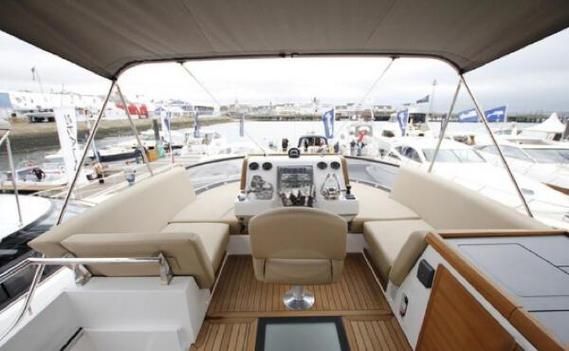
Noise Level: While the engine is idling, can you carry on a normal conversation? If you hear a buzzing sound in your ears, you’ll have no choice but to shout when driving at high speeds.
Issues caused by blind spots: From the driver’s seat, look back toward the deck. Just how large is the blind spot? When backing into a parking space, do you rely on the camera, or do you have to crane your neck to see?
Storage Space: Don’t just take the volume listed in the manual at face value. Go and take a look at the actual storage compartments. Will the life jackets, ropes, and spare parts you plan to store actually fit inside? On the vast majority of boats, storage space is simply insufficient.
Step 3: Analyze the Seller’s Motivation
Why are they selling?
This is crucial.
Trade-in: Indicates the boat is in good condition—the seller is simply upgrading.
Urgent sale: May indicate issues with the boat or financial difficulties.
Long Period of Inactivity: Check the engine for rust and inspect the battery for signs of failure.
I’ve seen far too many “long-term idle” boats on the European used boat market.
They look great on the outside.
But once you remove the interior trim, it’s full of moldy odors and rust stains.
A specific pain point for European and American users
There’s a cultural difference here.
In the U.S., boats are often high-powered, deep-V hulls designed for riding the waves.
In Europe, particularly in the North Sea and the Baltic Sea regions, boats prioritize stability, emphasize shallow draft, and place special emphasis on comfortable cruising performance.
If you’re the type to buy a boat in the U.S. and then head to Europe for a vacation—or vice versa, buying a boat in Europe to cruise in the U.S.—you absolutely must carefully consider whether you’ll be able to adapt to the climate conditions there.
For example:
Here are some examples of antifreeze measures for boats: Boats in Northern Europe typically have excellent insulation for their piping systems. If you were to take such a boat to Florida, it would likely experience excessive heat dissipation, which could lead to engine overheating.
Preventing biofouling: Boats in the Caribbean must have antifouling paint to prevent barnacles from attaching to the hull. If you take that boat to the UK, you might not need it at all—it would be a waste of money.
Additionally, there are legal compliance requirements.
Different countries have regulations regarding vessel emissions, noise levels, and even window sizes.
I once had a friend who bought an old sailboat in the Netherlands.
As it turned out, the height of the smokestack did not comply with new local environmental regulations, so he was unable to register it.
The boat effectively became scrap metal.
So, when conducting a boat inspection, you must verify whether the boat is in a legally compliant status in the country where it is currently located.
My Practical Advice: How to Create Your Own Comparison Chart
Don’t just rely on your memory.
Create an Excel spreadsheet.
Or use Notion.
List the 3–5 vessels you’re interested in.
Go see each boat in person.
Bring a tape measure.
Bring a flashlight.
Bring a moisture meter (to check the wood’s moisture content and prevent cracking).
Record the following details:
1. Deck wear: Pay special attention to areas where people frequently stand.
2. Electrical wiring: Is it messy? Are there any unauthorized connections?
3. Hydraulic system: Is the steering heavy? Are there any oil leaks?
4. Air conditioning or heating: Be sure to test these on-site; repairs can be quite expensive if they’re found to be broken.
Once, I found a boat I really liked.
The price was very attractive.
But I noticed a slightly darker patch of wood under the kitchen sink.
When I touched it, it was damp.

I took it apart and found a slight leak at the keel joint.
Although it wasn’t major,
it meant there was a problem with the waterproofing.
I decided to walk away from the deal.
I later heard that the boat was auctioned off six months later due to severe leaks.
The repair costs I saved were enough to buy another small boat.
Frequently Asked Questions (Q&A)
Q: Is it necessary to hire a surveyor for a used boat?
A: Absolutely.
Spending $2,000 can save you $20,000 in repair costs.
They can spot cracks that you can’t see.
Especially in structural components.
Don’t skimp on this expense.
Q: Are new-energy yachts worth buying?
A: It’s still in the early stages.
Charging facilities aren’t widely available at marinas.
Unless you’re only taking short trips in coastal waters, proceed with caution.
Conventional diesel engines are more mature and have a wider maintenance network.
Q: How can you tell if the engine needs a major overhaul?
A: Look at the color of the exhaust smoke.
Blue smoke = the engine is burning engine oil.
Black smoke = incomplete combustion.
White smoke = coolant entering the cylinders.
Also, listen to the sound.
If you hear a metallic knocking sound, walk away.
Q: What’s the ideal age for a boat?
A: There’s no standard answer.
Boats less than 10 years old feature newer technology but command a higher price.
Boats that are 15–20 years old offer good value for the price, but may need refurbishment.
It all comes down to the maintenance records.
A well-maintained older boat is a hundred times better than a poorly maintained newer one.
Q: Is it reliable to view boats online?
A: It’s only suitable for initial screening.
Videos can be made to look great.
But you can’t smell mold.
You can’t feel the rough handrails.
You can’t feel the vibrations when the boat is rocking.
You have to see it in person.
Even if you’re just looking and not buying.
It will help you get a feel for it.
Author’s Note: This article was written by Alex, who has 10 years of experience in buying, selling, and owning pre-owned yachts in Europe and North America. He has assisted over 50 buyers through the entire process—from selecting a boat to completing the transfer of ownership—and is well-versed in market pitfalls and hidden costs.All data in this article is based on average market conditions in the mainstream used boat markets of Europe and North America for 2024–2025 and is provided for reference only.