Note from the author: This article was written by an amateur boat owner who has lived on the East Coast of the United States for eight years and has owned a personal powerboat for 12 years. He has bought and sold boats through various online platforms and has encountered numerous challenges along the way.The content is based on real-world experience and industry data research and is not associated with any commercial promotional interests.
Let’s start with the truth
For many people, their first exposure to yacht websites comes from seeing photos of new boats posted by friends on social media or stumbling upon “unboxing videos” on YouTube. Once curiosity is piqued, they search for “buy a yacht” and are immediately overwhelmed by the sheer number of yacht websites that pop up.
Don’t worry—let’s take it one step at a time.
What is a yacht website?
Simply put, it’s a website platform that helps you “find a boat,” “view boats,” and “buy a boat.”
Currently, the leading yacht trading websites worldwide include platforms like Boat Trader, YachtWorld, and Boat Hunter. Essentially, these are information aggregation platforms that compile and display listings from yacht sellers, brokers, and dealers around the globe.
According to data from the North American Yacht Industry Association (NYIB) for 2025, approximately 62% of new yacht transactions in the United States over the course of a year were completed through online platforms—a figure that has been steadily rising from 38% in 2019. indicating that the market trend has shifted.
But here’s the catch—whether a website is user-friendly depends on your perspective.
Pros: Why People Love Using Yacht Websites
1. Vast Amount of Information, One-Stop Browsing
In the past, buying a boat meant first heading to the marina, contacting a broker, and then scheduling a viewing—a process that could easily take several days.
With these websites, you can browse through hundreds of boats right from your couch.
_Brand and model_, _year built_, _engine type_, _price range_—all these specifications are laid out clearly and concisely.
This is a real boon for ordinary people with limited budgets and tight schedules.
2. Powerful Comparison Features
Many platforms offer a “comparison” feature. You can select three to five boats at a time and compare their key specifications side by side.
For example:
| Parameter | Boat A | Vessel B | Vessel C |
|---|---|---|---|
| Price | $89,000 | $102,000 | $76,500 |
| Length | 32 feet | 34 feet | 28 feet |
| Year | 2018 | 2020 | 2016 |
| Engine Hours | 320 h | 180 h | 540h |
Look, Vessel C is priced over 10,000 cheaper, yet its engine has already logged 540 hours of operation, which is nearly at the scrappage limit.Boat A is relatively newer in terms of model year. Boat B appears to be in the most well-balanced condition from an exterior perspective. This kind of comparative analysis simply wouldn’t be possible in a brick-and-mortar setting.
3. Increased Price Transparency
In the past, when buying a used boat, you had no idea what the market price was—the seller’s asking price was the final word.
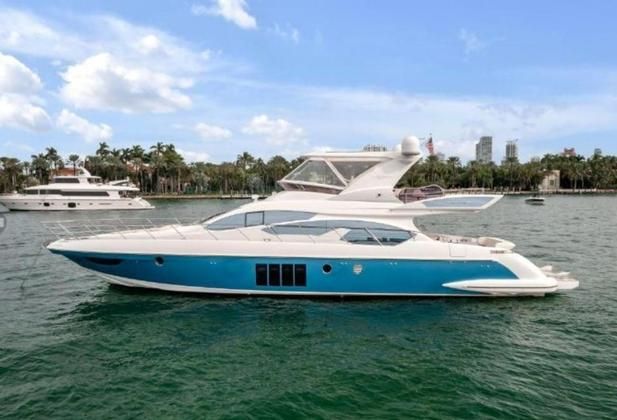
Now, with the website, the price range for similar vessels is clear and transparent, allowing you to roughly determine whether a boat is priced “reasonably” or “overinflated.”
Of course, there are pitfalls here as well—more on that later.
Drawbacks: The Things No One Tells You
1. Photos are heavily edited; the actual vessel may look very different
This is the pitfall beginners are most likely to fall into.
Most images on yacht websites are taken by professional photographers with excellent lighting and clever angles—and they’ve often been retouched in Photoshop.When you view a boat on your screen, it may appear to be “maintained like new,” but when you go to the marina to inspect it in person, you’ll be surprised to find—scratches on the deck, cracks in the seats, and uneven paintwork all over the hull.
It’s essential never to place an order based solely on photos; you must ask the seller to provide a live video, preferably one shot from the angles you specify.
2. Commission Structures Lead to Information Bias
Yacht-related websites are not charitable organizations; on most platforms, sellers are brokers who need to earn commissions.
What does this mean? It means that the boats they showcase are not necessarily the “best,” but rather the “best-selling ones available for sale” or those that “yield the highest commission.”In some cases, they may even deliberately conceal issues—such as a history of accidents or modifications that haven’t been properly approved.
According to a survey by Consumer Reports, approximately 23% of yacht buyers noticed “significant differences between the online description and the actual condition” after receiving the boat—which is a surprisingly high percentage.
3. Customer service is virtually nonexistent
You’ve submitted an online inquiry—and then what?
Many yacht websites use a “lead-transfer” approach for customer service, which involves passing your contact information to a broker in your area and then washing their hands of the matter. You’ll likely receive a few harassing phone calls, but there won’t be a single person who can actually resolve your issues.
This isn’t the website’s fault—it’s dictated by the business model. But you need to be aware of this.
4. Fake Listings and Scams
Sometimes, you’ll come across listings with absurdly low prices—like a boat worth 150,000 listed for 80,000—with vague descriptions and unclear details.
Nine times out of ten, these are phishing scams—often designed to trick you into paying a deposit. Never transfer money, and don’t believe claims like “pay a deposit first to reserve it.”
Tips for Beginners: How to Avoid Pitfalls
Rule #1: Treat the website as a “screening tool,” not a “purchase guarantee”
Its purpose is to help you narrow down your options and understand the market, but it should not be used as the sole basis for your final decision.
Rule 2: Learn to Check the History Yourself
In the U.S., there’s a service like the Vessel History Report on boats.gov. For less than $10, you can enter the serial number to check a boat’s accident history and ownership transfer records. In Canada, there’s a similar service called the Marine Equipment Database.
It’s money well spent.
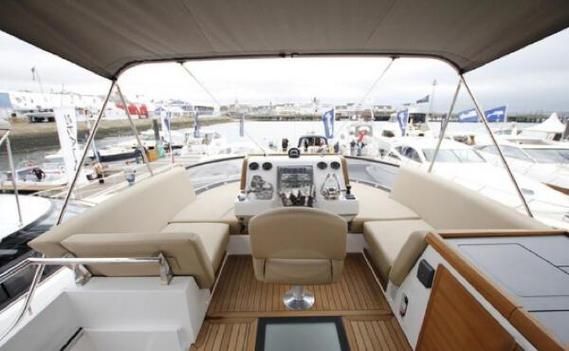
Tip 3: Bring Someone Along When Scheduling a Boat Viewing
Even if you aren’t an expert, an extra pair of eyes provides an extra layer of judgment, and having two people present makes it harder for the seller to pull a fast one.
Tip 4: Focus on engine hours rather than just the year of manufacture
A boat from 2020 with an engine that has already logged 600 hours may, in some respects, actually be inferior to a boat from 2017—even if that 2017 boat’s engine has only run for 200 hours.The engine is one of the most expensive components on a boat, and its repair costs can be quite high.
A Few Real-Life Examples
Case 1: A friend of mine spotted a 28-foot Boston Whaler on YachtWorld listed for a whopping $42,000; from the photos, it looked practically brand-new.He then made a special trip to Florida to see the boat in person, only to discover obvious repair marks on the deck and that the engine had just undergone a major overhaul. In the end, the actual cost came to nearly $10,000 more than the listed price.
Case 2: A friend of mine bought a boat on a platform called Boat Trader. Throughout the entire process, he never went to see the boat in person and simply completed the payment right away.However, the boat he ultimately received was completely different from what was shown in the photos: the paint was peeling, the interior was moldy, and the engine was making unusual noises.The process of seeking redress was long and arduous, and in the end, he recovered only half of his money.
Q: How much can you negotiate the price down on a yacht website?
Typically, you can negotiate a discount of 5 to 15 percent, depending on the boat’s condition, how eager the seller is to sell, and your own negotiating skills. If the listed price is significantly below market value, you should be cautious—there may be hidden issues.
Q: What kind of boat should a beginner start with?
Your first choice should be a cabin cruiser under 30 feet, because it offers excellent stability, and their maintenance costs are relatively low. Avoid jumping straight into large open boats or sailboats, as the learning curve for these options is too steep.
Q: Is buying a boat online more reliable than buying in person?
The risks vary depending on the situation. The advantage of buying online is the comprehensive information available, while buying in person allows you to inspect the boat firsthand. A prudent approach is to start by narrowing down your options online and then verify the details in person.
Q: Where can I find genuine user reviews?
The r/Yachts subreddit on Reddit features many genuine discussions, as does the r/Boating subreddit; however, these discussions do not represent official positions. You can also find some reviews from boat owners on Yelp.
One final note
Yacht websites are great resources, but they are tools—not answers.
If used properly, you can find the perfect yacht and save time and money. If used poorly, you might waste money and end up feeling frustrated.
The key is to stay level-headed, ask plenty of questions, do your research, and don’t let yourself be blinded by pretty pictures.
We hope you find the boat that’s right for you.
Data sources for this article: North American Yacht Industry Association (NYIB) 2025 Annual Report, boats.gov Vessel History Database, and Consumer Reports 2024 Yacht Buying Experience Survey.