Abstract: Planning to charter a catamaran in the British Virgin Islands? This article breaks down the actual costs for you, helps you avoid the pitfalls beginners often fall into, and shares practical sailing tips. It covers a comparison of costs during peak and off-peak seasons, potential expenses such as fuel and port fees, tips for choosing anchorages, and answers to frequently asked questions.
It’s worth noting that I’ve been sailing in BVI waters for over twelve years, and since my first charter to the present, I’ve led some thirty to forty groups of friends on trips there. Every piece of advice in this article is based on lessons learned from firsthand experiences navigating these challenges.The relevant data is sourced from publicly available information from the BVI Maritime Authority and quotes provided by major charter companies.
I. Let’s Start with the Money—How Exactly Do You Calculate the Costs?
Many people think that chartering a boat is simply a matter of paying the rental fee and that’s it.
That’s a huge mistake.
The first time I traveled to the BVI, I had put together a very detailed budget, but when I returned, I found I’d gone over budget by nearly $3,000. Why was that? Fuel, port fees, and mooring fees—I hadn’t factored in any of these hidden costs at all.
Now I’ll break it down for you.
High Season (December to April)
For a 40-foot catamaran, the weekly rental rate typically ranges from $8,000 to $12,000. This range indicates that the weekly rate falls within a specific price bracket, actually covers basic insurance and standard equipment. However, it’s important to note that insurance typically includes a deductible—an amount you’re responsible for covering out of pocket—which generally ranges from $1,000 to $2,000. If you damage the rental boat while operating it, you’ll have to pay this amount yourself.
Fuel costs are also a factor. Catamarans are not particularly fuel-efficient; at a cruising speed of 8 to 10 knots, they consume roughly $30 to $50 worth of diesel per hour. A typical round-trip voyage from Tortola via Chicken Island, Peter Island,Allen Island, will cost roughly $800 to $1,500 in fuel—this is no joke; these figures are well-documented.
Port fees and mooring fees are even more variable; each time you enter a port, the amount ranges from $10 to $25. While some anchorages are free, popular spots are highly competitive—the anchorages near Cow Island, for example, are essentially a matter of luck during peak season.
As for chef services, this is an optional extra. Hiring a local chef costs approximately $1,500 to $2,500 per week, including ingredients. If you choose to cook for yourself, grocery expenses range from $300 to $600 per week, depending on the quality of food you desire.
Off-season (May to November)
Rates are around 30% off; for a 40-foot catamaran, the weekly cost is $5,000 to $8,000. However, since we’re currently in hurricane season, weather conditions are unstable. a friend of mine went last September and ended up stranded at anchor for three days, just waiting for a weather window.
| Items | High Season (Weekly) | Off-Season (Weekly) |
|---|---|---|
| Boat Rental | $8,000–$12,000 | $5,000–$8,000 |
| Fuel | $800–$1,500 | $600–$1,200 |
| Port/Docking | $200–$500 | $150–$400 |
| Chef + Ingredients | $1,800–$3,000 | $1,500–$2,500 |
| Miscellaneous expenses | $300–$600 | $200–$400 |
| Total | $11,100–$17,600 | $8,450–$12,940 |
As you can see, there’s a huge gap. But you also need to consider the risks of the off-season.
II. Common Pitfalls for Newcomers
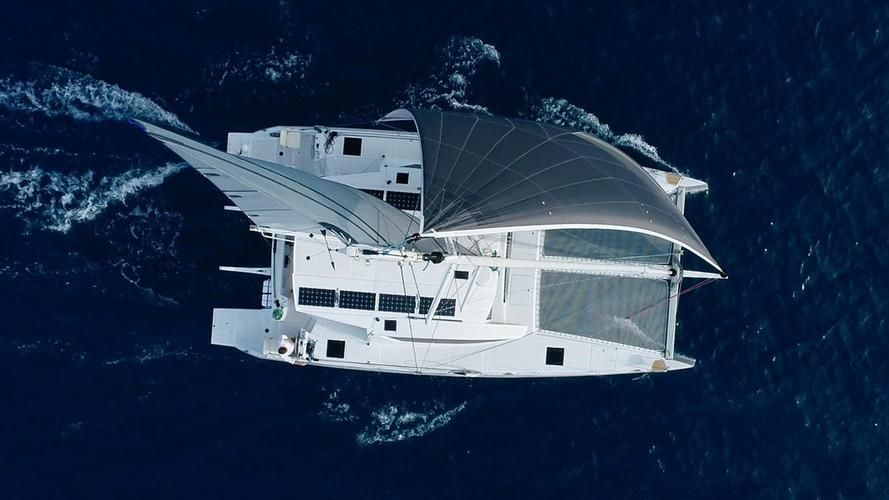
Pitfall 1: Assuming That Knowing How to Sail a Monohull Means You Can Sail a Catamaran
Single-hulled boats and catamarans are absolutely two completely different categories. Catamarans have a larger wind-exposed surface area, so they drift very quickly when hit by crosswinds, and they also require a long distance to come to a complete stop.The first time I entered the harbor area at Port Tottora, I nearly collided with the pier. At that moment, the captain was shouting from the side, “Reverse at full speed!” but my hands were shaking so much I couldn’t even press the corresponding control button.
After that, I became a bit more cautious. Before entering the harbor, I would first test the engine to confirm that reversing was working smoothly and normally. Since catamarans aren’t as maneuverable in reverse as monohulls, you have to plan ahead.
Pitfall #2: Competing for Anchor Spots
At Horseshoe Bay on Chicken Island and Soper’s Hole on Cow Island, it’s incredibly difficult to snag a good spot during peak season.You have to arrive before 7:00 a.m.; otherwise, all that’s left are the lousy spots. I’ve even seen people lining up as early as 6:00 a.m., coffee cups in hand—it looked just like people waiting in line for concert tickets.
Pitfall #3: Underestimating Fuel Consumption
Catamaran fuel consumption is higher than you might imagine. At a cruising speed of 10 knots, they consume about 5 gallons of diesel per hour. If the wind is light and the engine needs to run continuously, consuming 80 to 100 gallons in a single day is fairly normal. Diesel prices in the British Virgin Islands are significantly higher than in the continental U.S., costing around $6 to $7 per gallon.
Pitfall 4: Insurance Deductibles
The insurance provided by quite a few charter companies has deductibles ranging from $1,500 to $2,500. If you scratch or scrape the hull, you’ll have to pay this amount out of pocket.I’ve seen people purchase additional “zero deductible” insurance, which costs 15% to 20% more but offers greater peace of mind.
III. Practical Sailing Tips—All Learned the Hard Way
Tip 1: Keep a Close Eye on Weather Windows
The weather in the British Virgin Islands is unpredictable; it might be sunny in the early morning, only to be suddenly hit by a gale in the afternoon.I usually check weather apps like PredictWind or Windy at 6:00 a.m. If the forecast calls for strong winds, I’ll shorten my route or look for a sheltered cove to anchor in.
Tip 2: Choose Your Anchorage Wisely
Not every place where you can drop anchor is a bay. Some have coral bottoms where anchors have trouble holding, while others have muddy or sandy bottoms that can cause the anchor to drag in strong winds. I usually prioritize bays with a silt or sand bottom for anchoring—like White Bay near Jost Van Dyke. Although it’s crowded there, thankfully the seabed is stable.
When dropping anchor, be sure to let out enough chain—this is a crucial point to remember. Generally speaking, the chain length should be 5 to 7 times the water depth. For example, if the water is 10 feet deep, you’ll need to let out at least 50 to 70 feet of chain.Catamarans have a larger wind-catching surface area, so if the chain isn’t long enough, the boat is prone to drifting away from its original anchoring position.
Tip 3: Use the Right Channel for Communication
Boaters in the BVI use VHF Channel 13 for harbor traffic, while Channel 16 is reserved for emergencies. Before entering the harbor, monitor Channel 13 to understand the movements of other vessels. Never start by transmitting—listen first.
Tip 4: Fresh Water and Electricity Management
Generally, the fresh water tank capacity on a catamaran ranges from 200 to 400 gallons. If you hire a chef, your water consumption will increase significantly. I’ve seen people use up 200 gallons of fresh water in a single week, with showering alone accounting for the majority of that. I recommend showering in the morning, as this helps conserve water. As for electricity, solar panels are sufficient to meet daily needs; however, if you need to run the air conditioning, the generator must be started.
IV. My Personal Insights
When chartering a boat in the BVI, I place particular importance on the charter company’s reputation—not based on advertising claims, but on genuine reviews. I usually check reviews on CharterQuest or Sailo, focusing specifically on the negative ones—if the negative reviews consistently mention “poor boat condition” or “inadequate service,” then I’d steer clear of that company.
Additionally, I strongly recommend that first-time visitors hire a skipper. It’s not because you lack the ability to sail, but because the skipper is very familiar with the local waters and knows exactly where the reefs are and where the water is deep enough.The last time I sailed on my own, I ran aground near Virgin Gorda. Although it wasn’t a serious grounding, it was still very frustrating.
It’s best to avoid night sailing in the BVI. Many anchorages have no lighting, so navigation relies entirely on GPS. Night sailing carries significant risks unless you have extensive experience.
Q: Do I need a visa for the BVI?
A: Chinese passport holders are visa-exempt and may stay for up to 30 days. The same applies to holders of U.S., Canadian, and British passports. For other nationalities, we recommend checking the website of your local embassy.
Q: When is the best time to visit?
A: December through April is the peak season, when the weather is most stable, but prices are high. May and November are shoulder seasons, with fairly decent weather and prices 20% to 30% lower.I usually choose November, when there are fewer crowds, prices are lower, and the weather isn’t bad at all.
Q: Can I sail the boat myself?
A: It’s possible, but the vast majority of charter companies require you to have a sailing license, such as the ASA 104 or an equivalent certification. If you don’t have a license, you’ll have to pay to hire a captain.
Q: Can I use credit cards in the BVI?
A: Credit cards are accepted in most places, but small restaurants and gas stations generally accept only cash. We recommend bringing U.S. dollars in cash; the exchange rate is approximately 1:3.2.
Q: Which is better, a catamaran or a monohull?
A: Catamarans are very stable and offer plenty of space, making them particularly well-suited for family gatherings and get-togethers with friends. Monohulls, on the other hand, are faster and have a shallower draft, allowing them to reach areas that catamarans cannot access. It really depends on your specific needs.Personally, I usually choose a catamaran because it’s very comfortable to sail on.
This article is based on the author’s actual sailing experience in the BVI waters from 2012 to 2026, with data sourced from publicly available information from the BVI Maritime Authority and quotes from major charter companies.