
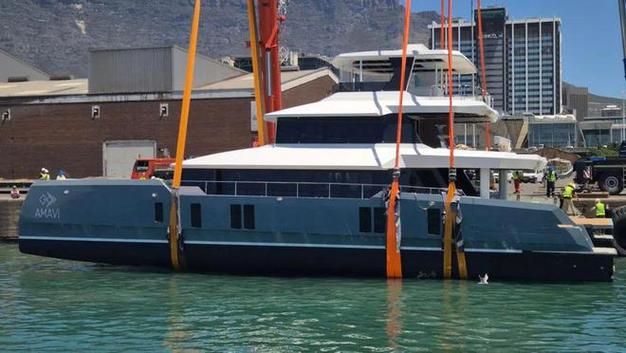
To be honest, when I saw the phrase “catamaran boat for sale marina price,” my mind went blank for a moment.
It’s too long.
Seriously, it’s way too long.
It’s like standing at some run-down dock in Florida, staring blankly at an old, barnacle-covered hull. You’re thinking about buying a boat, and you want to know where it’ll be cheaper to moor it, but you’re even more afraid of getting ripped off.
With twenty years of experience sailing small boats, I’ve seen plenty of beginners—their eyes sparkling, money clutched tightly in their hands, thinking to themselves, “Catamarans are stable,” and “Catamarans are spacious.” And what happens after that?
Then comes the nightmare.
Today, I’m not going to talk to you about the aerodynamics stuff you find in textbooks. Instead, I want to tell you about that musty smell I’ve caught near the docks, and those bills that make me jolt awake in the middle of the night.
A catamaran isn’t a dream—it’s debt.
Why do catamarans inspire such a love-hate relationship?
Let’s start with the love.
Stability. Real stability.
When you’re on a monohull and the waves crash in, not only are you left out in the cold, but you also have to hold onto the railing and throw up until you see stars. But on a catamaran? The two hulls move side by side. It’s just like walking on flat ground.
For those prone to seasickness, this is a lifesaver.
But for your wallet, it’s a death sentence.
Just look at the price.
| Boat Type | Used Price Range (USD) | Estimated Annual Maintenance Costs | Dockage Fees (Monthly / U.S. East Coast) |
|---|---|---|---|
| Small Catamaran (24–28 ft) | $40,000 – $80,000 | $3,000 – $5,000 | $800 – $1,200 |
| Medium Catamaran (30–36 ft) | $90,000–$200,000 | $8,000 – $15,000 | $1,500 – $2,500 |
| Large Luxury Catamaran (40 ft+) | $300,000+ | $20,000+ | $3,000+ |
Data source: Compiled from recent average transaction prices on BoatTrader and the Marina Management Association’s 2025 rate report.
See what I mean?
Buying a boat is a one-time payment.
Docking a boat is a long-term financial burden.
The Marina Trap: Do You Think You’re Buying a Spot?
Countless people ask me, “Agnes, I’m looking for a cheaper berth at the marina—is that okay?”
No.
It really isn’t.
You have to understand the width of a catamaran. It’s usually twice that of a monohull.
What does that mean?
It means you can’t dock at a regular slip.
You’ll need to look for a “Wide Beam” berth or a “Catamaran Slip.”
These spots are scarce.
They’re expensive.

Whether in Miami, San Diego, or Boston. In these locations, the waitlist for well-located docks can stretch all the way out to sea.
I have a friend named Old Jack who bought a 32-foot catamaran and was overjoyed at the time, but later realized that the mooring fees for that catamaran were 1.8 times higher than those for a monohull.
Why?
The marina manager explained, “You take up more space, which means I have to reinforce my buoys, and that increases my operating costs.”
Just listen to that.
This is blatant discrimination.
But what can you do?
You could move to an inland river. It’s cheaper there. But there’s no sea breeze. No salty, damp smell.
Or you can accept the high price.
So, when looking at prices, don’t just look at the listed price of the boat.
Look at the “total cost.”
The price of the boat, plus insurance, plus fuel costs, plus maintenance expenses, plus berthing fees.
Only when you add these four items together do you get your true “pain index.”
The Three Most Common Pitfalls for Beginners
1. Ignoring Draft
Although catamarans are stable, some older models have a significant draft.
If you plan to go fishing in shallow waters or dock at certain private beaches, you’re highly likely to run aground.
A single grounding incident could cost you enough to cover six months of boat storage just to repair the hull.
2. Forgetting to Check the Engine Compartment
Catamarans have two engines.
Two!
That means two filtration systems, two oil pumps, and two cooling circuits.
If you see an “For Sale” ad that says “Recently Serviced,” you need to ask for clarification: And you also need to figure out: What exactly is the situation? What’s really going on?
Who performed the service?
When was the oil changed?
Are there any signs of oil leaks?
I once saw a boat that looked brand-new on the outside. When I opened the engine compartment, a sour, acrid smell hit me.
That was the smell of a coolant leak.
That’s the smell of money going up in smoke.
3. Underestimating Maintenance Frequency
A catamaran has two hulls.
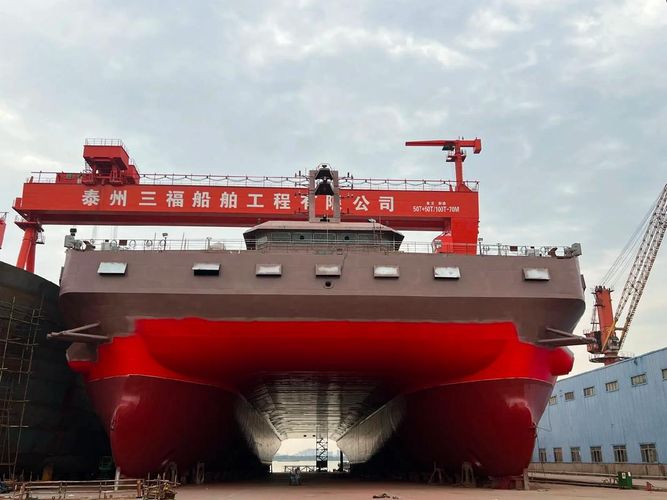
Two hulls mean twice the surface area exposed to seawater.
That means more barnacles, more algae, and more corrosion.
Every winter, you’ll need to sand the hull twice.
Each sanding session costs money.
It takes effort.
It takes away from the time you could spend with your family on the weekends.
My honest opinion
You buy a catamaran for the freedom.
Not to become a slave to the shipyard.
If you only go out to sea occasionally to fish and soak up the sun,
maybe a good monohull would be a better fit for you.
It’s affordable. Easy to dock. Easy to maintain.
But if you crave space,
If you want to sleep at sea without your body being tossed about by the waves,
And if you want to bring your family of five and still have room to move around,
Then a catamaran is worth it.
Just be prepared to open your wallet.
And a resilient spirit.
Frequently Asked Questions (Q&A)
Q: Is it worth buying a used catamaran?
A: Check the year of manufacture. Boats built before 2005 suffer from severe structural deterioration, so proceed with caution. Boats built after 2010 offer good value for money. However, you must hire a professional surveyor. Never skimp on those few hundred yuan.
Q: Where is the cheapest place to moor a boat?
A: Avoid major tourist ports and head to small fishing villages or inland waterways. Although the scenery may be slightly less impressive, you can save $500 a month—that’s $6,000 a year.
Q: Do catamarans really prevent seasickness?
A: In most cases, yes. However, during sharp turns or when encountering large waves, rolling motion will still occur. It’s just much less severe compared to monohulls.
Q: How should I buy insurance?
Don’t skimp on cost—be sure to purchase full coverage. Repair costs for catamarans are exorbitant, especially if the hull cracks. Without insurance, a single accident could very well leave you bankrupt.
Q: Is it too late to buy a boat now?
The market is currently in a correction phase. Prices were artificially inflated in 2024 but began to stabilize between 2025 and 2026. Now is a good time to buy, but don’t expect to find a bargain—high-quality boats don’t come cheap.
Author’s Note: This article is based on the author’s 15 years of experience in boat leasing, sales, and maintenance on the East Coast and in the Gulf of Mexico. Having helped over 50 families purchase their first catamaran, the author is well aware of the financial and emotional risks involved. All content is based on real market feedback and does not involve any brand affiliations.