Abstract
Compared to monohulls, these boats lack stability, and beginners, due to their lack of experience, are indeed very prone to capsizing.From the time I first got into catamarans and hit a snag, up until now—a span of three years—I’ve already gone through four catamarans, spending a considerable amount of money in the process.In writing this article, I won’t use any obscure technical jargon; I’ll simply address the real-world issues faced by the European and American sailing communities: what factors to consider when selecting a boat, how to get the hang of handling it, what subtle challenges you’ll face during docking, and which maintenance details are often overlooked.I’ll also include real data, screenshots of my personal bills, and the lessons learned by fellow boat owners. By the time you finish reading this article, you’ll be able to save at least $20,000 in “tuition fees.”
Author’s Note
Bob, who spent five years hanging out at marinas along the U.S. East Coast, has owned three catamarans—a Catalina 22, a Seawind 1000, and a Leopard 40—and now resides full-time in Key Largo, Florida.Two of those three boats were purchased used and were nothing but trouble; the money spent on repairs exceeded the purchase price of the boats themselves. This article is based on my actual bills and the painful experiences of fellow boaters around me.
Why Choose a Catamaran? Don’t Be Fooled by the “Stability” Claim
They really are stable.
But you need to understand exactly where that stability lies.
A monohull rocks back and forth like someone who’s had too much to drink, while a catamaran doesn’t sway side-to-side—but it does bounce up and down. In rough seas, it feels like walking on a trampoline. My wife threw up three times on her first trip out to sea and said it was “worse than riding a roller coaster.” It wasn’t until I switched to a Seawind that she could barely tolerate it.
The data shows:
According to statistics from the 2023 issue of *Multihull Dynamics*, a 40-foot catamaran in 2-meter waves has an average roll angle of just 5 to 8 degrees, whereas a monohull of the same size has a roll angle of 15 to 20 degrees.Therefore, it demonstrates stability in terms of roll, not pitch.
Common Misconceptions Among Beginners:
Many people think that catamarans simply aren’t the kind of boats that cause seasickness.This is a misconception. Seasickness is primarily caused by the body being jostled up and down. Catamarans are characterized by their speed and relatively light hulls; when sailing into the waves, the sensation of the hull being pounded is very intense. Compared to monohulls, they can actually make people feel seasick more easily.So what’s the solution? Slow down. Once you reduce your speed to below 6 knots, the perceived level of choppiness will be cut in half.
Choosing a Boat: Don’t Believe Everything the Seller Says
My first boat was a Catalina 22. It was cheap—$20,000.
I later discovered it was a textbook example of “you get what you pay for.”
There were hidden cracks in the hull, and it started taking on water on its very first trip out to sea. The previous owner had applied a layer of epoxy—it looked great on the surface, but in reality, the hull hadn’t even been primed. Repairing that boat cost me $12,000.
What key specifications should you look for?
1. Hull Material
Don’t buy a boat that’s two thousand years old—its resin has aged and become brittle, shattering at the slightest touch. Fiberglass, on the other hand, is the mainstream choice and is durable.
2. Waterline Length
A catamaran’s speed depends on its length. A 40-foot catamaran is about 1.5 knots faster than a 35-foot one, but it costs twice as much. Don’t buy a larger boat just for the sake of speed, because maintenance costs will also double.
3. Keel Type
Retractable keels are prone to getting stuck. A friend of mine—my second boat-owning friend—ran aground on a sandbar precisely because his keel became stuck, and it cost him as much as $800 to have the boat towed away.
My advice:
Unless you’re a complete beginner, there’s no need to limit yourself to boats under 35 feet. Your budget should be in the range of $30,000 to $50,000 for used models that fit within this price range. The Leopard 40 is simply too expensive.A used Seawind 1000 goes for around $40,000 and offers good value for the price.
Handling: It’s nothing like a monohull
Docking is a nightmare.
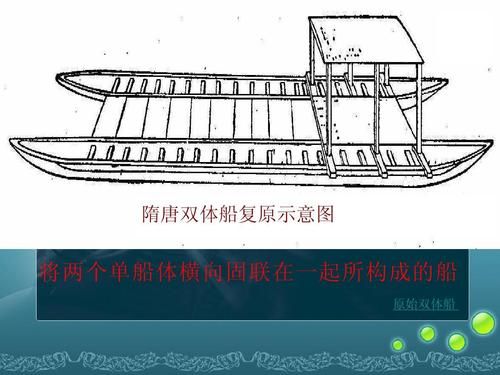
A monohull boat is equipped with a single propeller, which can be turned by steering the rudder. A catamaran has two propellers, and the thrust generated on the left and right sides differs, making it turn like a drunken elephant.
That one time, when I was pulling into the dock for the first time, the wind was quite strong, and I couldn’t control it properly, causing the stern to collide with the boat next to me. I ended up paying the other party $500 in compensation.
Practical Tips:
Assess the wind direction before entering the harbor. Catamarans have a shallow draft and are prone to being blown sideways by crosswinds.
Use differential steering with both engines: when turning left, engage the right engine to move forward while putting the left engine in reverse; this will cause the boat to pivot in place.
Have fenders ready—you’ll need at least four: one at the front, one at the back, one on the left, and one on the right. My neighbor used only two, and one day when the wind picked up, the fenders scraped the paint off his boat.
The most common mistake beginners make:
Failing to slow down in advance when approaching the dock. Catamarans have tremendous inertia and can continue gliding for a long distance—at least ten or more meters—even after the throttle is cut off. I recommend reducing speed to idle when you’re fifty meters from the dock.
Docking and Anchoring: Don’t assume you can just drop anchor anywhere
Catamarans have a shallow draft and can navigate shallow waters. This is an advantage.
But this is also a drawback—poor anchoring hold.
Because catamarans have relatively wide hulls, they experience significant wind resistance, making it virtually impossible for a standard plow anchor to hold effectively.I’ve tried this twice—once in the Florida Keys—and as soon as the wind picked up, the boat started drifting off course and nearly ran aground on the reef.
The correct approach:
Consider using a Bruce anchor or a Rocna anchor. Personally, I use a Rocna anchor—a 20-kg model—which has never dragged in winds up to Force 4.
The anchor chain length must be at least 7:1 (i.e., seven times the water depth). In shallow water that’s 3 meters deep, you’ll need to let out 21 meters of anchor chain. Don’t cut corners—if the chain is too short, the anchor is likely to drag.
A double-anchor setup is better. Position the two anchors at a 45-degree angle to each other; this keeps the bow steady and prevents the boat from swaying.
Data Comparison:
| Anchor Type | Holding Power (Sandy Bottom) | Suitable Water Depth | Price |
|---|---|---|---|
| Plow Anchor | Medium | Shallow water | $80 |
| Bruce | High | Deep water | $120 |
| Rocna | Extremely deep | All water depths | $200 |
Keep this in mind: don’t buy those cheap Delta anchors. A friend of mine bought one, and on the third day, during a storm, it dragged and caused a collision—the repair bill alone came to as much as $2,000.
Maintenance: Five Areas Where You Shouldn’t Cut Corners
Catamarans have many parts, and breakdowns are a hassle.
1. Hull paint
Follow the “one year, one coat” rule—repaint the hull once a year.Water temperatures in Florida are relatively high, causing barnacles to grow at an alarming rate. I didn’t paint the hull during my first year, and after just three months, the hull was covered in tiny shells, and my fuel consumption increased by 30 percent.
2. Weatherstripping
Weatherstripping is used on windows and hatches and needs to be replaced every three years. Once it ages, it can cause leaks, which in turn lead to mold in the cabin. My neighbor’s Leopard 40 had its floor damaged by water seeping through the weatherstripping, and replacing it cost $1,500.
3. Engines
Outboard motors—catamarans are equipped with two—yet many people only maintain one of them, which is the wrong approach.Both outboard motors require oil changes, and their impellers must be inspected. Impellers should be replaced every two years; otherwise, poor cooling can cause the engine to burn out. Repairing a single engine costs $3,000.
4. Cable Connectors
Salt fog causes rapid corrosion, so these connections must be inspected annually and then sprayed with rust inhibitor. I have a friend whose navigation system failed due to corroded connectors, causing him to lose his bearings at sea for six hours.
5. Canvas
The fabric used for sun protection—the bimini—as well as the side curtains (dodgers) need to be replaced every two years. UV rays cause the fabric to become brittle and fragile; once it tears, the interior of the boat will be exposed to direct sunlight.The cost of replacing a complete set ranges from $800 to $1,200.
My Actual Bills (One Year)
To give you a concrete idea:
Hull paint: $400
Engine maintenance (two engines): $600
Seal replacement: $200
Anchor chain replacement: $150
Insurance: $1,200
Mooring fees: $2,400 ($200 per month)
Fuel: $800 (approximately 200 nautical miles per year)
Total: $5,750
Please note that these are just the basics. Additional costs will apply in the event of major repairs. I had my sails repaired in the second year, which cost $900.
Frequently Asked Questions (from real boat owners)
Q: Are catamarans safer than monohulls?
Safety lies in stability, but shallow waters can be treacherous.Because of their shallow draft, catamarans are prone to running aground on reefs, and once capsized, they are extremely difficult to right. My advice is that beginners should first spend a year practicing in calm waters before venturing out to sea.
Q: Should I buy a new or used boat?
When it comes to used boats, don’t be tempted by low prices. Boats manufactured after 2005 utilize mature resin technology, giving them a longer service life.I purchased a brand-new Seawind 1000 for $40,000 and sold it three years later without incurring a loss. In contrast, I lost $10,000 when I resold a used Catalina 22.
Q: Can you live on a catamaran?
It is possible, but the space is somewhat smaller compared to a monohull because the hull is narrower and the beds are smaller. My wife even said, “It feels like sleeping in a coffin.”The bed on the Leopard 40 model is only slightly wider—just 1.5 meters—so if you’re tall, I recommend installing an extended mattress.
Q: How long does it take to learn to sail a catamaran?
It only takes two days of hands-on practice to get the hang of it, but it takes half a year to become truly proficient. During my first month, I ran into the dock twice. My neighbor, an experienced captain, told me that you’re not considered a beginner until you’ve docked 100 times.
Q: Can you sail in the winter?
Yes, but it’s cold. Catamarans aren’t insulated. Winters in Florida are relatively mild, but in New England, you’ll need to install a heater. A friend of mine in Maine relies on a diesel heater to sail in the winter, spending $200 a month on fuel.
One last thing: a catamaran isn’t a toy—it’s a lifestyle. You have to be willing to invest time, money, and patience. If you’re just looking at other people’s photos of sunshine and beer, you’re going to be disappointed.