Author's Note
, My name is Mike. I’ve been sailing in Florida and the Bahamas for eight years, and I’ve owned three catamarans myself—one of which was a Bali 4.1.I’m not some professional reviewer—just an old-school sailor who absolutely loves spending time on a boat, doing odd jobs and repairs, and tinkering with all kinds of gear.The pitfalls I’m about to share—and the lessons I’ve learned—were all bought with my own hard-earned money.
First, let’s talk about why I chose the Bali.
I’ve asked myself this question many times.
There are countless catamarans on the market—Lagoon, Fountaine Pajot, Nautitech, and more—so why, out of all these options, did I choose Bali specifically? What was the reason?
The answer is simple: the door.
And that’s not a metaphor.
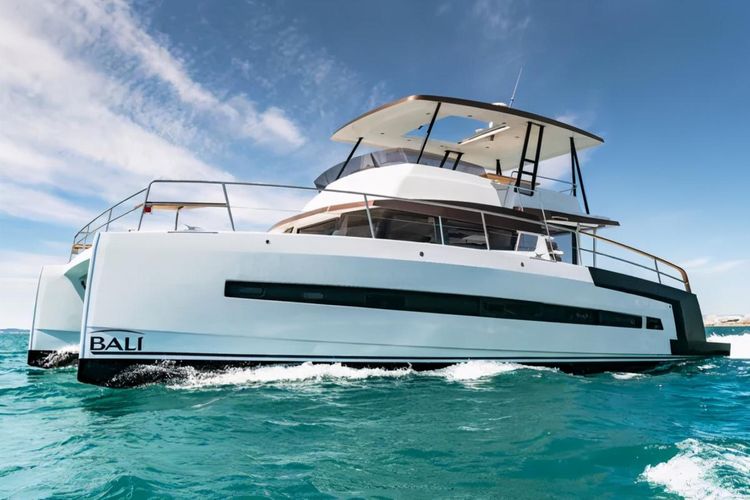
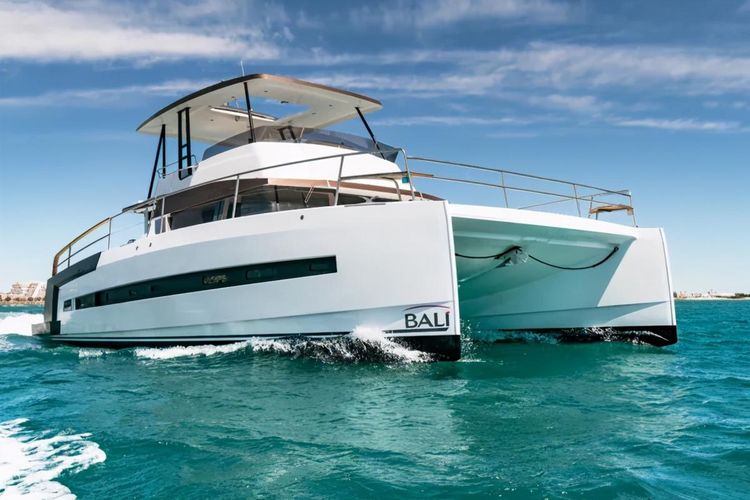
The iconic Bali, known as the “hardtop open salon,” features a rear wall that opens completely, allowing the stern and the living area to merge into a single space, creating a feel reminiscent of a loft apartment at sea.When my wife first stepped aboard, she said, “This isn’t like a boat—it’s like a vacation villa.”
But—this design comes at a cost.
The point beginners most easily overlook:
An open salon is paradise in tropical regions, but in temperate climates—such as the northern Mediterranean or the U.S. East Coast during spring and fall—when the wind picks up and the waves turn cold, you’ll find yourself desperately longing for a solid wall.
Compared to standard catamarans, the Bali’s hardtop and sliding door mechanisms are heavier, raising the boat’s center of gravity slightly. If you’re primarily focused on long-distance, transoceanic cruising rather than anchorage vacations, this design may not be the right fit for you.
My experience:
I sailed around the Bahamas for three years, and 90 percent of that time was spent in tropical, pleasant weather—the open-air salon experience was truly unbeatable.However, on one return trip from Florida, we encountered a cold front with force 5 winds and two-meter waves. The salon started letting in wind, and my wife, bundled up in a down jacket on the helm, berated me for a full four hours.
Therefore, before purchasing a Bali, you should carefully consider the specific waters where you’ll primarily be sailing and engaging in other activities.
How to Choose a Bali Model? Don’t Just Look at Length
The mainstream Bali models currently range from 4.0 to 5.4, but don’t assume bigger is always better.
Here’s a simple comparison to help you get up to speed quickly:
| Model | Length | Suitable Scenarios | Biggest Drawback |
|---|---|---|---|
| Bali 4.0 | 40 feet | Couples/small families, inshore cruising | Limited storage space |
| Bali 4.1 | 41 feet | Families + occasional guests; best all-around choice | Slightly low swim platform at the stern |
| Bali 4.5 | 45 feet | Long-distance cruising for groups; popular in the charter market | Deep draft; limited in shallow waters |
| Bali 5.4 | 54 feet | Luxury cruising + crew | High docking fees; difficult to operate solo |
My Mistake:
I bought the 4.0 model to save money, but I found that:
The kitchen countertop was too small—I had to chop vegetables in batches just to cook a proper meal.
The 100-liter fridge was simply not enough to store enough supplies to last 10 days after restocking in the Bahamas—it was far from sufficient.
With a helm station that only seats two people, when friends came over to hang out, one person had to man the helm while everyone else was crammed into the living area.
Later, when we switched to the 4.1, these problems were largely resolved.
Details to keep in mind:
Draft: Compared to a Lagoon of the same size, the Bali generally has a draft that is 5 to 10 centimeters deeper. The 4.5 model has a draft of 1.2 meters, so you’ll need to be extra careful when anchoring in certain shallow anchorages in the Bahamas.
Regarding clearance height, the Bali’s hardtop is slightly higher than a standard hardtop, making it prone to scraping the top when passing under bridges.For example, I once witnessed a Bali 4.5 scrape off its radar dome while navigating the Florida ICW—the so-called Intracoastal Waterway.
Sealant strips around doors and windows: this is a known weak point on Bali boats. I know three Bali boat owners personally; two of them replaced the rear door seals within their second year of ownership. It’s not a major failure, but it can be a nuisance.
Engine and Propulsion System: Don’t Under-Size It
The standard configuration for a Bali typically includes two 30–50-horsepower inboard diesel engines.
But many people opt for lower horsepower to save money.
My opinion:
For a Bali under 40 feet, you should have at least two 30-horsepower engines; I recommend two 40-horsepower engines.
For 40- to 45-foot Bali boats, the minimum is 2 × 45 horsepower, while I recommend 2 × 50 horsepower.
For boats over 45 feet, start with two 50-horsepower engines; if budget allows, go straight for two 60-horsepower engines.
Why?
Because Bali hulls are relatively wide, resulting in high wind resistance. Once, a friend of mine was piloting a 4.0-foot boat equipped with two 30-horsepower outboard motors as he was leaving the port in Morhead City. Facing a headwind of Force 4 and a 1-knot undertow, the boat’s speed was only 4.5 knots—it simply couldn’t outpace the waves and nearly crashed into the breakwater.
You might ask, “If you’re not racing the boat under normal circumstances, can’t you just slow down?”
Sure, but in emergency situations—like encountering a thunderstorm, needing to quickly clear a reef, or facing strong winds while docking—horsepower provides that crucial safety margin.
Another pitfall:
The rudder on the Bali is relatively large, and during reverse maneuvers, the boat veered significantly off course.The first time I tried reversing toward the dock, I turned the rudder all the way. The stern swung straight to the left by nearly two meters, nearly scraping against a Hunter boat next to us. This kind of situation requires specific practice.
Sails and Rigging: Don’t Trust the Term “Standard Equipment”
The sails that come standard with the Bali are usually adequate, but they’re certainly not outstanding.
Mainsail:
The standard is a Dacron (polyester) battenless sail, which starts to lose its shape after just two years of use.
I recommend upgrading to a battened mainsail—one equipped with battens—which will help maintain the sail’s shape much better and double its lifespan.
Taking it a step further: if you plan to sail long-distance, opt for laminated sails. While this is more expensive, the sails are 15 to 20 percent lighter, resulting in a significant increase in speed in strong winds.
Fore-sail:
I strongly recommend using a furling jib, as it allows you to furl the sail without having to go all the way to the bow when sailing solo.
However, be aware that the factory-installed furling system on the Bali is prone to jamming during furling. Among my acquaintances, three people replaced their factory furlers with Furlex or Harken systems within the first year.
Spinnaker/Asymmetric Sail:
In the Bali region, where wind speeds are 4.1 or lower, I do not recommend using a spinnaker. Operating a spinnaker requires a certain level of experience from the crew. The boat’s wide hull design results in significant heeling. For beginners, this situation can easily lead to the spinnaker flipping over rather than the boat capsizing.
If you really want to try it, install a symmetrical spinnaker equipped with a rotating boom; this will provide greater safety.
Electrical System: Bali’s Weak Point
This is the point I’m most eager to rant about.
The Bali’s factory-standard electrical system is really… just enough? No, it’s not.
Specific issues:
The battery bank consists of four standard 100Ah lead-acid batteries, totaling just 400Ah. However, Bali’s electrical system—including the refrigerator, autopilot, navigation, and air conditioning—consumes a significant amount of power.When anchored in the summer, the system can consume 200–250 Ah in a single night. As a result, the remaining charge the next day is simply insufficient to power the engine for recharging.
Solar Power: The manufacturer originally equipped the boat with only two or three 100-watt panels, which, even combined, provide a maximum of 350 watts.Under sunny conditions in tropical regions, these panels can replenish about 50 percent of the battery’s charge, but in areas with heavy cloud cover—such as Puget Sound—they are essentially useless.
My modification recommendation:
Batteries: Replace them directly with lithium-iron batteries—at least 600 Ah, preferably 800 Ah. They cost twice as much, but they last three times longer and weigh half as much.
Solar panels: Install at least 500 watts; 800 watts is recommended. They should be mounted on top of the hardtop, leaving space for air circulation.
As for the charger, the factory-installed one charged quite slowly, so I later replaced it with a multi-stage smart charger capable of at least a 50A input.
Here’s a scenario: if you plan to stay at anchor for more than three days and don’t intend to start the engine, you’ll need to install a small diesel generator. Personally, I installed a Fisher Panda 4.5 kW model, which is notably ultra-quiet.
A real-life example:
Back in 2023, I was anchored off Key Largo, Florida. While there, I met a woman who had been sailing south from New York. She happened to mention this Bali 4.5 model—and it was the top-of-the-line version, no less.Later, she told me, “I watch Netflix for two hours every night, and by the next morning, the milk in my fridge is actually lukewarm.”
I took a look and found that her battery capacity was only 300Ah, her solar panels were half-shaded by a structure, and the actual output was just 120W.
She later spent $7,500 at a local boat yard to replace the battery with a lithium-ion system and install additional solar panels.
Don’t follow her example.
Anchor and Windlass: Don’t Skimp
The Bali has a wide hull and a large windward surface area, so it requires a strong holding anchor when at anchor.
The standard configuration originally provided by the manufacturer is typically a 30 kg Delta-type or Bruce-type anchor.
To be honest, that’s not enough.
My experience:
On sandy bottoms, it’s barely sufficient.
On muddy or weedy bottoms, the Delta anchor is extremely prone to slipping. I once witnessed a Bali 4.5 being caught in a wind gust off the Florida Keys; it drifted with the wind, the anchor dragging along the seabed, and nearly crashed into a seawall.
Recommended upgrade:
Replace the anchor with a Rocna or Spade model, weighing at least 35 kg (for boats over 40 feet, 45 kg is recommended).
As for the anchor chain, listen up: you should use G40-grade short-link chain exclusively; mixing chain with rope is absolutely not allowed.Also, regarding the Bali anchor locker: it’s designed for relatively shallow waters, and using pure chain makes stowage much easier.
The factory-supplied electric windlass has sufficient power, but the batteries in the remote control tend to fail easily. It’s a good idea to have a wired remote control on hand or to replace it with a waterproof model.
Tip:
The bow anchor roller on the Bali has a tendency to get stuck on the crossbar when the anchor is being hauled in. Every time I perform an anchor-hauling operation, I have to walk up to the bow and place my hand on it to give it a little nudge—which is a real waste of time.
The solution is to add an anchor roller extension rod to position the anchor farther from the hull, thereby reducing the likelihood of it getting stuck.
Renting or personal use? That determines which configuration you buy
Many rental companies use the Bali, so there are a large number of “rental versions” of the Bali on the market.
The differences are significant:
| Item | Rental Version | Private Version |
|---|---|---|
| Interior | Durable, durable, and even more durable; monotonous color options | Optional premium wood trim and light-colored fabric |
| Systems | Simple and straightforward, easy to repair | More refined, but more complicated to repair |
| Air Conditioning | Usually installed only in the living room | Equipped in all cabins |
| Electronic equipment | Basic navigation + autopilot | Advanced radar, chart plotter, sonar |
| Deck layout | Designed for multiple users to take turns | Greater emphasis on privacy and comfort |
| Price | 10%–15% cheaper | More expensive but retains its value |
My recommendation:
If you plan to operate a rental business—such as renting in the Caribbean or the Mediterranean—then buy the rental version, as its maintenance costs will be lower.
If you’re buying for personal use, don’t get the charter version. Here’s why:
I once saw a charter version of the Bali 4.5 that was very inexpensive, but all the upholstery was made of dark gray fire-retardant fabric, the kitchen countertops were stainless steel (a material that scratches very easily), and there were no blackout curtains around the windows, so the sun would shine in and wake you up at 5:00 a.m.
Saving that little bit of money won’t buy you comfort.
Boat Inspection: Don’t Rely on “A Friend of a Friend”
When buying a used Bali, you must have a professional boat inspection done.
But many first-time buyers get ripped off.
Key inspection items:
1. For hardtop structures, inspect the bonded areas for cracks. Due to the significant forces they endure, Bali hardtops are highly prone to developing micro-cracks after prolonged exposure to vibration.
2. Main sail track: Check the wear on the track and sliders. If there is unusually severe wear, replacing them will require removing the hardtop, which can result in labor costs running into the thousands.
3. Seal the portholes: First, open all portholes, then rinse them with a hose for ten minutes to check for leaks. The seals on Bali portholes are prone to aging.
4. Hull: Check the hull gelcoat for any blistering. For catamarans, if blistering occurs on the hull, the cost of repairs can reach tens of thousands.
5. Engine Compartment: Check for any signs of water leakage. The ventilation design in Bali’s engine compartments is relatively basic, making them prone to condensation.
My Lesson Learned:
When I bought my first Bali 4.0, I tracked down “a friend of a friend who had experience with boat inspections.” He took a quick look and said, “No problems, it’s clean.”
Three months later, I noticed standing water in the left engine compartment. When I took it apart to inspect it, I found that seawater had seeped in through the shaft seal, corroding four mounting brackets.
Repair cost: $2,800.
After that, I wised up and spent $800 to hire a professional boat inspector who even crawled under the hull to check it out—it was well worth it.
Insurance: You probably won’t find cheap coverage
Insurance rates in Bali are 10%–20% higher than for a Lagoon of the same size.
The reason is simple: Bali has a relatively high accident rate.
Don’t get me wrong—Bali isn’t a bad boat—but many Bali owners are first-time buyers with limited sailing experience. Combined with the Bali’s specific handling characteristics—it’s wide and heavy, and tends to drift off course when reversing—this leads to a high number of accidents.
My advice:
Before purchasing insurance, check whether your sailing experience will be accepted by the insurance company.
If you don’t have at least three years of catamaran experience, your premiums will be significantly higher.
Consider taking a specialized sailing training course to earn your ASA 114 (catamaran handling) certification, which can help lower your premiums.
Real-life experience:
Every year when I renew my insurance, the insurance company always asks, “Have you filed any claims in the past year?”
One year I said, “No.”
They asked again, “Do you sail the Bali?”
I said, “Yes.”
“Okay, your renewal rate will stay the same, but you’ll need to sign a statement promising not to rent the boat to beginners,” they said after a three-second silence.
Frequently Asked Questions (The Real Ones)
Q1: Is the Bali suitable for a round-the-world voyage?
Let’s be honest: not really.
The Bali was specifically designed for coastal cruising and tropical vacations. Its open-saloon layout, wide hull profile, and high wind resistance are not features intended for transoceanic voyages.
If you’re planning to sail from Florida to the Bahamas, that’s doable.However, if you’re planning to cross the Pacific—say, from Panama to the Marquesas Islands—that’s a 3,500-nautical-mile journey with no resupply stops along the way. In that case, I’d recommend choosing a Lagoon 42 or an Outremer 45.
Q2: What is the resale value of the Bali?
It’s slightly lower than that of a Lagoon, but higher than that of a Fountaine Pajot.
First, the Bali brand isn’t as well-known as Lagoon; second, however, in specific markets—particularly the Caribbean and Mediterranean charter markets—demand for these boats exists and remains stable.
If you maintain the boat well, you can sell it for 65 to 70 percent of the original price after five years. However, if you’ve made too many modifications—such as adding a generator or changing the sails—the value will actually decrease for the average buyer.
Q3: Does a Bali boat need antifouling paint applied annually?
It depends on your sailing area.
In tropical waters—namely the Caribbean and the South Pacific—antifouling treatment is required annually, and the antifouling paint selected must be a polish-type, which is suitable for long-term mooring.
In temperate waters—such as the Mediterranean and the U.S. East Coast—you should apply antifouling paint every two years, opting for a hard antifouling paint, which is suitable for high-speed cruising.
I’ve made mistakes in the past. The first time was in the Bahamas, where I used a hard antifouling paint. Six months later, a layer of barnacles and green algae had grown on the hull, and the boat’s speed dropped by 0.8 knots.
Q4: Is the position of the anchor light on the Bali good?
No, it isn’t.
The Bali’s anchor light is mounted on the front edge of the hardtop, which is positioned rather high. When anchored at night, the light sways back and forth, making it very easy for nearby vessels to mistake it for a navigation light—that’s how it appears to others.
Here’s a solution: Install an LED anchor light on top of the mast and control it with a separate switch.
Q5: Can I operate the Bali 4.1 by myself?
Yes, but it takes practice.
The Bali 4.1’s helm is on the starboard side, offering good visibility; however, this view is limited when reversing. My recommendation is to practice reversing into the dock ten times in calm weather to master the use of differential steering with the engines.
Here’s a little tip: Think of the engines as a steering wheel. If you want to turn left, push the left engine to move forward; if you want to turn right, push the right engine to move forward.Once you’ve mastered this, you’ll be able to maneuver the boat around a tight dock on your own.
Final Tip
Before buying a boat, spend plenty of time on board trying it out.
Don’t just look at photos and videos.
Get on board, open the cabin door, and let the sea breeze blow in.
Then ask yourself: Could I live here for a month?
If your answer is “yes”—then go ahead and buy it.
Bali won’t let you down, as long as you’re prepared to deal with its little quirks.
—Mike, an old-timer who’s been sailing the seas for eight years