
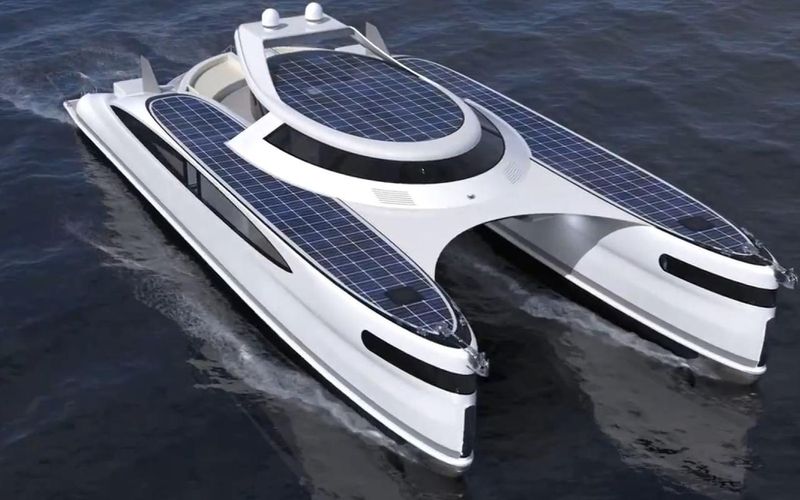
—A Must-See Comparison of Actual Costs Before You Buy
Summary:
Don’t be fooled by sales pitches. Power catamarans may look glamorous, but their maintenance costs could end up draining your wallet. Based on real-life experiences with four boats over five years, this article breaks down the hidden costs of major manufacturers—including Leopard, Fountaine Pajot, Lagoon, and local Hainan brands—covering everything from engine maintenance to hull repairs and marina fees, I’ll tell you which expenses are unavoidable and which ones you can cut back on—perfect for owners planning to buy a boat or those who’ve just entered the boating world.
Author’s Note:
My name is Dave, and I’m a Florida-registered recreational boat owner. Over the past five years, I’ve owned, chartered, and helped friends repair motor catamarans—spanning four different brands and ranging in size from 30 to 45 feet.I’ve never been a captain, nor do I hold any certifications; the experience I’ve gained comes purely from countless mistakes along the way. All opinions in this article are based on my personal experiences and discussions with local boat shop technicians, and do not include any manufacturer sponsorship.
Maintenance Costs for Motor Catamarans? Twice as Expensive as You Think
Have you seen those photos online?
Sunshine, blue seas, and beer on deck.
No one takes pictures of the oil stains in the engine room, nor of the bucket after bucket of barnacles scraped off the hull.
A motorized catamaran has two engines, two propellers, and two rudders—and it seems like almost all related components come in duplicate.This means that maintenance costs are generally 1.5 to 2 times higher than those of a monohull.
My first boat was a Leopard 40 PC, model year 2508. When I bought it, the salesperson claimed, “Maintenance costs are low, and catamarans are fuel-efficient.” The fuel efficiency was indeed true—but low maintenance? Hmph.
During the first quarter, the warning light on the left engine came on. I had it towed to a repair shop, where diagnostics revealed that the impeller in the seawater pump had deteriorated. For just this one small part, both engines had to be replaced; including labor costs, the total came to $1,200.
Next came hull cleaning. Since Florida’s waters are relatively warm, if you don’t have it cleaned every three months, a sizeable “forest” can grow on the hull. Since catamarans have two hulls, the area requiring cleaning is 40 percent larger than that of a monohull. A single dry-docking session plus repainting starts at $2,500.
So, if you think power catamarans save money by “cutting maintenance costs,” wake up.
The Truth About Maintenance Costs from Major Manufacturers: Leopard vs. Lagoon vs. Fountaine Pajot vs. Chinese Brands
Many people ask: Which brand has the lowest maintenance costs?
The answer is: There’s no “lowest”—only differences.
I’ve listed four brands that I’ve personally experienced firsthand; the data comes from my own repair records and quotes from local shipyards, providing you with a realistic point of reference.
| Brand | Average Annual Maintenance Cost (35–40 ft, Florida, 2023–2025) | Biggest Pain Points | Pitfalls Beginners Often Overlook |
|---|---|---|---|
| Leopard 40 PC | $8,500–$11,000 | Engine compartment is too small; changing the oil requires removing interior panels | Water accumulation in the bilge; the bilge pump is prone to burning out |
| Lagoon 42 | $9,000–$12,500 | Complex steering system; repairs require genuine parts | The windlass is prone to rust; severe corrosion from seawater |
| Fountaine Pajot MY 40 | $7,500–$10,000 | The hull is lightweight, making repairs after a collision difficult | The propeller is prone to getting tangled in fishing line; each cleanup costs $500 |
| A domestic brand from Hainan (45 feet) | $6,000–$9,000 | Unreliable parts supply; waiting 2–3 weeks is common | The electrical system layout is disorganized, posing a high risk of short circuits |
Have you noticed?
The Leopard isn’t the most expensive model, but it’s quite difficult to repair.I remember when we were changing the oil; the mechanic said, “What were you thinking when you designed this?” Just reaching in with two fingers to tighten a screw took a full three hours. The labor cost for that repair was $450.
What about the Lagoon? It’s certainly luxurious, but building one is extremely labor-intensive.My friend’s Lagoon 42 had a hydraulic line on the rudder actuator burst, so we had to have a replacement shipped from France and wait three weeks. The daily docking fee was $80, and we were just sitting there waiting for nothing.
Fountaine Pajot is relatively user-friendly, but its hull is simply too lightweight.Once, when my friend was docking, there was a minor scrape, and the hull immediately developed a crack. The cost to repair the fiberglass was $1,800. If it had been a Leopard, under the same impact, it might have just chipped the paint.
Are Chinese brands the cheapest? You’d better be mentally prepared for what you’re getting. Their circuit diagrams are hand-drawn, and the screw sizes aren’t standardized.I once helped a friend repair one of these boats, and just finding the right wrenches took a long time—there was a mix of 6mm, 8mm, and 10mm sizes. The parts had to be mailed from China, and the shipping costs were more expensive than the parts themselves.
Engine: The Joys and Sorrows of Twin Engines
For a powered catamaran, the engine is its soul.
You don’t have to mention it if you don’t want to. But I’ll tell you the truth: sailing a catamaran on a single engine is an absolutely dreadful experience.
Once, my right engine malfunctioned and failed, so I had no choice but to head back to the dock on a single engine. The boat kept listing to the left, and I had to constantly turn the wheel to the right.For the entire 15-nautical-mile journey back to the dock, I was so tense at the helm that my palms were sweating. And even though we were moving at a mere 6 knots, we were overtaken by a trawler.
That’s why it’s essential to maintain both engines properly.
Recommended maintenance intervals:

Oil change: Every 100 hours or quarterly (whichever comes first)
Seawater pump impeller: Replace once a year—don’t skimp on this
Fuel filter: Replace every 200 hours
Propeller inspection: Every six months
For two Yanmar 4JH45 diesel engines, I’ve calculated that the annual basic maintenance—which includes engine oil, filters, belts, and impellers—incurs material costs of approximately $800, plus labor costs, which range from $600 to $1,000, depending on whether you choose to perform the work yourself.
A common mistake beginners make is focusing solely on operating hours without considering the operating environment.
I boat in Florida’s nearshore waters, where the depth is only three to five meters, causing the engine to suck in a lot of sand. My cooling system clogged once in just two years, and the cleaning cost $900. If you boat in open waters, you might not encounter this problem for five years.
Therefore, engine maintenance costs vary from person to person; don’t simply copy someone else’s maintenance schedule.
Hull and Deck: Sunlight Is the Biggest Enemy
Power catamarans have a large deck area—40% to 50% larger than that of monohulls.
What does a large deck mean?
More surfaces to maintain.
Teak Deck: Requires annual oiling; one bottle of oil costs $120, and labor costs $800
This is not a non-slip coating; re-application is required every three to five years, with material and labor costs ranging from 3,000 to 5,000 yuan; this process must be repeated each time.
After two years of UV exposure, the canvas canopy will fade; replacing a set costs between $1,500 and $2,500.
Florida’s high temperatures cause window sealant to crack after just three years, and a single repair can cost as much as $600.
Here’s something that actually happened to me: I once stepped into a hole—turns out I’d forgotten to cover the electronic equipment on the helm.
Once, I was away from the boat for two weeks, and the GPS screen on the helm was damaged by direct sunlight. Replacing it with a Raymarine screen cost $1,800.
Here’s the revised version: The lesson is that every piece of electronic equipment needs to be covered. Spend fifty dollars on a sunshade, and you’ll save two thousand dollars.
Additionally, catamarans require more frequent hull cleaning because the water flow between the two hulls carries more sediment. I have my hulls cleaned twice a year, at a cost of $1,500 to $2,000(including antifouling paint). If you’re in cold waters, such as the Pacific Northwest, cleaning once every two years may be sufficient.
The bottom line is that hull maintenance depends on the conditions of the waters where you sail. In areas with warmer water and higher nutrient levels, biofouling occurs much more rapidly. While scraping the hull yourself might save you a little money, it can take a toll on your back and may end up being counterproductive.
Living Systems: Air Conditioning, Fresh Water, Toilets—They All Need Attention
The living quarters on a powered catamaran are larger than those on a sailboat, but the systems are also more complex.
Air conditioning: Catamarans are typically equipped with two split-system air conditioners, one in the port hull and one in the starboard hull. Each unit requires annual cleaning and refrigerant recharge, costing between $400 and $600.
Freshwater system: Catamarans have very large freshwater tanks—for example, the freshwater tank on my Leopard holds 150 gallons—but the water pump is prone to failure. I’ve actually had to replace a pump once, which cost me $350. Then there’s the water heater—its anode rod needs to be replaced every year, at a cost of $50 per replacement.
Toilets—this is a topic rarely discussed, but sooner or later, you’re bound to run into it.
You can’t use just any toilet paper on a boat—you have to use the quick-dissolving kind. A pack of that costs $8, and you’ll go through two packs a month. If you use regular toilet paper and clog the toilet, it’ll cost $300 to unclog it.
Once, a friend of mine used regular toilet paper, which caused the toilet to clog, leading to sewage backing up into the shower—a scene I’d rather not recall. The repair and disinfection cost $700.
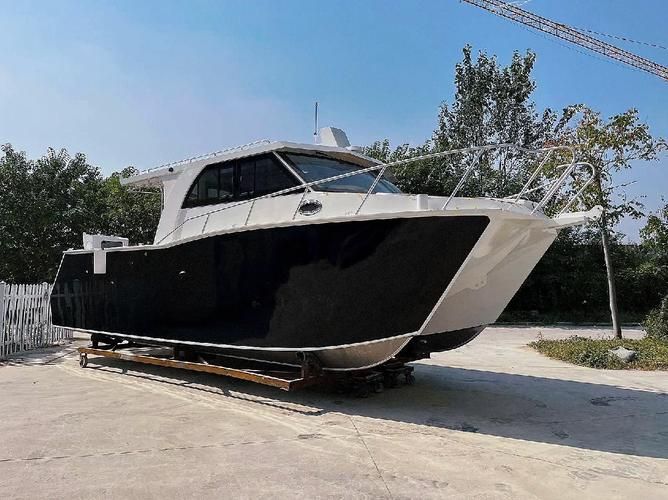
The guide in my hand notes that the toilet system requires a weekly dose of deodorizer, which costs 15 yuan per bottle. Don’t skimp on this. If you try to save that small amount of money, you’ll end up paying a much higher price.
Docking and Marina Fees: The Overlooked Fixed Costs
Many people forget this item when calculating maintenance costs.
Power catamarans have a very shallow draft, allowing them to reach many places that monohulls cannot. However, docking fees are calculated based on the boat’s length.
For a 35-foot monohull at a typical Florida marina, the monthly fee ranges from $600 to $800.
For a 35-foot catamaran, due to its greater width, some marinas charge for a “double berth,” with fees ranging from $1,200 to $1,500 per month.
I have a friend who, after buying a boat, realized that the marina fees were almost as high as his mortgage. In the end, he had no choice but to moor at a remote marina, which meant it took 40 minutes every time he had to sail to the main island.
If you plan to moor long-term, be sure to ask before choosing a marina: Is there a catamaran surcharge?
Alternatively, anchoring is another option.
Catamarans are quite stable when anchored, but you’ll need to purchase a suitable anchor. I recommend either Delta or Rocna; a proper anchor costs between $400 and $800. Beginners should avoid buying cheap ones—I once used a cheap anchor and it dragged in high winds, nearly causing the boat to run aground.
Anchoring can save you dock fees, but it takes time to learn.
Frequently Asked Questions: The Most Common Concerns for Beginners
Q: What is the approximate total annual maintenance cost for a power catamaran?
Depending on the size of your boat and how often you use it, for a medium-sized vessel between 35 and 45 feet in warm waters like Florida, it’s fairly standard to budget $12,000 to $18,000 for the entire year(This covers mooring fees, insurance costs, routine maintenance, and repair costs in case of unexpected incidents.) If you have some hands-on skills, you can reduce these costs to $8,000 to $10,000.
Q: If an engine breaks down, can I replace just one?
Technically, it’s possible. However, both engines must be the same model; otherwise, the boat’s course will be off. Additionally, the resale value of a single engine drops significantly when sold separately. Therefore, it’s recommended to replace both at the same time.
Q: Is diesel or gasoline better?
Diesel engines, which are used in powered catamarans, are fuel-efficient, durable, and safe. Gasoline engines have relatively lower maintenance costs, but they consume more fuel and pose significant risks related to the explosion of volatile vapors. I once witnessed a gasoline-powered catamaran that was destroyed by a fire caused by static electricity while refueling. Therefore, choosing a diesel engine is non-negotiable.
Q: Are maintenance costs higher for used boats?
Not necessarily, but if you’re purchasing a boat that’s more than 10 years old, you should be prepared for higher costs. The sealants, fuel lines, and electrical systems on older boats are likely to have deteriorated. I once saw a used Leopard that cost a total of $22,000 in repairs during its first year after purchase, which was more than the purchase price of the boat.
Q: How much can I save by doing it myself?
Changing the oil, replacing filters, cleaning the AC, and replacing seals—I do all of these myself.That adds up. Over the course of a year, I can save between $3,000 and $5,000. However, for engine overhauls, AC refrigerant refills, and hull repairs, I recommend seeking out a professional. If you try to save money in the wrong places, it could end up costing you more.
Final Thoughts:
Power catamarans are beautiful. They’re spacious, stable, and comfortable. But the maintenance costs are no small matter.
I’ve seen too many people buy one on impulse, only to sell it at a loss a year later because they can’t afford the upkeep.
If you’re truly serious about buying one, you must plan your budget in advance—not just for the purchase price, but also for annual maintenance costs, mooring fees, insurance, and even potential upgrades.
Buying a boat isn’t the end—maintenance is the real journey.
I hope these lessons learned from my own mistakes can help you avoid wasting a few thousand yuan.