
Abstract
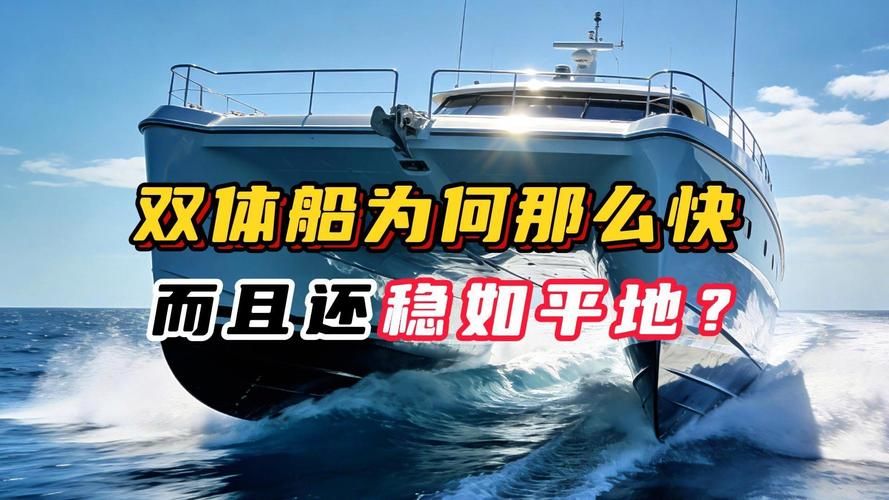
Operating the Aquila power catamaran is completely different from operating a monohull; it has significant steering inertia, tends to drift off course when docking, and the propellers are prone to hitting the bottom in shallow water.I’ve been sailing in Florida Bay and the Bahamas for three years—I’ve scraped the hull, hit reefs, and even nearly ran aground during high tide.This article doesn’t cover textbook theory; it focuses solely on the challenges I’ve personally faced, the pitfalls I’ve encountered, and practical tips I’ve found to be effective through real-world experience. It’s ideal for beginners who are just getting started with an Aquila or are planning to purchase a power catamaran.
Why the Operating Logic of Motor Catamarans Is “Completely Different” from That of Monohulls
My first boat was a monohull powerboat—a 28-foot Bayliner. I’d sailed it for five years and considered myself a seasoned veteran. Yet, the first time I took the helm of an Aquila 36, I nearly crashed into the dock railing.
The reason is simple:
The beam of a hydrofoil catamaran—specifically the Aquila 36—exceeds 14 feet, which is quite substantial compared to an SUV traveling sideways.When a monohull is docking, its bow has a relatively small turning radius. However, at low speeds, a catamaran is virtually incapable of performing a “swing-around” maneuver; in this situation, you must anticipate a delay of about 3 to 5 seconds in advance.
On catamarans with widely spaced propellers, the engines on each side generate thrust independently. At low speeds, the thrust on the left and right sides is unbalanced, causing the hull to yaw. You might think you’re turning the wheel, but in reality, you’re adjusting the differential throttle between the two sides.
That was my first time performing a docking maneuver. The wind speed was about 15 knots, creating a crosswind. Following the standard procedure for monohulls, I turned the wheel to port and applied a little throttle to the starboard engine. However, the stern didn’t budge at all, while the bow swept straight toward the dock.Luckily, a friend on shore used a mooring line to pull the boat back; otherwise, I would have had to replace the fender.
A detail beginners often overlook:
When a catamaran is traveling at low speed, its rudder effectiveness is virtually zero. You’re not controlling the direction; instead, you’re using the throttle differential between the two engines to control the boat’s attitude. Don’t count on the rudder to help you achieve this.
Docking at the Pier—Three Proven Techniques
1. Slow down early; don’t wait until the last 50 meters to cut the throttle
When I first got the Aquila, I had the same habit as with monohulls: I didn’t start slowing down until just before entering the harbor. However, the boat was simply too heavy, and its inertia was too great—I just couldn’t stop it.
The correct approach:
Start easing off the throttle at least 300 meters from the dock, reducing speed to 4 to 5 knots. Then, use the “differential speed” between the port and starboard engines to adjust the heading, rather than relying on the rudder.
On one occasion, at a dock in Fort Lauderdale, the water was calm and the wind was still. I began reducing speed in advance, then shifted the port engine into reverse while putting the starboard engine in neutral, and the boat moved straight toward the dock.An elderly captain standing nearby watched for quite a while before asking me if I’d ever operated a tugboat. I told him honestly that I hadn’t—I’d just watched a few days’ worth of YouTube videos.
2. Berthing in a Crosswind—Engine Differential is Key
Crosswinds are the most frustrating. Catamarans have a large wind-exposed surface area on their sides, so even the slightest increase in wind speed causes the hull to immediately start drifting sideways.
My approach:
Point the bow slightly into the wind, at an angle of about 15 degrees.
Put the left engine in a slight forward gear, and the right engine in neutral or reverse to keep the boat from spinning in circles.
As you approach the dock, immediately shift the outer engine into reverse and put the inner engine in neutral; the boat will then move straight across and pull up alongside the shore.
A pitfall:

The first time I tried this technique in crosswinds, I applied too much throttle, and the bow crashed straight into the dock. I only realized later that throttle differential should be applied in “short bursts”—not continuously. A quick burst, then a pause—this allows the boat to gradually adjust its course.
3. Don’t Rely on Mooring Lines to Save You
Many beginners have this misconception: if they fail to dock, someone on shore can simply pull the mooring line to save them. However, catamarans are simply too wide; if the mooring line is pulled at the wrong angle, it will actually pull the boat off-center.
My advice:
First, secure a mooring line in the middle of the hull, then slowly adjust the bow’s angle. Do not secure a line at the bow or stern first, or the hull will start spinning in circles.
Navigating Shallow Waters—The Aquila’s Draft Is “Shallower” Than You Think
The Aquila’s draft is around 2.5 feet, which is much shallower than that of a monohull of the same size; however, this does not mean you should carelessly head into shallow waters.
Real-life example:
Once, in the Exuma Islands of the Bahamas, I looked at the chart, which indicated a depth of 4 feet, and assumed there would be no problem. However, the hull actually scraped directly against the sandy bottom.Fortunately, I was traveling relatively slowly at the time, so only a layer of paint was scraped off. Later, after talking with a local skipper, I learned that the water depth in that area is affected by the tides and is only 2.5 feet at low tide.
Tip to Avoid This Pitfall:
When navigating in shallow waters, raise the engine to a semi-trimmed position. The Aquila’s engine has an electric trim function, which is incredibly convenient.
Pay close attention to what’s marked on the nautical charts—that’s the “low-tide depth,” not the so-called “average depth.” Many charts show the average high-tide depth, but at actual low tide, there can be a difference of one to two feet between the two.
If you feel vibrations from the hull, immediately reduce speed and inspect the propeller. I’ve seen people damage propeller blades—repairs can cost at least $2,000.
Turning and Drifting—Why Catamarans Can’t Turn Like Monohulls
Catamarans have a large turning radius, which is determined by their physical structure. There is significant hydrodynamic drag between the two hulls, and when turning, the drag on the outer hull pushes the boat outward.
My Empirical Data:
| Hull Type | Turning Radius (at 15 knots) | Steering Response Delay |
|---|---|---|
| 28-foot monohull powerboat | Approx. 30 feet | 0.5 seconds |
| Aquila 36 | Approx. 55 feet | 1.5 seconds |
| Aquila 44 | Approx. 70 feet | 2 seconds |
Data is from my own GPS track logs; it is not official data.
Operating Tips:
Start turning the tiller earlier and at a steeper angle. For example, if you want to turn the boat 90 degrees to the right, you should start turning the tiller at least three seconds in advance.
Avoid sharp turns. When a catamaran makes a sharp turn, the outer hull lifts out of the water, affecting stability.
When following another boat, maintain a larger safety distance. I usually keep a distance of at least two boat lengths, which is roughly 70 to 80 feet.
Fuel Efficiency—Don’t Trust the Official Figures
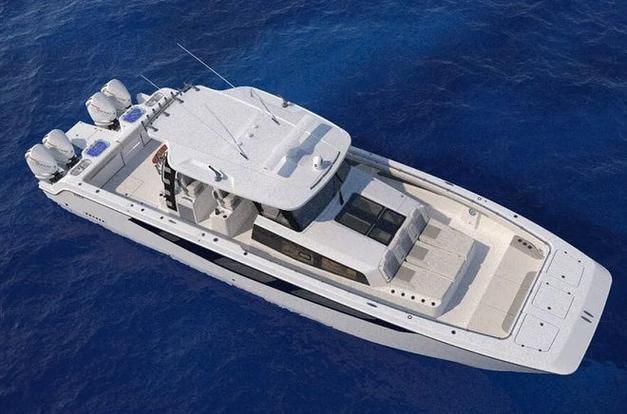
Aquila’s official claims state that fuel consumption can reach 1.2 gallons per nautical mile. However, my actual measurements show:
At a cruising speed of 20 knots, fuel consumption is approximately 1.5 gallons per nautical mile
At a cruising speed of 25 knots, fuel consumption is approximately 1.8 gallons per nautical mile
At a slow cruise of 10 knots, fuel consumption is approximately 0.9 gallons per nautical mile
Why is the discrepancy so large?
The conditions under which the official figures were measured are ideal—no wind, no waves, a clean hull, and a light load.However, in real-world sailing conditions—with seaweed on the hull, sustained winds and waves of Force 3 to 4, fresh water on board, a full fuel tank, and a variety of equipment—fuel consumption will inevitably be higher.
Here’s a tip:
When sailing in the Gulf of Florida, I’ve found that maintaining a constant speed of 18 to 20 knots keeps fuel consumption within the range of 1.3 to 1.4 gallons per nautical mile, offering the best value.If the speed is increased beyond that, fuel consumption rises very rapidly; if the speed is reduced, fuel can be saved, but the time cost becomes too high.
Frequently Asked Questions (Real, High-Frequency Questions)
Q: Is the Aquila power catamaran suitable for beginners?
Personally, I think it’s feasible, but you must first spend a day or two specifically training on docking and steering—don’t head straight out to sea for a long voyage.My recommendation is to first practice differential engine control in calm waters, using a buoy as a makeshift dock to simulate a docking scenario. If you don’t have an instructor, search for “catamaran docking tutorial” on YouTube and watch it a few times.
Q: Are there any warning signs when navigating in shallow waters?
Yes. The Aquila’s hull emits a low-frequency vibration. If you notice the boat suddenly feeling “heavier” or the propeller sound becoming muffled, it’s highly likely that the propeller blades have struck the sandy bottom. Slow down immediately and check the situation—do not force your way through.
Q: Is it equipped with Yamaha twin engines or Mercury engines?
My boat is equipped with twin 250 Yamaha engines, which have been in service for three years without any issues. I’ve heard that Mercury engines offer more torque, but replacement parts are not easy to find in the Bahamas. Yamaha parts can be purchased anywhere—this is something I’ve learned from personal experience.
Q: Can I still go out to sea in a Force 5 crosswind?
It’s possible, but you’ll need to watch out for the boat yawing. Catamarans are extremely stable in crosswinds, but you’ll notice the boat sways quite a bit from side to side.My advice is to reduce your speed to below 15 knots and engage the autopilot. If you’re a beginner, don’t go out to sea in Force 5 winds; wait until the weather improves before setting sail.
Q: Between the Aquila 36 and 44, which is better suited for beginners?
Because the 36 has a shorter hull and a smaller turning radius, it’s easier to handle. Although the 44 offers more space, docking is significantly more challenging. I recommend that beginners start by sailing the 36 for a year before upgrading to the 44. Don’t go for the bigger model just yet.
Author’s Note: I am an amateur sailor with eight years of sailing experience. For the past three years, I have primarily sailed the Aquila 36 and 44 along the Florida coast and in the Bahamas.All data in this article comes from my own logbooks and GPS records, and some tips are based on discussions with local skippers. I have no conflicts of interest; the brands and equipment mentioned in this article are products I have personally used.