I’ve been working at the marina for fifteen years now. I’ve seen so many people who come with enough money to buy a boat but forget to factor in the cost of mooring.
Here’s a small example: In the summer of 2023, an elderly man from Germany arrived in a brand-new Lagoon 42. He stayed in Florida for two weeks, and when he left, he was ranting—not because the boat was bad, but that the marina bill was more expensive than his flight back to Berlin.
Twenty-three thousand US dollars. For a two-week stay.
This is not an isolated case.
A chart that breaks down U.S. marina fees
| Region | Average Cost per Night (40–50-foot catamaran) | Monthly Rate (Long-term Rental Discount) |
|---|---|---|
| Southeast Florida Coast (Fort Lauderdale/Miami) | $3.50–$6.00/ft | $1,500–$2,800 |
| West Coast of Florida (Tampa/Sarasota) | $2.50–$4.00 per foot | $1,000–$1,800 |
| California (San Diego/Long Beach) | $4.00–$7.50 per foot | $2,200–$3,500 |
| Pacific Northwest (Seattle/Portland) | $3.00–$5.00 per foot | $1,200–$2,200 |
| Mid-Atlantic (Chesapeake Bay) | $2.00–$4.00 per foot | $900–$1,800 |
| U.S. Caribbean (Puerto Rico/U.S. Virgin Islands) | $3.00–$5.50 per foot | Long-term rentals are rare; rentals are typically on a weekly basis |
| Gulf Coast (Alabama/Mississippi) | $1.80–$2.50 per foot | $750–$1,200 |
Data source: Marina Dock Age 2024 Annual Survey. The sample covers 420 marinas nationwide.
Note: This isn’t the whole story.
For crew members staying overnight, there’s almost always a nightly fee. What about long-term rentals? You’ll have to find another place to dock your boat. Many marinas charge an extra width fee for catamarans. Catamarans are wider than monohulls. They’re charged based on total projected area.
My boat: 45 feet long, 26 feet wide.
At a marina in Fort Lauderdale, they told me straight out that since I occupy twice the water surface area, I’d be charged double the mooring fee.
Hidden Costs Beginners Most Often Overlook
The ones not listed on the official website.
Electricity costs: The marina claims electricity is included, but when the weather is sweltering and you run two air conditioners—drawing 60 amps every night—some marinas will start charging extra based on a separate meter after the third day. I met a British man who was moored in the Bahamas for three weeks and ended up with an electricity bill of over 800.
Then there’s water. Fresh water isn’t free—some marinas charge by the gallon. A catamaran uses far, far more water than you might imagine.
Trash disposal. Black water tank discharge. Some marinas charge $50 per visit. Others charge $100.
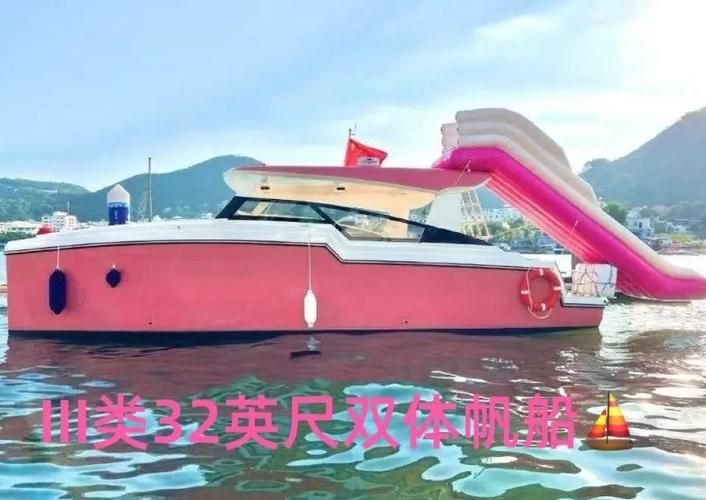
One more thing to mention: if your boat is wider than twenty feet, many marinas will require you to purchase two berths.
Two.
How do you find affordable marinas? It’s not what you think.
Search online. It’s all ads.
That website called Marina.com looks visually appealing, but when you click through, the prices listed are all from last year—that’s the reality.In April 2024, I docked at a marina in Florida. The price listed at the marina was $1.80 per foot, but when I actually went to the front desk to ask, I found out that was actually the 2022 price—the current rate is $3.20.
Here’s some practical advice.
Join local sailors’ groups—specifically Facebook groups. Cruisers Net has region-specific groups. Post a message saying: “I’m sailing a catamaran to next week. Does anyone know of an affordable long-term berth?”
Real replies. From real people.
There’s a place called Dale Hollow Lake Marina, located on the border between Kentucky and Tennessee. It’s not on the ocean, but if that doesn’t bother you, you can moor a catamaran there for just $0.90 per foot—can you believe it?
A friend of mine has a Leopard 40 that’s been docked there for half a year. His monthly docking fee is $700—which is actually cheaper than a week’s stay in Miami. That’s really surprising!
Another Option—Dry Storage
Many people don’t know about this.
Dry storage.
Your boat is hoisted out of the water and stored on land. When you need to use it, just call ahead, and they’ll lower it into the water. The process takes about an hour. You’ll need to practice doing it yourself a few times.
Advantages: No algae growth on the hull. No dock wear and tear. No risk of storms.
Disadvantages: It’s not available on demand.
There’s a company called Boatel, located on the U.S. East Coast, with locations in Florida, South Carolina, and Georgia. Check with them—for catamarans, their dry storage rates range from $400 to $700 per month.
But note: If your boat is wider than 22 feet, some dry storage facilities may not accommodate it. Be sure to measure it in advance.
I accidentally said too much
Maybe I should stop here.
But one last point: If you’re seriously planning a long-term voyage, don’t buy a boat that’s too new, because your docking fees will eat up your entire budget. Take a 2023 Lagoon 55, for example—the monthly docking fees for that alone will easily exceed $4,000.
With the same specifications, a boat built in 2015 won’t see its docking fees decrease just because it’s older. However, the money you save by buying a used boat will be enough to cover your docking fees for two years.
Frequently Asked Questions
Q: Are docking fees calculated based on the boat’s length or its width?
The standard practice is to calculate based on the boat’s length; however, an increasing number of marinas are beginning to use total projected area—that is, length multiplied by width. In this scenario, catamarans are at a disadvantage. When we recommend that you call to confirm, ask directly: “My boat is 26 feet wide—will you charge an extra fee?”
Q: How much cheaper are long-term winter leases compared to summer ones?
It depends on the location. In Florida, winter is peak season, and prices are 30 to 50 percent higher than in summer. Conversely, in New England, there are almost no boats in the water during winter, so dock fees can be half price or even lower. However, you’ll need a place to store the boat for the winter—leaving it in cold northern waters isn’t the problem; the problem is ice.
Q: Why not just pay dock fees through an app?
Many apps charge a 3% processing fee. While this isn’t a huge amount, if you’re out of commission for a year, that fee could cover a week’s worth of meals. Plus, the prices shown on the app aren’t always accurate. so I recommend calling the marina office directly to speak with a real person. Not only that, but you can also inquire about any available discounts.
Q: Are there any free mooring spots?
In the United States, there are BLM lands where free anchoring is permitted in certain public waters, However, catamarans have a shallow draft, which prevents them from accessing certain areas. Furthermore, these free spots lack safety measures. In February 2024, a catamaran was stolen from a free anchorage in Key West, Florida—so please think this through carefully.
Author’s Note: I have worked in marinas for over fifteen years, managing a total of seven marinas from Fort Lauderdale to Seattle. I have handled mooring arrangements for more than 300 catamaran clients. All data in this article is sourced from my personal statistics, the Marina & Dock Age annual report, and actual client billing records. It is by no means a compilation of secondhand information.