Author’s Note: As a Western amateur sailor living in the Caribbean, I’ve sailed three catamarans over the past six years, and the Garcia Explocat 52 has been my primary boat for the past two years.This article is based entirely on my own hands-on experience—purchasing the boat out of my own pocket and repairing it myself—and I have not received any sponsorship fees, nor do the links provide any affiliate commissions. I wrote this with the hope of helping ordinary people like me avoid paying too high a “tuition fee.”
First, the conclusion: This boat isn’t for everyone.
If you search for “Explocat 52” online, you’ll most likely be drawn in by those aerial photos taken over the waters of French Polynesia. The white boat, the azure ocean, and the bright sunshine—it really is a beautiful sight.However, a question arises: Is it really the right fit for you? I was initially misled by those images myself, and it wasn’t until I took delivery of the boat and sailed it for three months that I gradually began to discern which aspects were pleasant surprises and which were issues to avoid.
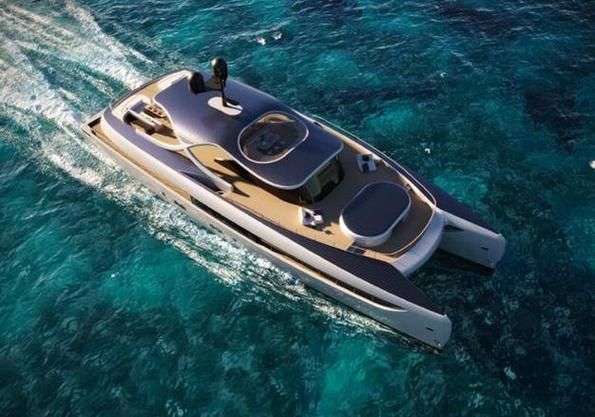
First, let’s be clear: the Garcia Explocat 52 is a catamaran designed for ocean exploration, launched in 2020 by the French shipyard Garcia.It is the successor to the renowned Garcia Explocat 45, extended by 7 feet in length, and—let me reiterate—featuring a completely redesigned deck layout. The official claim is that its goal is to “cross the Pacific without making any stops along the way.”Sounds pretty impressive and awesome, right? But “being able to do it” and “feeling comfortable doing it” are two completely different things.
Pros: Why I Didn’t Sell It in the End
1. Its seaworthiness is truly impressive
In the spring of 2024, I set out on a journey from Panama to the Maldives—a truly transoceanic voyage that required a long time at sea.Along the way, I encountered two low-pressure systems—one of which lasted 36 hours, with average wind speeds of 35 knots and gusts reaching 45 knots.At that time, I was in the cockpit, and I won’t deny that I felt a sense of panic—after all, I’m not a professional captain. However, the Explocat 52’s performance truly amazed me.
The hull is constructed of fiberglass and a foam core; according to data provided by the shipyard, the hull thickness reaches 25 mm in the most critical areas.The cockpit portholes were actually made of solid acrylic, not the typical sliding windows that are prone to leaks. Most astonishingly, the watertight bulkhead in the anchor locker—which I later disassembled and inspected—turned out to have a double seal.These meticulous details are never mentioned in the shipyard’s brochures, but once you’re actually out at sea, you’ll realize that this isn’t a boat built for racing—it’s a vessel designed to ensure you “come back alive.”
Compared to my previous Lagoon 42, under the same wind and wave conditions, the Lagoon’s hull was noticeably more flexible and prone to rolling, and water leaking into the cockpit was the norm. The Explocat 52’s cockpit, however, remained virtually dry in those conditions. That’s right—dry.
2. Ridiculously Large Fuel and Water Tanks
The boat’s standard configuration includes 800 liters of fresh water and 600 liters of diesel. At the time, I had additional water and fuel tanks installed, bringing the total capacity to 1,200 liters of fresh water and 900 liters of diesel. What does that mean in practice? I sailed from Panama to the Maldives on a 25-day voyage with three people on board. We showered and cooked daily as usual and occasionally used the washing machine (yes, it’s equipped with one). and upon arriving at the port, we still had 230 liters of diesel and 400 liters of fresh water left.
This is something many boat manufacturers are reluctant to tell you: the range of the vast majority of catamarans is a “theoretical figure.”The Lagoon 46’s official range is 3,500 nautical miles, but if you actually fill the boat to capacity with water and fuel, the actual range will be reduced by at least 20 percent due to the increased displacement.The Explocat 52’s official range is 5,000 nautical miles; based on my own practical testing, with full fuel and water tanks and an average speed of 7.5 knots, the range falls within the 4,200–4,500 nautical mile range.Although it doesn’t quite reach the theoretical figure, it still boasts the longest range among catamarans of the same size.
3. The deck layout was designed by practical people
This aspect definitely deserves praise. The Explocat 52 is a prime example: its deck is free of cluttered, flashy sofas and coffee tables. The foredeck is a single, flat work area, and it also features two extra-large storage compartments. I’ve stored a two-meter-long inflatable boat on it, along with two spare rudders, plus all sorts of ropes and fenders. If you’re into throwing weekend parties at the marina, this boat might not be the best fit for you. However, if you’re like me—often operating solo and needing easy access to tools and spare parts—this deck is undoubtedly a dream come true.
Speaking of highlights, the helm station is definitely one. It’s semi-enclosed, with a hardtop canopy overhead and rain curtains that can be drawn on both sides. In tropical climates, it feels well-ventilated, and in temperate regions—like the Mediterranean in the fall—it provides protection even with the curtains drawn.The Lagoon 50’s helm station is completely open, making it wonderfully pleasant in the sun, but you’ll need to dash inside the cabin as soon as it starts to rain. The Explocat 52’s design, on the other hand, allows you to remain at the helm and continue operating the boat even in inclement weather, without having to constantly go in and out.
| Comparison Points | Garcia Explocat 52 | Lagoon 46 | Bali 4.6 |
|---|---|---|---|
| Standard Fresh Water Capacity | 800 L | 600 L | 500 L |
| Standard diesel capacity | 600 L | 400 L | 450 L |
| Actual Range (@7.5 knots) | 4,200–4,500 nautical miles | 2,800–3,200 nautical miles | 2,500–3,000 nautical miles |
| Cockpit Type | Semi-enclosed | Fully open | Semi-open |
| Hull Material | Fiberglass + foam core | Fiberglass + Balsa wood | Fiberglass + foam core |
The data is sourced from official specifications provided by major boat manufacturers, as well as personal field test records. Specifically, the field-tested range data for the Lagoon 46 and Bali 4.6 comes from a comparative review conducted by Cruising World in 2023.
Drawbacks: Pitfalls You Need to Know
1. The boats are heavy—really heavy
The Explocat 52 has a light-load displacement of 18 metric tons, which can reach 24 metric tons when fully loaded. In comparison, the Lagoon 46 weighs only 16 metric tons when fully loaded, while the Bali 4.6 weighs approximately 15 metric tons. The issues associated with this weight can be broken down into two aspects:
Acceleration is relatively sluggish. With the same 50-horsepower diesel engine, the Lagoon 46 can reach a speed of 8.5 knots, whereas the Explocat 52 can only manage 7.8 knots.When the engine speed is increased to 3,200 RPM, fuel consumption rises even further. According to my actual measurements, at a cruising speed of 7.5 knots, it consumes 12 liters of diesel per hour. In contrast, the Lagoon 46 requires only 9 liters at the same speed.
You’ll need to be careful in shallow waters; this boat has a draft of 1.2 meters. While that isn’t particularly deep, the change in draft when fully loaded is quite noticeable and significant. I once had an incident where the hull was scraped on a shoal in the Bahamas. At the time, I thought the water was deep enough, but who could have predicted that the increased weight of the boat would cause the draft to deepen by 10 centimeters, causing the boat to scrape right across the bottom? Fortunately, the keel had been reinforced, so no serious damage occurred. Still, that “creaking” sensation is something you definitely wouldn’t want to experience a second time.
2. The interior is “practical to the point of being spartan”
Garcia’s shipyard adheres to the philosophy of “sturdiness first,” so its interior design is entirely different from those French brands that market themselves as “apart-boats.” The Explocat 52’s cabin features oak veneer and stainless steel countertops; all cabinet doors are equipped with push-to-open latches, and there’s no upholstered trim or leather—giving it a distinctly “hardcore” look.
But here’s the catch: if your wife (or husband) expects a decent kitchen on board, along with plush sofas and mood lighting, the Explocat 52 could plunge you into a marital crisis.When my wife first stepped aboard, she looked around and asked me, “Isn’t this boat finished yet?” My explanation at the time was, “This is called the ‘adventure’ style.” Three months later, she admitted the truth herself: “Well, at least it’s easy to maintain.”
It is indeed easy to maintain—a quick wipe with a cloth is all it takes to clean it up. It’s resistant to seawater corrosion and won’t fade in the sun. However, if you’re seeking “quality of life,” this kind of boat will leave you disappointed.
3. After-sales service and parts are a major issue
Garcia is a French shipyard with an extremely low production volume. Compared to large manufacturers like Lagoon, which can produce hundreds of boats a year, the difference is like night and day.In 2023, the freshwater pump on my boat broke down. It was just a very common Jabsco pump, and I assumed I’d be able to find a replacement anywhere.However, I discovered that the Explocat 52’s piping layout is specially designed, and its fitting sizes do not match standard parts. Left with no other choice, I had to order a custom adapter from the original manufacturer in France, for which I waited three weeks—during that time, I could only barely keep things running by relying on a manual pump.
Another issue arose in early 2024, when the pulley for raising and lowering my boat’s mainsail got stuck. After disassembling it for inspection, I discovered that the bearing inside was a custom specification made by Garcia—one that simply couldn’t be found on the market. As a result, I had to wait another two weeks.
Key takeaway: If you’re planning to buy this boat, you either need to be extremely skilled at repairs yourself, or you need to moor it in a location with a large warehouse where you can store a stockpile of spare parts. Don’t count on being able to “just go to the marina and buy a replacement” if something breaks—it’s highly unlikely you’ll be able to find what you need.
4. The sail area is on the small side, making light-wind conditions very unpleasant
The Explocat 52 has a mainsail area of 65 square meters and a jib area of 45 square meters, for a total sail area of 110 square meters.By comparison, the Lagoon 46 has a mainsail area of 73 square meters and a jib area of 48 square meters, for a total sail area of 121 square meters. This results in a 10% difference in sail area.
That might not sound like much, but it becomes very noticeable when actually sailing. When wind speeds drop below 10 knots, the Explocat 52’s speed drops below 5 knots, while the Lagoon 46 can still maintain a speed of around 6 knots under the same conditions. In 2023, I spent two full days anchored in the Caribbean waiting for the wind, which kept fluctuating between 6 and 8 knots. I could barely reach 3 knots, so I eventually started the engine and motored 200 nautical miles—the fuel consumption on that trip weighed on my mind for quite some time.
A common mistake made by beginners is assuming that “the engine is always just for backup.” However, in certain situations—for the Explocat 52, at least—the engine is the primary means of propulsion.You have to adapt to this reality—its design philosophy prioritizes “strong resistance to wind and waves over sailing speed,” rather than “high-speed cruising.”
Frequently Asked Questions (FAQ)
Q: Compared to a used Lagoon 46, which one offers better value?
A: Ultimately, it depends on how you plan to use it. If you’ll be moored in port most of the time and only go out to sea occasionally on weekends, then the Lagoon 46’s interior layout and space will certainly provide you with a more comfortable experience.However, if—like me—you’re planning transoceanic voyages or cruising to remote destinations, the Explocat 52’s range and structural strength are unmatched by the Lagoon. In terms of price, a new Explocat 52 ranges from approximately $750,000 to $850,000(depending on options), while the Lagoon 46 generally ranges from 650,000 to 750,000. On the used market, the price difference between the two is even more pronounced, though the Explocat 52 has a relatively small fleet, making it difficult to find vessels in good condition.
Q: Is this boat suitable for single-handed operation?
A: It’s doable, but it takes some getting used to. I’ve operated it alone over a dozen times, and the most complicated part is docking—given the boat’s weight, there’s significant inertia when reversing, so you have to anticipate your moves.Also, the windlass on the foredeck is electric, and as far as I recall, the anchor chain is the standard 80 meters long, so dropping anchor is no problem for a single person. I’d recommend adding a bow thruster—it’ll cost about $5,000 extra, but it’ll save you a lot of hassle.
Q: Is the keel prone to rusting?
A: The Explocat 52 has a cast-iron keel, not a lead one. Cast iron is heavier and less expensive than lead, but it is more prone to rust.The shipyard has applied three layers of epoxy sealing, which, in theory, should last quite a long time.In early 2024, I had the boat hauled out for an inspection; the sealant layer remained intact, and there were no signs of rust. However, if you plan to use this boat long-term in waters with high salinity, I recommend hauling it out for an inspection every two years and reapplying anti-rust paint. This step should not be skipped.
Q: How often should the antifouling paint on the hull be replaced?
Answer: That depends on the conditions of the waters you’re in. I’m in the tropical waters of the Caribbean, where the water temperature stays above 26 degrees year-round, and barnacles and seaweed grow very quickly here.I use a self-polishing antifouling paint called “Micron Extra,” which lasts about 18 months. If you’re in temperate waters, such as the cooler regions of the northern Mediterranean, it can last up to 24 months.I recommend checking with a local boat yard to confirm this; don’t just take online claims at face value that “it must be replaced every year”—that’s just what paint sellers say.
Q: I’ve seen people online say this boat is “bumpy.” Is that true?
A: It all depends on how you define “bouncy.”Catamarans have an inherent advantage: they are stable and do not heel. However, because the Explocat 52 has a relatively heavy hull, when sailing into the waves, the up-and-down motion of the bow is noticeably greater than that of lighter catamarans.I’ve done a comparison: under the same wave height of 2.5 meters, the Explocat 52’s bow moves up and down by about 1.2 meters, while the Lagoon 46’s moves by about 0.8 meters.So, if you’re prone to seasickness, you might actually feel more uncomfortable on this boat.However, from another perspective, while this up-and-down motion is quite pronounced, its frequency is relatively low and the rhythm is quite steady—unlike the rapid, jarring motion typical of lighter boats. My personal experience is that once you get used to it, you don’t actually feel seasick.