Abstract
Buying a catamaran at a discount in Greece might sound like a great deal, but in reality, there’s a lot more to it than meets the eye.I visited three ports—Piraeus, Lefkada, and Crete—where I spoke with boat owners, brokers, and maintenance technicians, and ended up falling into at least four obvious pitfalls.This article cuts out all the fluff and focuses solely on real-world experiences—including details that beginners are extremely likely to overlook, as well as a few strategies that can save you thousands of euros. It’s perfect for anyone looking for information on discounted catamarans for sale in Greece—make sure to do your homework beforehand.
Discounted catamarans? It’s not a windfall
Around that time last year, while my wife and I were sipping coffee at a small marina south of Athens, a push notification popped up on my phone, reading: “Lagoon 380 yacht, built in 2016, originally priced at 195,000, now on sale for 142,000—in Greece, only this one available.”
My eyes lit up, my heart raced, and I almost spilled my coffee on my pants.
Don’t laugh. When a beginner sees the word “discount,” their first thought is “bargain.”
But if you actually dive right in, you’ll realize that this kind of “bargain” is likely just a trap.
Over the next two-plus months, I went to see seven boats in person, had coffee with three boat owners on multiple occasions, and even got involved in helping a friend negotiate a deal that ultimately fell through.
What I’m trying to say is: there’s a certain type of catamaran that’s available at a discount, and you can find them in Greece. As for the “reason behind the discount,” that’s a hundred times more important than the discount itself.
Why are boats discounted? The three most common “scapegoats”
1. Seasonal write-offs: Owners are desperate to recoup their losses
During Greece’s peak season, when charter rates can soar to 3,000 to 5,000 euros per week, this period lasts only for those few months—specifically from June through September.
But once October is over, the boats are practically worthless.
A British gentleman I know in Lefkada—who owns a 2019 Fountaine Pajot Lucia 40—listed his boat for sale in September.
Why? Because he did the math:
If he kept it for another year, property tax, insurance, and marina fees would add up to 12,000 euros.
Rather than holding out until next year, he decided to sell it at a discount to recoup some of his investment.
He listed it at 158,000 euros, while the normal market price is around 182,000.
This discount is genuine. But it’s limited to cases where the boat is in good condition—the owner just wants to move on.
A common misconception among beginners is that all discounts mean “there’s something wrong with the boat.” However, that’s not always the case. The key is to be able to accurately distinguish between “a fire-sale to cut losses” and “trying to pass the buck for existing problems.”
2. The vessel is old, the equipment is outdated, and the owner can’t be bothered to repair it
I’ve fallen into this trap once before.
Back in 2015, I went to Crete and saw a Bali 4.1 listed at 135,000—about 20,000 cheaper than similar models.
It looked nice, the bathroom was clean, and the engine sounded fine.
But when I crawled under the engine compartment, I was instantly speechless.
The freshwater system pipes were so rusty they looked like ancient artifacts.
The sealant on one of the portholes was cracked in at least three places.
The most outrageous issue was this: the helm system consists of two tiller handles, and one of them had obvious traces of a previous repair—and the repair job looked like it had been chewed up by a dog.
I asked the boat owner, “Has this been repaired?”
He smiled and said, “It’s a minor issue—replacing the tiller handle would only cost a few hundred euros.”
A few hundred euros? Are you kidding me?
Later, I asked a repair technician and learned that replacing just the tiller handle itself isn’t expensive. However, if you plan to carry out the actual work—that is, disassembly and reassembly, sourcing genuine manufacturer parts, and recalibrating the steering system—then the total cost for all that would come to at least 2,000 to 2,500 euros.
Plus, these “minor issues” rarely come alone.
My advice: When you see a boat on sale, don’t just look at the asking price. Make a “hidden repair checklist,” add the repair costs to the asking price, and then calculate the total cost.
For example:
Aged sails (replacing the mainsail and genoa set, approximately 3,000–5,000 euros)
Outdated electronics, including radar, autopilot, and GPS—the total cost for this package ranges from 4,000 to 7,000 euros.
Engine maintenance records are missing; you may face a major overhaul, with costs ranging from 2,000 to 4,000 euros.
All told, the “discount” actually amounts to “list price plus repair costs”—do you still think it’s a good deal?
3. The owner is eager to sell off the boat, but the vessel itself is a “charter boat”
There are a significant number of catamarans in Greece, particularly from the Lagoon and Fontaine Pajot brands, which have long operated under a charter model.
What does this mean? It means the owner buys the boat, hands it over to a charter company, and collects the rental income.
When the contract expires, the owner plans to sell the boat, but by then, it has been “run into the ground” by all sorts of inexperienced renters.
I once saw a Lagoon 42 with my own eyes back in 2018, and the asking price listed was 165,000.
The owner wrote “lightly used” in the ad.
Ha. “Lightly used”?
The first thing I noticed when I stepped aboard was:
It was clear that the cabin door hinges, which should have been in normal condition, were now crooked. I surmised this was most likely caused by someone violently yanking on the door.
On the kitchen countertop, there were two very obvious cracks, which were likely caused by a heavy object being slammed down on the surface.
At the bottom of the cabin, there was a faint, lingering musty odor—the drainage system had most likely been clogged at some point and had been exposed to water.
I’ll be blunt: I won’t touch this boat.
It’s not that you can’t buy a catamaran that’s been returned from a charter.
But you absolutely must set aside the time to conduct a comprehensive marine survey. Do not skimp on the 800 to 1,500 euros for the survey.
A friend of mine skimped on this expense, only to discover after the purchase that the fresh water tank was leaking, and the entire hold had been waterlogged for three whole months.
The repairs cost 6,000 euros—he regretted it so much he could have kicked himself.
The Three Most Common Pitfalls for Beginners
1. “Discount” Does Not Equal “Deal”
If you search for “catamaran for sale greece discount,” the platform will pull up a whole bunch of boats with low prices.
But you have to ask yourself: Why isn’t anyone else buying them?
One time, I came across a boat called the Privilege 39, listed at 105,000.
That’s more than 40,000 below market price.
Upon further investigation, I discovered that this boat was involved in a major accident in 2011, sustaining damage to the keel, which was repaired via welding.
It’s not that you can’t buy it, but would you dare?
Here’s what I do:
First, check the boat’s history using MarineTraffic or a similar service to see if there are any accident flags.
Check the owner’s background: has the boat been in long-term personal use, or is it being resold by a leasing company?
Finally, you must ask, “Why is it for sale?” If the answer is vague or unclear, turn around and walk away immediately.
2. Focusing only on the purchase price, not the operating costs
When buying a boat in Greece, the real money pit isn’t the purchase price—it’s what comes after.
I’ve done the math: for a 150,000-euro catamaran, in the first year:
Moorage fees: approximately 3,000–5,000 euros (depending on the port)
Insurance: approx. 1,200–1,800 euros
Routine maintenance: approx. 2,000–4,000 euros (oil changes, filter replacements, cleaning)
Property tax: approx. 500–800 euros
Reserve for major repairs: at least 2,000 euros
Total: Approximately 9,000–14,000 euros.
If you’re buying a discounted boat, these costs remain the same.
Don’t just look at the purchase price; calculate the total cost of ownership (TCO).
3. Don’t overlook “regional details”—not all parts of Greece are suitable for buying a boat
Boat prices and services vary wildly between Greece’s larger and smaller ports.
Piraeus: With a large number of boats, there is a wide variety of options; however, dock fees are high, and craftsmen’s rates are also steep.
Lefkada, located in the heart of the Ionian Islands, is ideal for sailing, but its repair resources are limited.
Crete: Boat prices tend to be lower, but shipping parts takes time.
Here’s my suggestion: first, decide on the main area where you’ll be sailing, and only then determine where to buy the boat.
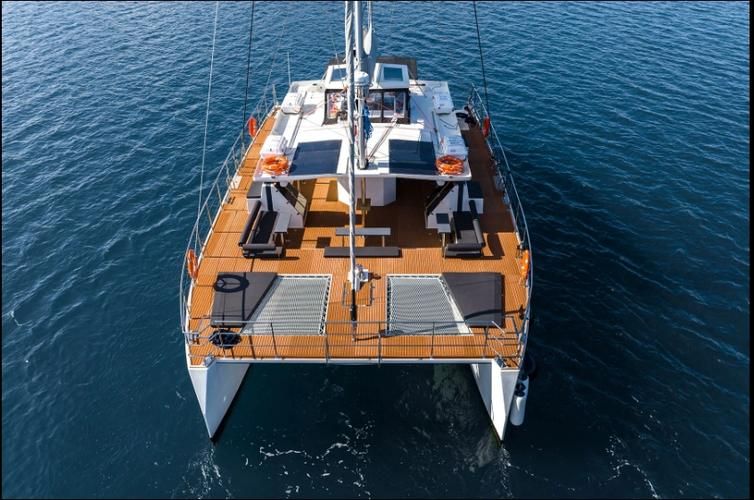
For example, if you’ll mainly be sailing in the Aegean Sea, don’t buy a boat in the Ionian Islands—towing fees are exorbitant.
Here are a few reliable boat-buying tips I’ve tested myself
1. Find “private sellers” and bypass brokers
Brokers take a 5%–10% commission.
If you deal directly with private sellers, you can negotiate that fee out of the deal.
How do you find them?
Greek sailing groups on Facebook
Small local forums
Marina bulletin boards (seriously, people still post handwritten notices there)
I found the boat I ended up buying in a Facebook group called “Greek Sailing Community.”
The owner, a retired engineer, had maintained the boat as if it were a brand-new car. After some negotiation, I saved as much as 8,000 euros in commission.
2. Buy in Winter, Use in Summer
In the Greek boat market, the off-season runs from September to March of the following year.
Since owners have a harder time selling, prices naturally drop.
After observing the market for half a year, I found that boats listed for sale in the winter are, on average, 12 to 18 percent cheaper than those listed in the summer.
However, there is one complication: during winter inspections, strong winds and cold weather can make it difficult to detect certain issues—for example, problems with the air conditioning or fresh water systems may not become apparent in low temperatures.
My solution: Negotiate the price in winter and conduct the survey in spring.
3. Don’t just look at “Greece”—check out neighboring countries
Croatia, Turkey, and Malta all have strong catamaran markets.
Prices are sometimes lower than in Greece, and operating and maintenance costs are more affordable.
In Turkey, a friend of mine purchased a Leopard 45, which cost 25,000 euros less than the same model in Greece; however, shipping the boat from Turkey back to Greece cost 3,000 euros.
All things considered, it was still a good deal.
Frequently Asked Questions (Asked by Real Users)
Q: Do all discounted catamarans have issues?
Not necessarily. Some are being sold because the owner is in a hurry to offload the vessel, is upgrading to a new boat, or simply no longer has the interest to continue owning it. However, you must do your research and be prepared!My advice is: under no circumstances should you pay even a single cent as a deposit before the results of the survey report are available.
Q: Is it easy to get a loan to buy a boat in Greece?
It’s not easy if you’re not an EU resident. Most Greek banks don’t offer loans to foreigners for boat purchases, so you’ll need to pay in full or seek out international lenders with higher interest rates. I once knew an American resident who ultimately secured a loan from a Swiss bank.
Q: Can a discounted boat be chartered out to make a profit?
In theory, it is feasible, but in practice, there are many complications.The charter market in Greece is extremely competitive, and these discounted boats often have outdated equipment, resulting in a poor experience for charterers. Once negative reviews start piling up, others will be reluctant to charter the boat.My advice is as follows: if you plan to rent out a boat, you should at least purchase a boat in good condition at market price; under no circumstances should you buy a discounted boat just to save money.
Q: How can you tell if a boat owner is lying?
Look at the details.
Can they provide a complete maintenance log?
Are there any personal traces on the boat? For example, a logbook, photos, or personal belongings?
Do they avoid eye contact when speaking?
I usually ask, “What do you think has been the biggest headache with this boat over the past few years?”
If he can point to a specific, genuine issue—such as a freshwater system that frequently breaks down or sails that tend to luff—then he’s most likely telling the truth.
If he just says, “Everything’s fine,” then there’s almost certainly a problem.
Q: Who should I hire for a survey?
Find a qualified independent surveyor, preferably one affiliated with a professional organization (such as IMI or NAMS). Under no circumstances should you hire someone recommended by the shipowner. The time I got ripped off was precisely because I hired a friend introduced by the shipowner; the report was beautifully written, yet not a single issue was detected.
Author’s Note:
This article was written by an amateur blogger from Europe or the U.S. who has six years of sailing experience and has inspected over 20 catamarans in person. Furthermore, I am not a professional broker and have never received a single penny in commission from any shipowner.Furthermore, all opinions are based on personal experience and real-life cases shared by friends. If you’re planning to buy a discounted catamaran in Greece, I recommend reading this article twice before making a decision.