From the protected waters of the British Virgin Islands to the volcanic cays of the Grenadines, the Caribbean offers some of the most diverse and accessible cruising grounds on the planet. This guide covers where to sail, when to go, what it costs, and how to stay safe—whether you’re planning your first bareboat charter or your tenth season aboard.
1. Why the Caribbean?
The Caribbean’s appeal to sailors rests on three pillars: steady winds, short passages, and world-class beauty. Northeast trade winds blow consistently at 15 to 25 knots from December through May, creating predictable downwind and beam-reach sailing between islands. Island groups are compact: in the British Virgin Islands, most hops take under four hours, while in the Grenadines, legs average just 6 to 20 nautical miles—short enough to sail in the morning and snorkel by lunch. Add to that water visibility often exceeding 30 meters (100 feet), vibrant coral reefs, and a shoreline culture built around the sea, and you have a sailing destination without equal.
The numbers tell the story. The BVI alone comprises over 60 islands and cays, the Grenadines chain stretches roughly 50 nautical miles end to end, and the Leeward Islands span more than 400 nautical miles from Anguilla to Dominica, offering everything from three-day tasters to month-long odysseys.
2. The Caribbean Sailing Calendar: When to Go
Caribbean sailing has a clear seasonal rhythm. Choosing the right window shapes everything from wind strength to marina availability.
| Season | Months | Conditions | Crowds & Pricing |
|---|---|---|---|
| Peak Dry Season | December–April | NE trades 15–25 knots; temperatures mid-70s to low 80s °F (24–28 °C); minimal rain | Highest prices; book 8–12 months ahead |
| Shoulder (Best Value) | May–June | Lighter winds (10–15 knots); warming sea temps; occasional showers | Crowds thin; prices drop; excellent sailing |
| Hurricane Risk | July–November | Variable winds; squalls possible; peak storm risk August–October | Lowest prices; flexible insurance essential |
Only 17% of annual hurricanes in the Atlantic occur outside the August–October window, but if you sail during hurricane season, flexible plans and a close eye on forecasts are non-negotiable. Peak-season charters fill fast: brokers recommend booking 8 to 12 months in advance for Christmas, New Year, and the February–March regatta window.
“Christmas Winds”: a phenomenon unique to December and January when the trades can spike to 20–25 knots and deliver gusty conditions, particularly through the Anegada Passage and the channels between the Leewards. It’s exhilarating sailing—but reef early and secure your dinghy.
Regatta season peaks from late January through April, with events like the BVI Spring Regatta (late March) and Antigua Sailing Week (late April) drawing the international fleet. If you’re chasing a party, aim for these dates; if you prefer quiet anchorages, schedule around them.
3. The Best Sailing Destinations
The Caribbean breaks naturally into five major cruising regions, each with its own personality.
| Region | Best For | Key Highlights | Suggested Duration | Difficulty |
|---|---|---|---|---|
| British Virgin Islands | First-timers, families | The Baths, line-of-sight navigation, 60+ islands | 7–10 days | Beginner |
| St. Vincent & the Grenadines | Experienced sailors, reef lovers | Tobago Cays, Mustique, Salt Whistle Bay | 7–14 days | Intermediate |
| The Leeward Islands | Culture seekers, long passages | Antigua, St. Barths, Nelson‘s Dockyard | 10–21 days | Intermediate |
| Windward Islands | Adventurers, volcano scenery | The Pitons (St. Lucia), Dominica rainforests | 10–14 days | Advanced |
| The Abacos, Bahamas | Calm-water cruisers, town hoppers | Hope Town, Sea of Abaco, sheltered anchorages | 5–7 days | Beginner |
3.1 British Virgin Islands (BVI)
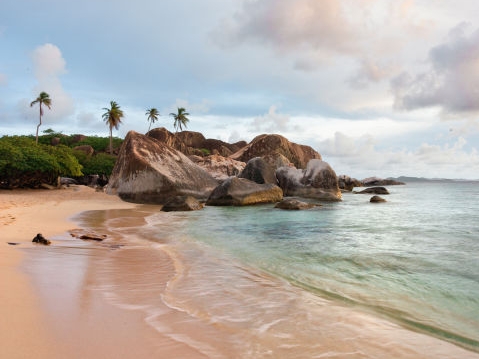
The BVI is the world’s most popular charter ground, and for good reason. Line-of-sight navigation, well-marked mooring fields, and a compact archipelago of over 60 islands and cays make it virtually purpose-built for sailing. Winter trades blow northeast at 15–20 knots; inside the Sir Francis Drake Channel, seas stay calm.
Must-see stops:
- The Baths (Virgin Gorda): Giant granite boulders form tidal pools and grottoes, accessible by dinghy or a short swim from the mooring field. Arrive before 10 a.m. in peak season to beat the day-charter crowds.
- North Sound (Virgin Gorda): A deep, protected bay ringed with options. Moor at Saba Rock or the Bitter End Yacht Club for sundowners and a swim-up bar; Oil Nut Bay Marina Village offers 101 slips and 22 mooring balls alongside its overwater restaurant and suspended pool.
- Soper‘s Hole (Tortola): A picture-perfect harbor with pastel-colored buildings, provisioning stores, and a customs office—an ideal crew-change point.
- Anegada: The only coral atoll in the BVI; famed for its 12-mile stretch of white sand and lobster shacks. Navigate carefully: the reef extends well offshore.
Key marinas & moorings: Nanny Cay Marina on Tortola is a full-service hub with fuel, provisions, and yacht services, popular as a start/end base. Mooring fields at The Bight (Norman Island), Cooper Island, and White Bay (Jost Van Dyke) offer first-come, first-served balls; plan to arrive by mid-afternoon to secure one in high season.
7-day itinerary snapshot: Tortola → Norman Island → Peter Island → Cooper Island → Virgin Gorda (The Baths, North Sound) → Anegada → Jost Van Dyke → back to Tortola. Total distance: roughly 60–70 nautical miles over seven days, with the longest leg (Anegada to Jost Van Dyke) at about 20 nautical miles.
3.2 St. Vincent & the Grenadines (SVG)
If the BVI is polished, SVG is raw. The chain stretches some 50 nautical miles from the volcanic peaks of St. Vincent to the low-lying cays near Grenada. Passages are short—typically 6–20 nautical miles—but conditions demand attention: high islands create acceleration zones and gusty lee shores. The reward is the Tobago Cays, a horseshoe reef sheltering five uninhabited islets where turtles graze the seagrass beds and the water glows aquamarine in the shallows.
Must-see stops:
- Tobago Cays Marine Park: A protected anchorage behind Horseshoe Reef. Mooring balls available; snorkel with sea turtles off Baradal. No shore facilities—bring everything.
- Mustique: Private island with celebrity cachet. Pick up a mooring in Britannia Bay, rent a golf cart, and have a “Full Mosquito” cocktail at Firefly as the sun drops.
- Salt Whistle Bay (Mayreau): A palm-fringed isthmus with white sand on both sides; one of the most photographed anchorages in the Caribbean.
- Bequia (Admiralty Bay): The cruising hub of the Grenadines. Chandleries, provisioning, restaurants, and a turtle sanctuary protecting hawksbills since 1995.
- Blue Lagoon (St. Vincent): The main charter base and marina, with off-season slip capacity of over 200 berths—a safe hurricane hole.
7-day sample loop (St. Vincent to Tobago Cays return): Blue Lagoon → Bequia (~9 nm) → Mustique (~12 nm) → Tobago Cays (~15 nm) → Mayreau → Petit St. Vincent → Carriacou → return north. Total: approximately 90–100 nautical miles over a week.
SVG charters also work well one-way to Grenada, adding stops at Carriacou (home to over 100 rum shops) and the underwater volcano Kick ‘em Jenny before disembarking in St. George’s.
3.3 The Leeward IslandsThe Leewards offer the Caribbean’s richest mix of European and Caribbean culture, spanning from Anguilla in the north to Dominica in the south—over 400 nautical miles of cruising ground. The islands are volcanic in origin, lush and mountainous. This is where the international yachting calendar comes alive: the St. Barths Bucket Regatta each March and Antigua Sailing Week in late April draw superyachts and racing yachts from across the globe.
Must-see stops:
- English Harbour & Nelson’s Dockyard (Antigua): A UNESCO World Heritage site; a living 18th-century naval dockyard with marina slips, restaurants, and a museum. Ashore, Antigua claims 365 beaches—one for every day of the year.
- St. Barths (St. Barthélemy): The Riviera of the Caribbean. Anchor in Gustavia harbor for designer shopping and fine dining; Colombier Bay offers a quieter, undeveloped alternative reachable only by boat or trail.
- Barbuda: A 62-square-mile island with pink-sand beaches and a frigate bird sanctuary that hosts one of the largest colonies in the Caribbean.
- Sint Maarten / St. Martin: One island, two nations. Simpson Bay on the Dutch side is a yachting hub with bridge access to the lagoon, marine services, and the famous Port de Plaisance superyacht facility. On the French side, Orient Bay and Anse Marcel provide excellent anchorages.
- Guadeloupe & Les Saintes: French Caribbean at its best. Terre-de-Haut in Les Saintes offers a picture-perfect bay, scooters for hire, and some of the best croissants this side of the Atlantic.
Key marinas: Nelson‘s Dockyard Marina (Antigua), Port de Plaisance (Sint Maarten), and Marina Bas du Fort (Guadeloupe) provide full-service superyacht facilities.
Recommended itinerary (10–14 days, Antigua to St. Martin): Antigua (English Harbour) → Barbuda → St. Kitts & Nevis → St. Barths → Anguilla → St. Martin, covering roughly 220 nautical miles with four to six open-water passages.
3.4 The Windward Islands
The Windwards are the Caribbean’s wilder side. Stretching from Martinique to Grenada, the chain delivers dramatic landscapes—Dominica’s rainforest-cloaked peaks, St. Lucia’s twin Pitons rising 2,600 feet from the sea, and the volcanic black-sand beaches of St. Vincent. Sailing here is more challenging: Atlantic swells can run 2–4 meters (6–13 feet) in the channels, and passages between islands routinely exceed 25–30 nautical miles—a step up from the BVI or Grenadines. Plan 9–12 days with four to five stops for a one-way St. Lucia to Grenada route.
Must-see stops:
- St. Lucia: Anchor between the Pitons at Sugar Beach or in Marigot Bay—a hurricane hole with a full-service marina.
- Dominica: The “Nature Island.” Hike to Boiling Lake; snorkel Champagne Reef where volcanic gases bubble through the seabed. Secure a guide for inland excursions.
- Martinique: French infrastructure with Caribbean flair. Fort-de-France offers major provisioning; anchorages at Anse Mitan and Grande Anse d’Arlet are protected.
- Grenada: The “Spice Isle.” Grand Anse Beach is two miles of white sand; St. George’s harbor is one of the most beautiful in the Caribbean. Port Louis Marina offers superyacht berths with full services.
3.5 The Abacos, Bahamas
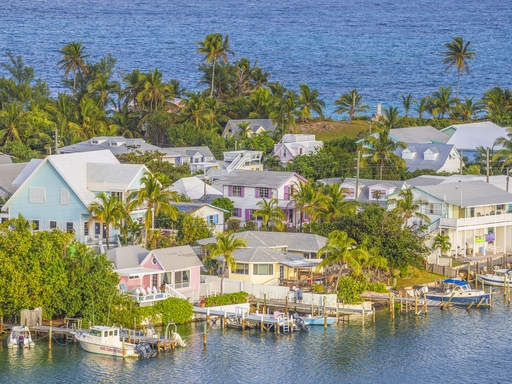
The Abacos lie outside the classic Caribbean arc but earn their spot for one reason: the Sea of Abaco. This shallow, protected body of water—roughly 120 nautical miles long and just 2–10 meters (6–33 feet) deep—offers some of the calmest cruising on the planet, sheltered behind a string of barrier islands and cays. Winter trade winds blow strong, but the fetch is limited, keeping the sea state gentle. Summer brings lighter winds and warmer water, ideal for families.
Must-see stops:
- Hope Town (Elbow Cay): One of the last manually operated lighthouses in the world, a candy-striped landmark visible for miles. Moor in the harbor and explore by golf cart.
- Great Guana Cay: Home to Nipper‘s Beach Bar and miles of Atlantic-facing beach.
- Green Turtle Cay: Pastel clapboard houses, a village ambience, and the Loyalist Memorial Sculpture Garden.
- Man-O-War Cay: The boat-building capital of the Bahamas; watch traditional wooden skiffs being crafted.
Key marinas: Marsh Harbour Marina is the main charter base; Hope Town Marina and Green Turtle Club offer moorings and fuel. Access the Abacos by flying into Marsh Harbour International Airport, or by yacht from Florida—roughly 160 nautical miles from Fort Lauderdale to the Abaco entrance.
7-day itinerary: Marsh Harbour → Hope Town → Great Guana Cay → Green Turtle Cay → Man-O-War Cay → back to Marsh Harbour. Most legs are under 10 nautical miles, making this an ideal first-time charter destination.
4. What It Costs: 2025/2026 Charter Pricing
Caribbean yacht charters span a wide price range. Below are representative weekly rates for the 2025/2026 season; holiday periods (Christmas and New Year) typically command premiums of 30–50%.
| Charter Type | Weekly Rate (Low Season) | Weekly Rate (High Season) |
|---|---|---|
| Bareboat Monohull (35–45 ft) | $1,500–$3,000 | $3,000–$5,000+ |
| Bareboat Catamaran (40–45 ft) | $3,000–$5,000 | $5,000–$9,000+ |
| Crewed Monohull (38–50 ft) | $12,000–$25,000 | $25,000–$45,000 |
| Crewed Catamaran (40–62 ft) | $15,000–$25,000 | $25,000–$49,000 |
| Luxury Crewed Catamaran (64–80 ft) | $50,000–$80,000 | $80,000–$115,000 |
| Superyacht (100+ ft) | $80,000–$150,000 | $150,000–$300,000+ |
Sources:
Above-charter costs fall under the Advance Provisioning Allowance (APA), which typically runs 25–35% of the charter fee and covers fuel, food, beverages, dockage, customs fees, and incidentals. For a $30,000 crewed charter, budget an additional $7,500–$10,500 for APA. For budget-focused charters, per-person pricing on a crewed all-inclusive catamaran with six guests starts from around $2,200 per person per week.
5. Practical Tips
- Customs & immigration: Most Caribbean islands require clearance at each new country. SailClear, an online system now operating in about 20 Caribbean islands, costs US$25 annually to register and can cut office waiting time significantly. French islands use their own system (as of September 2024); always check current requirements on Noonsite.com before departure. Carry original boat documents, passports, and crew lists in a waterproof folder. Meet officials with patience, a collared shirt, and a neat dinghy—appearances count.
- Navigation & safety: Monitor VHF Channel 16 for weather and emergencies. Always plan reef-fringed arrivals with good overhead light, ideally between late morning and mid-afternoon, to read the water color and identify coral heads. Carry a well-stocked first aid kit and know the location of the nearest hyperbaric chamber if diving is part of your plan.
- What to pack: Soft-sided luggage only—hard cases are impossible to stow. Bring reef-safe sunscreen, polarized sunglasses, a wide-brim hat, quick-dry clothing, and non-marking deck shoes. A 12V USB charger and a waterproof phone case are worth their weight.
- Provisioning: Major charter bases—Tortola (BVI), St. Vincent, Antigua, and St. Martin—offer full provisioning services. Pre-order through your charter company to have stores delivered to the yacht before you arrive. In more remote anchorages (Tobago Cays, Anegada), stock up on perishables in advance; local vendors may sell fresh lobster and bread, but don’t count on finding a supermarket.
- Sustainability: Caribbean marine parks are fragile. Use mooring balls where available—anchoring on coral damages ecosystems that can take decades to recover. Pack out all trash, and never discharge holding tanks within three miles of shore.
6. Choosing Your Destination
| If You Want… | Sail Here |
|---|---|
| Easy, line-of-sight cruising with beach bars | British Virgin Islands |
| Uncrowded, raw island-hopping and pristine reefs | St. Vincent & the Grenadines |
| European flair, superyacht culture, and long passages | Leeward Islands |
| Volcanic drama and challenging open-water sailing | Windward Islands (St. Lucia, Dominica, Martinique) |
| Shallow, protected waters and charming island towns | Abacos, Bahamas |
The Caribbean is not one sailing destination but many. Match your itinerary to your crew’s experience, your appetite for open water, and what you want from shore time. A first charter in the BVI can build the confidence for a second in the Grenadines, and a third across the Leewards. The trade winds will be there waiting.