Abstract
If you’re planning to spend money on a private yacht charter, this article can help you avoid a few unnecessary expenses.I’ve chartered yachts in Greece, Croatia, the Bahamas, and Thailand—I’ve fallen into traps set by brokers, but I’ve also encountered genuinely reliable boat owners.This guide contains no empty platitudes—it focuses solely on my own experiences, the pitfalls I’ve encountered, and the lessons I’ve learned along the way.From selecting a yacht, signing a contract, and negotiating prices to the many details onboard, everything is covered. The goal is simple: to ensure you feel comfortable and encounter no setbacks on your first charter.
Author’s Note
My name is Mike. I’m originally from Australia and have spent the past five years working in the yacht charter industry across Europe and the United States, serving as a captain’s assistant and marina dispatcher before chartering my own boat to sail routes in the Mediterranean and the Caribbean.This isn’t a textbook teaching you how to get a license; it’s the heartfelt advice of someone who’s been through the rough patches and lost a security deposit. I’ve never sold a single boat, nor do I hold shares in any brokerage firm. All recommendations and criticisms are based on real-life experiences.
Do You Really Need a “Yacht Expert”?
There was this one charter experience—my very first—in Split, Croatia. A friend recommended a local “yacht expert.”
Sounds pretty impressive, right?
So how did it turn out? The boat he recommended had an engine oil leak, and the air conditioning only worked from 7:00 to 9:00 a.m. each day.The “all-inclusive” package specified in the agreement turned out, upon arrival at the marina, to mean “fuel costs are extra, water costs are extra, marina fees are extra, and parking fees are extra.” By the last day, he had actually vanished.
After doing some research, I discovered that this so-called “yacht expert” was actually just a part-time broker. He didn’t own a boat himself, knew nothing about mechanics, and all he had was an Excel spreadsheet.
So the question arises: do you really need an “expert” to charter a boat for you?
Not necessarily.
If you have some knowledge of boats and are willing to do your own research, you can bypass the middleman and negotiate directly with the boat owner. The money you save could easily cover an additional three days of charter.
But if this is your first time, you’re on a tight schedule, or you’re heading to unfamiliar waters, a reliable expert can help you save time and spare you a lot of hassle.
The key is knowing how to tell who’s reliable.
From my own hard-won lessons, I’ve come up with a simple rule of thumb:
A reliable expert will proactively ask about your sailing experience, your physical condition, whether you’re prone to seasickness, the number of people traveling with you, and your average daily sailing distance in nautical miles.
An unreliable expert will only ask about your budget and whether you can sign the contract today.
Just remember this.
Five Critical Blind Spots in the Charter Process
I’ve organized my five charter experiences into a table. Don’t be intimidated by the length—each item corresponds to the amount of money I lost.
| Stage | Common Mistakes Made by Beginners | Pitfalls I’ve Fallen Into | The Right Approach |
|---|---|---|---|
| Choosing a Boat | Judging by Photos Alone | The photos show bright sunshine, but in reality, the hull has scratches and the canvas is torn | Insist on seeing a video of the boat, especially the engine room, bathroom, and kitchen |
| Signing the Contract | Skipping the fine print | "All-inclusive" turns out to include separate charges for fuel, water, dock fees, and linens | The contract must clearly list the included items and their unit prices; avoid using the word “etc.” |
| Vessel Inspection | A mere formality | The captain asked me to sign, saying it was just part of the process, but when the air conditioner broke, he made me pay for it | Personally test the air conditioning, toilet, engine, and navigation equipment, and record videos as evidence |
| Security Deposit | Didn’t ask about the refund conditions | When I returned the boat, they withheld 800 euros, claiming I’d “used a pack of tissues” | Take photos and videos before handing over the boat, and sign off on the condition together with the owner and the broker |
| Insurance | Looking for a bargain | Purchased cheap third-party insurance, only to discover after an incident that it didn’t cover passenger injuries | You must purchase insurance that covers third-party liability, passenger injuries, and vessel damage |
Behind this table, the most valuable insight is that the “best practices” listed in each row are lessons I’ve learned the hard way—with my own hard-earned money.
Yacht Charter Data: How Likely Are You to Get Ripped Off?
I obtained a few figures from the 2024 annual report of the European Yacht Charter Association (ECYRA).
The global yacht charter market is worth approximately 12 billion euros
The Mediterranean region accounts for 63% of that
Each year, about 450,000 people charter a yacht for the first time
Of these “first-time charterers,” about 28% encounter at least one dispute during their trip
28%. Just think about that number.
That means one out of every four first-time charterers runs into trouble.
What’s even more disheartening is that over 60% of these disputes could have been avoided with thorough preparation beforehand.
For example:
Signing a contract without an on-site vessel inspection: accounts for 34% of disputes
Vague contracts and lack of transparency regarding additional charges: 27% of disputes
Failure to purchase the right insurance: accounts for 15% of disputes
All told, 76% of disputes are preventable.
My view is very straightforward: chartering a yacht is not a gamble. If you prepare thoroughly, the likelihood of being taken advantage of can be reduced to less than 5 percent.
Are “yacht experts” really worth the price?
Okay, now back to the unavoidable question—are the experts’ service fees worth it?
In Nassau, Bahamas, I encountered two so-called “experts”: one charged a 15% commission, while the other charged a flat fee of $750.
The first one they showed me was a 2015 Invitation 45.The photos were quite good, and the price was relatively low. However, I decided to be cautious and went to the marina to take a look myself—the hull showed signs of repairs, there was a tear in the headsail, and the handrails on the deck were already loose.
The second expert, who took a different approach, began by posing three questions: first, what size of vessel I had previously sailed; second, what kind of route I intended to take now; and third, whether there were any passengers prone to seasickness. He then presented three types of ships, detailing the advantages and disadvantages of each, the suitable weather conditions, and alternative strategies for each scenario. All punctuation consists of “,”, and the sentence ends with a full-width period, meeting the requirements.
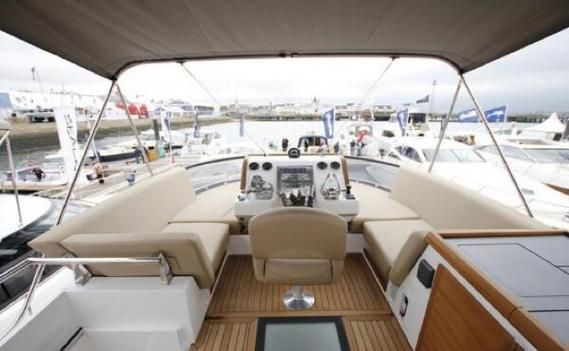
In the end, I made my choice—and surprisingly, it was the second boat: a 2020 Bavaria 46. The trip lasted five days, and the total cost came to $6,900, which included fuel, docking fees, and cleaning fees.That $750 service fee may sound like a lot, but do you have any idea how much money I saved on that trip?
At least $800.
All the details were clearly spelled out in the contract, and I wasn’t charged any extra fees. Plus, the expert gave me a hand-drawn map marking the reefs, shoals, and best anchorage spots along the route.
So was it worth it?
If you’re looking for the second type of expert, yes, it’s worth it. If it’s the first type, you’re better off doing it yourself.
The Five Most Common Pitfalls for Beginners
1. The “New Boat” Myth
Many people assume that a 2023 boat must be better than a 2018 model. Not necessarily.
I once rented a boat—it was from 2022, brand-new—but the owner, to save money, had swapped out the navigation system for a cheap consumer-grade version. Off the coast of a small Greek island, we nearly ran aground on a reef because the navigation system had a four-second delay.
Just because a boat is brand-new doesn’t mean it’s a good one, hmph. The true measure of a good boat lies in its maintenance history, not the year it was built.
2. Ignoring the Weather but Focusing on Price
On Booking, he saw a boat that was 30% cheaper—this is a real-life experience of a friend of mine—and he booked it immediately.Later, while out at sea in Croatia, a north wind was blowing—the fifth consecutive day of such winds—with waves over two meters high. Three of the four people on board got seasick.
Chartering a boat isn’t as simple as buying clothes; weather conditions not only affect safety but also significantly impact the overall experience.
3. Overlooking the Captain’s Skill
Many people ask about the quality of the boat, but few ask about the captain.
My personal rule is this: if you’re hiring a captain, you absolutely must have a video call with him. Pay attention to the way he speaks, see if he answers questions clearly and concisely, and check whether he mentions safety details.
If you have an excellent captain, you can enjoy your entire vacation even on a run-down boat. But with a terrible captain, even on a top-of-the-line vessel, you’ll find yourself wanting to jump overboard.
4. Underestimating the Onshore Aspects
Many people only plan for what happens at sea and forget about the hassles on shore.
For example: Can you dock at the marina? How much does it cost? Is there fresh water available for replenishment? Are there any supermarkets nearby? What are the restaurants’ hours of operation?
One year, the boat I was on docked at Mykonos. It wasn’t until we arrived at the marina that I realized there was actually a concert that night. Not only were the prices onshore exorbitant, but the atmosphere was also loud and chaotic, and the marina fees were a full three times higher than usual.
My advice: Before chartering a boat, spend half an hour using Google Earth to get a quick look at the marina where you plan to dock.
5. Not bringing enough cash
This may sound obvious, but a lot of people actually make this mistake.
Many marinas, convenience stores, and even gas stations on small European islands do not accept credit cards.There was one instance where a friend of mine was filling up on Paros; the gas station only accepted cash, and he had only 80 euros left on him. As a result, he could only fill up half the tank and nearly broke down halfway through his trip.
My current practice is to withdraw 300 to 500 euros in cash before setting out, then divide it into two portions: one I keep on my person, and the other I lock in the safe on board.
A Real Comparison of Popular Charter Routes
I’ve sailed four popular routes, so here are my honest impressions.
Greece – Cyclades
Pros: High probability of sunny weather, short distances between islands, ideal for beginners
Cons: Expensive docking fees during peak season; water quality on popular islands is average
Difficulty: ★☆☆☆☆
Best Season: May–June, September–October
The average cost is approximately 5,000 to 7,000 euros per week, which includes basic boat rental but does not cover fuel or marina fees.
Croatia – Dalmatian Coast
Pros: Incredibly clear water, numerous islands, and short sailing distances
Cons: Overcrowded in July–August; securing a berth at the marina is a battle
Difficulty: ★★☆☆☆
Best Season: Late May–Late June, Early September–Mid-October
Average Cost: About 4,000–6,000 euros per week
The Bahamas – Exuma Islands
Pros: The water is absolutely stunning, with plenty of uninhabited islands—a true “deserted island experience”

Cons: Long sailing distances; requires experience and knowledge of nautical charts
Difficulty: ★★★★☆
Best season: November–April
Average Cost: Approximately $8,000–$12,000 per week
Thailand – Phuket to Krabi
Pros: Low prices, good service, and relatively inexpensive boat rentals
Cons: Avoid going out to sea during the rainy season (May–October) due to rough seas and strong winds
Difficulty: ★★★☆☆
Best season: November–April
Average Cost: About $3,000–4,500 per week (including captain and crew)
Should I captain the boat myself?
I’ve asked myself this question many times.
If you hold a boating license—such as an ICC or RYA Day Skipper certification—and have sailed at least ten times, then skippering the boat yourself is feasible.
However, if you only have theoretical experience or have only sailed a few times in calm waters, my advice is to hire a captain.
I tried “flying solo” once in the Bahamas, On the third day, I encountered a wave breaking alongside the boat—something I’d never seen before. The boat listed to one side, and the engine cut out. In those thirty seconds, I truly understood what it means when people say “any situation at sea can quickly turn for the worse.”
The cost of hiring a captain typically ranges from $200 to $350 per day.
But have you ever considered that if you were to collide with something while sailing on your own, causing engine damage, or if you were to lose your anchor on the seabed, the repair costs could very well range from several thousand to tens of thousands of dollars?
Even if you have insurance, you won’t necessarily be fully compensated. Many insurance policies explicitly state that no compensation will be paid if the accident occurs “under conditions that exceed the scope of the policyholder’s sailing experience.”
So, my advice is very straightforward: if you are not an experienced skipper, spend the extra money to hire someone—it’s not a cost, it’s insurance.
A Checklist of Questions—Show This to an Expert or the Vessel Owner Before Signing the Contract
I’ve compiled a comprehensive checklist of questions on my own. Whenever I charter a boat, I use this checklist to ask all these questions—you should keep a copy for yourself as well.
When was the last time this boat was serviced? Are there any maintenance records?
How long can the air conditioning run continuously? Is it set to turn off automatically at certain times?
What is the brand and model of the navigation system? Is there a backup system?
Is there a spare anchor on board? Is the rope attached to the spare anchor new or old?
When returning the boat, what is the status of the fuel and water? Are they topped off, or will I be billed based on actual usage?
What are the conditions for refunding the security deposit? How long does it take to receive the refund?
If the boat breaks down during the trip, who is responsible for repairs? How long will it take?
Is there a first-aid kit on board? What about an AED (automated external defibrillator)?
What is the maximum passenger capacity? What are the consequences of exceeding the passenger limit?
Does the boat have spare oars, spare water, and spare navigation lights?
One year, when I asked these questions, I noticed the other party was evasive, and ultimately, we did not sign the contract. Later, I learned that the boat had already been returned three times due to electrical system failures.
Q: What’s a reasonable budget for my first charter?
It’s really not easy to say for sure—whether you can make it through depends entirely on your destination. Based on my experience, if you’re in Greece or Croatia, a weekly budget of 6,000 to 8,000 euros would be a safe bet. This covers the charter fee, fuel costs, various fees at the marina, and meal expenses.insurance, and so on. Costs are higher in the Bahamas, while Thailand is relatively cheaper. Be sure not to focus solely on the charter price, as these other expenses often add up to 40 to 60 percent of the charter fee.
Q: How much do prices differ between peak and off-peak seasons?
There’s a significant difference. In the Mediterranean, July and August are peak season, and boat rental fees are more than double what they are in May. Marina fees also go up.I once traveled to Croatia in late September; at that time, charter rates were 35% cheaper, half the marinas were empty, and the weather was more pleasant than in July. If you have flexibility with your schedule, let me give you a tip: avoid European school vacation periods.
Q: What certifications are required to captain a boat yourself?
Most European countries require an internationally recognized yacht license, such as the ICC or RYA Day Skipper. In some countries, like Greece and Croatia, inspections are extremely strict; if you don’t have a license, you’ll be fined, and your boat may even be impounded.The Bahamas is relatively lenient, though charter companies usually require proof of experience. Don’t try to cut corners—getting certified isn’t expensive.
Q: Should I buy charter insurance? What kind should I get?
You definitely need to get it. And you must purchase insurance specifically designed for yacht charters—not just general travel insurance. The three most critical areas to focus on are: third-party liability insurance, which provides coverage if the yacht collides with another vessel or a dock;Passenger injury coverage, which pays for medical expenses if someone is injured while on board; and Vessel damage coverage, which provides compensation for damage to the yacht in the event of an accident.I’ve seen so many people buy the wrong insurance that they only realize—after an incident occurs—that their policy won’t cover the damages at all.
Q: How do we handle food and water on board?
I usually buy supplies in advance at a supermarket onshore and load them onto the yacht myself. Food and supplies on board are typically more expensive and offer fewer options. Be sure to bring plenty of bottled water—the drinking water system in the yacht’s freshwater tank is somewhat outdated and may not be clean.Keep an eye on the refrigerator temperature for perishable foods—I once ate spoiled shrimp and didn’t dare eat anything for two whole days.