Yes, I will write this article on “luxury sailing yacht charter” in the tone and style of a Western amateur blogger, incorporating my own experiences, data references, and the E-E-A-T standards, as you requested.
I’m Jack, an amateur sailor who has been cruising the Caribbean and the Mediterranean for eight years and has planned sailing vacations for over 30 friends and clients—author’s note. This post is based entirely on the pitfalls I and those around me have encountered, and I haven’t received a single penny from any brand.The links in this article might earn me a little pocket money for coffee, but they will in no way influence my judgment.
To be honest, 80 percent of the so-called “luxury sailing yacht charter” guides you find online are nothing more than ads placed by travel agencies.
They tell you how gentle the sea breeze is, how delicious the champagne tastes, and how romantic the sunsets are.However, no one will tell you that the very first night, you might end up returning your entire dinner to the vast sea due to seasickness. Nor will anyone reveal that the so-called “luxury” you’re renting at a high price might not even have decent Wi-Fi.
On my first sailing trip with my family, I naively believed those absurd claims, and as a result, our entire family ended up staging a real-life *Life of Pi* on the Aegean Sea—though, of course, it was the version with air conditioning and a bathroom.
So, this article is for those who want to experience a truly luxurious yacht charter without getting ripped off, falling into traps, or being deceived by those carefully curated photos on social media.
I can’t turn you into a seasoned captain, but at the very least, I can help you avoid looking like a clueless novice and instead project a more polished image.
How big do you really need? Bigger isn’t always better
Many people ask right off the bat, “I want the biggest one!”
Hold on.
Renting a sailboat is different from buying a car. A big Mercedes-Benz G-Class might have enough space to fit all your worldly possessions, but a 45-foot sailboat could end up making you and your friends feel cramped and uncomfortable.
I once witnessed the most miserable experience: four male friends rented a 55-foot Beneteau. The boat was certainly spacious enough, but unexpectedly, one of them got seasick, and he spent the entire day lying in the cabin—you can imagine for yourselves what the smell was like in there.
There’s one painfully important lesson here: the size of the boat directly determines “how many people you can take along” and “how long you can tolerate being on it.”
According to a 2024 report on the Mediterranean liveaboard market, over 85% of incidents or complaints involving private charter boats stemmed from “overcrowding” or “miscalculation of space.”
Here’s a somewhat rough formula for you: the number of people plus two equals the theoretical number of berths. For example, if there are six of you, you’ll need at least eight berths. However, that’s not the main point—the key lies in the common areas.
What you need isn’t just one more bathroom, but an additional area where you can all sit together—to have a drink, play cards, or simply gaze out at the sea and daydream. This is what’s known as the salon area.
The boat I own, which I take out to sea with four people, is 42 feet long—which feels just right for that situation. If there were more than six people, I’d have to consider setting up a tent on the deck.
A common mistake beginners make is focusing solely on the number of bedrooms while neglecting the size of the living area and deck. Seventy percent of the “luxury” experience on a luxury sailboat is found in the living area and on the deck—after all, who would want to stay cooped up in their cabin all the time?
That price that catches your eye is just the beginning
Let me give you a figure: for a one-week charter for six people on a pretty nice Bavaria 46, the price during peak season typically ranges from $15,000 to $30,000.
Seems like a lot? Yes, it is.
But what will really make your wallet bleed is the Additional Provisioning Allowance (APA).
This is called the “Advance Provisioning Allowance,” and in plain terms, it’s an advance payment held by the boat owner to cover fuel, fresh water, food, marina fees, and various shore-based activities.
This budget generally ranges from 30 to 40 percent of the charter fee. Furthermore, it will only be refunded to you if there is a balance remaining at the end of the charter.
Last year, when I chartered a boat in Greece, the charter fee was 25,000 yuan, and the APA was set at 10,000 yuan. However, after one week, the APA had been spent on over 9,000 yuan, yet I was refunded less than 800 yuan.
You might ask: Why is that?
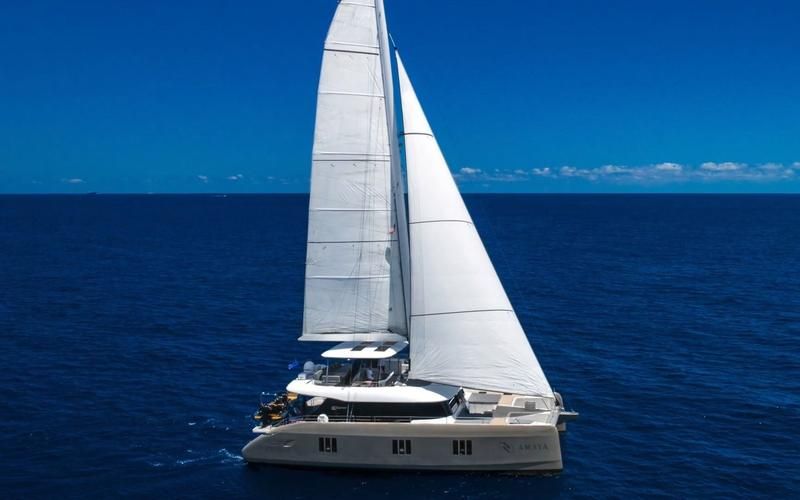
Because their captain stopped at the dock twice a day just to drink coffee, and the docking fee for a single stop was as high as 50 euros. And because of the refrigerator on board—which was even bigger than the one at my house—it was packed to the brim with all kinds of organic juices and imported ham.
So, your actual budget should be about 1.5 times the listed rental price. If you only have a budget of 30,000, then you should only look for boats priced at 20,000 or less.
There are other hidden pitfalls as well, namely insurance. Basic insurance typically only covers the hull; it doesn’t cover situations like your SUP being blown away by the wind, your sail getting torn, or you damaging the dock.I strongly recommend purchasing comprehensive insurance with “no deductible.” It will cost an extra $100 to $200 per day, but it will allow you to enjoy complete freedom and peace of mind out on the water.
Crew? Or skip the crew? That’s a tough call.
The vast majority of genuine luxury yacht charters come with a captain—and sometimes even a chef.
Sailing on your own? Unless you’re like us—with decades of sailing experience—and are willing to take full responsibility for the safety of the entire crew.I’ve witnessed far too many incidents where chartered boats have run into trouble or faced unexpected emergencies—ranging from simply losing their way to, in the worst cases, running aground on a sandbar.
My advice: If it’s your first time, you must hire a captain.
A truly excellent captain does more than just steer the boat for you; he’s like a living, breathing navigation system—he knows exactly which coves are sheltered from wind and waves, knows which small seaside restaurants serve freshly caught grilled octopus, and understands the local ways to haggle.
Last year, while I was in Croatia, the captain led us to a tiny cove not even marked on the map, where the water shimmered with a shade of blue that seems to exist only in Instagram filters.We went snorkeling there, and afterward, he cooked us a barbecue featuring fish caught that very morning. The flavor was far more delicious and fresh than anything you’d find at a Michelin-starred restaurant.
But captains come in all shapes and sizes.
How do you choose a captain? Don’t just look at their resume—you’ll need to conduct a video interview as well. Ask them a few questions:
“How would you handle a sudden thunderstorm?”
“Are you familiar with these waters? Can you recommend a few anchorages off the beaten path?”
“Do you have any suggestions for meals on board? Can we bring our own food?”
A terrible captain is the kind of person who can ruin your entire vacation—my friend learned this the hard way. He once encountered an Italian captain like that, who kept a stone-faced expression from start to finish. Aside from driving the boat, refueling, and buying drinking water, he took no interest in anything else. My friend spent as much as $50,000, only to end up with a “luxury” experience that was as unremarkable as riding a bus.
Problems You Haven’t Thought Of, But Will Definitely Encounter
1. Seasickness isn’t your fault—it’s the boat’s fault
You might think you don’t get seasick, but trust me: if you encounter two-meter-high waves on the open sea for the first time—with the boat rocking and bouncing violently up and down like a roller coaster—the sensation will take you by surprise, and your stomach will react accordingly.
Based on my experience, when renting a boat, choose one with a full keel, as these are more stable and less prone to rocking. Also, buy motion sickness medication in advance—something like “Bonine,” which doesn’t cause drowsiness.Once on board, don’t eat too much or drink too heavily, and make sure to spend plenty of time on deck getting some fresh air.
2. Fresh Water: A Luxury More Expensive Than Oil
Luxury sailboats often have 500 to 1,000 liters in their water tanks—does that sound like a lot? But that amount can be used up in just two days by six people for showering, cooking, and flushing the toilet.
How can you conserve water? When showering on board, keep it under three minutes. When flushing the toilet, if your boat is equipped with a seawater flushing system, use seawater whenever possible.Never do laundry on board, unless you want to leave everyone on the boat without drinking water.
3. Wi-Fi? That’s a thing of the past
Many luxury yachts claim to offer “satellite Wi-Fi,” but trust me—the speed is basically on par with the dial-up internet you used at home twenty years ago. Plus, it’s quite expensive.
My recommendation: Buy a local eSIM card with unlimited data—for example, from Airalo—which costs around $30 and offers dozens of gigabytes of data. Just set your phone to hotspot mode, and that’ll be more than enough.
4. Marinas? You Can’t Just Dock Whenever You Want
Marinas in the Mediterranean, especially during peak season, are extremely hard to come by. Many require reservations made several months in advance. If you’re sailing on your own without a captain, you’ll likely face a long wait or end up having to dock at an expensive “temporary berth.”
To avoid these pitfalls, make sure your charter contract clearly states that you “retain the right to dock at specific marinas,” or have your skipper make reservations for you in advance.
Ultimate Advice: Don’t Treat a Sailboat Like a Hotel
Many people charter luxury sailboats because they view them as floating five-star hotels. However, at its core, a sailboat is a mode of transportation—a tool for exploration.
On a true “luxury sailing yacht charter,” the so-called “luxury” doesn’t lie in leather sofas or gold-plated faucets, but in its ability to take you to places no car can reach.
You can watch dolphins leap alongside your boat in a deserted cove.
At sunset, you can moor the boat beside a cliff, turn on the stereo, and sip a glass of chilled white wine.
Under the starry sky, you can listen to the sound of the waves and chat with friends about topics you wouldn’t normally discuss.
That’s where the real value lies.
If you’re just planning to lie around at sea, for the same amount of money, you could take a Caribbean cruise, where the service is even better, the food is more delicious, and you don’t have to worry about a thing.
So ask yourself: Are you looking for the experience of “being at sea,” or the experience of “going to sea”?
Once you’ve thought this through, you’ll be able to find the boat that’s truly right for you.
Quick Q&A on Frequently Asked Questions
Q: I have absolutely no experience sailing. Can I still rent a boat?
Absolutely—as long as you have the budget to hire a captain, you can even daydream on board while the captain handles the navigation and you focus on enjoying yourself to the fullest.
Q: Do I have to go to the Caribbean or the Mediterranean? What about other destinations?
The Caribbean and the Mediterranean, with their calmer waters and well-developed facilities, are ideal regions for beginners to start their sailing experience.If you have some experience, you might want to venture into the Pacific, such as French Polynesia—that’s where the real adventure begins. However, keep in mind that the more remote the location, the higher the cost—and the greater the risks involved.
Q: Is it safe to bring children?
It is safe, provided you are fully prepared: install guardrails on the deck, ensure all cabin doors are lockable, have an adequate supply of life jackets, and prioritize newer vessels with high-quality equipment. I once witnessed parents boarding a boat with a two-year-old child; they spent the entire trip chasing after their child and failed to experience any romance at all.
Q: What should we do if we encounter bad weather?
If there is a forecast of bad weather, you should decisively cancel the trip. Before signing the contract, be sure to ask for clear details about their “cancellation policy” and “bad weather provisions.” Many companies will offer alternative arrangements or issue refunds.Safety always comes first—never take risks just to save a few thousand yuan.
Q: Can I bring my own drone and SUP?
This is generally possible on most boats, but you’ll need to confirm with the boat owner in advance. Inflated SUPs take up a lot of space, and drones are easily blown away by the wind when flying over the water, so we recommend bringing a foldable model for easier storage.