

Abstract
If you’re interested in catamaran sailing but aren’t sure whether to buy or rent, this article will help you sort through your options. Starting with the initial purchase cost, then moving on to ongoing expenses, and finally discussing the rental experience—we’ll break down the common pitfalls beginners tend to fall into, drawing on real-world data from overseas and years of hands-on experience.A quick reference guide to frequently asked questions is included at the end—by the time you finish reading, you’ll know which option is best for you.
Author’s Note
This article was written by a sailing enthusiast who has spent seven years cruising the Caribbean and the Mediterranean, holds certification from the American Yachting Board for Family Boating (AYBF), and has personally tested four catamarans from different eras;The data in this article is compiled from the YachtWorld 2024 Annual Report and BoatUS industry statistics and is provided for personal reference only.
Don’t rush to spend your money! First, figure out exactly what you want
To be honest, the first time I saw a catamaran on the water during a vacation in Miami, I was almost completely captivated by one called the Lagoon 450.
It was too big. I simply couldn’t afford it.
Afterward, I spent a full three months chartering a 2016 Catana 42 and spent two weeks in the Bahamas—only then did I figure out exactly what I needed.
Buying a boat versus renting one isn’t really an either/or question—it’s the answer that depends on where you are in life.
Let me start with the conclusion—if you go out to sea fewer than 10 times a year, don’t buy one. Seriously.
However, if you spend more than 30 days at sea each year and have strong personal preferences regarding where your boat is moored and the standards of maintenance, then the advantages of boat ownership become clear.
Below are the pitfalls I’ve encountered; I hope this helps you avoid wasting money.
Buying Guide: The Hidden Costs Sellers Won’t Tell You
The Initial Investment Goes Far Beyond the Price of the Boat
Many people ask me, “How much did you pay for your boat?”
When I answer, “A used Lagoon 42,” they assume that’s the end of the story.
Wrong. Completely wrong.
Take a used catamaran listed at $150,000—its total cost to take delivery is likely somewhere between $180,000 and $220,000. Why is that? It’s because the following expenses are extremely easy for newcomers to this field to overlook:
| Cost Item | Estimated Amount (USD) | Notes |
|---|---|---|
| Broker Fee | 5%–7% of the boat’s price | Typically split equally between the buyer and seller |
| Marine Survey | $3,000–$8,000 | It is recommended to hire an independent surveyor |
| Title Transfer and Documentation Fees | $1,500–$4,000 | Depends on the place of registration |
| Initial comprehensive maintenance | $5,000–$15,000 | Common Pitfalls for New Boat Owners |
| First-Year Insurance | $2,000–$6,000 | Varies by coverage amount and route |
| Berth (First Year) | $8,000–$25,000 | Varies significantly in tropical waters |
Data sources: YachtWorld 2024 Market Report, BoatUS Insurance Rate Analysis
Did you see what happened during that first maintenance check? The hard lesson I learned back then was that I bought a used boat that looked to be in good condition, but engine maintenance, sail line replacement, and hull cleaning—these three items combined cost nearly $20,000. The seller claimed the maintenance had just been done, but it turned out to be on a different boat.
Annual Boat Maintenance Costs
This is the real “slow bleed.”
According to data from the American Boat Owners Association, the annual operating costs for a catamaran are approximately 8%–12% of the boat’s purchase price.
This means that the boat you purchased for $150,000 will cost you between $12,000 and $18,000 annually just to maintain—and that figure doesn’t include time spent at sea; it’s based solely on the boat sitting idle at its mooring.
What does this include?
Hull polishing: At least once a year, costing between $800 and $2,000.
Antifouling repainting: Performed every six to twelve months, costing between $1,500 and $4,000 (you can save half the cost by doing it yourself).
Regular engine maintenance: Minor service every 200 hours; major service every 1,000 hours
Dockage fees: Charged per foot; double during peak season
Insurance Renewal: Annual increases of 3%–5% are typical
Equipment Depreciation Reserve: It is recommended to set aside 1% of the boat’s value annually as an emergency fund
I’ve seen countless beginners who, in the first year after buying a boat, are full of enthusiasm, but by the second year, they begin to worry about the costs. By the third year, they list the boat for sale, only to discover that the sale price barely covers the loan—and they’ve even had to pay out of pocket for maintenance costs.

That’s why I say: Don’t buy a boat unless you’re certain you’ll stick with it.
Renting: The Right Way to Test the Waters at Low Cost
Short-Term Rentals vs. Long-Term Charters
There are two mainstream models for catamaran rentals, with significant price differences.
Short-term rentals are similar to vacation-style charters (Weekly Charter).
Typical Scenario: You charter a boat with family and friends to spend a week exploring a specific stretch of water. You can either have the captain, meals, and fuel fully included in the package or choose these options yourself.
Among the most popular routes in the Caribbean (including Tortola and St. Lucia), prices range from $8,000 to $25,000 per week, depending on the type of boat and the season.
Southeast Asia (Thailand, Indonesia): $3,000–$8,000/week
In the Mediterranean, prices range from $10,000 to $35,000 per week, with rates skyrocketing during peak season.
Long-term charter, also known as a Monthly Bareboat Charter:
Ideal for those who want to explore a region in depth.
Greek Islands: $8,000–$18,000/month
Croatian Adriatic: $6,000–$14,000/month
Bahamas/Virgin Islands: $10,000–$22,000/month
The Ins and Outs of Chartering
I’ve chartered three different types of boats myself and learned a few lessons the hard way:
1. Make sure to clarify whether crew is included
Some quotes may seem cheap at first glance, but the captain’s fee is charged separately.A professional skipper’s daily rate ranges from $200 to $500, or $1,400 to $3,500 per week. If the skipper is not included, you must hold your own yacht license—specifically, an ICGY Class A license or equivalent certification.
2. Fuel is usually not included in the base price
Catamarans consume more fuel than monohulls, especially when relying on the engine for propulsion in windy or rough conditions. Many first-time renters overlook this expense when calculating costs, which often leads to unexpected overspending.
3. Destination Restrictions
The charter contract will specify the permitted sailing areas. If you plan to sail outside the contract’s scope, the insurance company will not provide coverage, and the charter company will hold you liable.
Once, I saw a friend chartering a boat in Greece, and on a whim, he decided to visit a remote island. Upon his return, he was shocked to discover a clear and explicit territorial clause in the insurance policy, which nearly forced him to pay several thousand euros out of his own pocket to repair the boat.
4. Security Deposit and Damage Liability
Security deposits typically range from $2,000 to $10,000. If you scratch the hull or damage the deck, the cost will be deducted from this deposit. It’s recommended to take a complete video of the boat before renting it to keep as evidence and avoid disputes when returning the vessel!
Buy vs. Rent: How Do You Choose? A Comparison Chart Makes It Clear
I’ve summarized the key differences between buying and renting to make it easier for you to compare:
| Comparison Criteria | Purchase | Renting |
|---|---|---|
| Average Annual Cost | 8%–12% of the boat’s price (maintenance costs) | $3,000–$25,000 per week (varies by boat type and region) |
| Flexibility | Can depart at any time, subject to availability of berths | Can switch between different waters, but advance booking is required |
| Maintenance Responsibilities | Entirely your responsibility | The boat owner is responsible; you only need to worry about using it |
| Social Freedom | Complete autonomy | Subject to charter rules |
| Suitable for | Suitable for families or groups with a set sailing itinerary | Suitable for occasional travelers or those looking to try it out |
| Financial Requirements | 30%–50% down payment + monthly payments | You can start your journey with just a few thousand yuan |
| Emotional Value | High (your own boat) | Low (rent and return as needed) |
Key Takeaway: If you go out to sea fewer than 15 days a year, choose to rent; if more than 30 days, seriously consider buying.
My Personal Experience: From “Wanting to Own One” to “Glad I Didn’t Act on Impulse”
In 2019, I came across a 2012 Lagoon 42 in Miami listed at $145,000. At the time, I thought the price was simply too tempting, so after a week of hesitation, I put down a deposit.
Then reality set in:
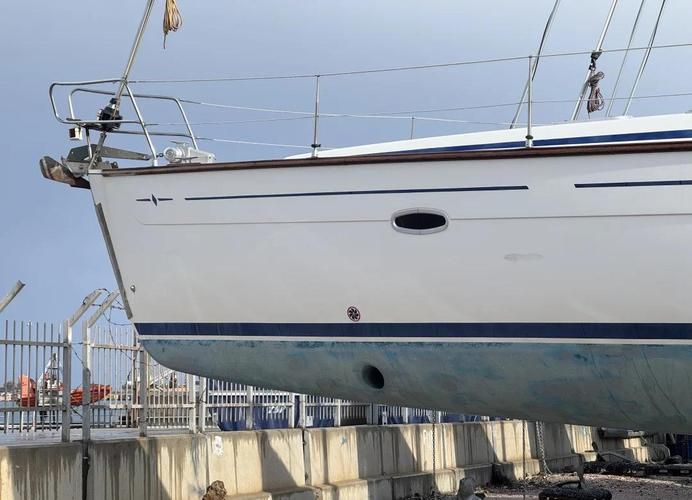
First, during the first month, the surveyor detected minor oil leaks in both engines, and a repair estimate came in at $8,000.The seller was willing to offer a $4,000 discount on top of that, but I felt that was just the beginning of the negotiations, so I decided to walk away from the deal.
The following month, I chartered a 2015 Lagoon 42—similar to the one I’d chartered before—and spent five days at Tesla, waking up every morning to the sight of the blue sea and the white boat, with no alarm clock ringing. Later, as I reflected on the experience of those mornings without a set alarm, I realized that, in fact, you don’t necessarily have to own something to truly experience it.
In the third month, I used that $145,000 budget to do some more systematic calculations.I found that if I were to go out to sea for just four weeks each year during the peak season, the cost of owning a boat would amount to $3,600 per week. However, chartering a boat for the same amount of time—which includes the boat, a captain, fuel, and meals—would cost roughly $12,000 to $15,000 per week.
That’s a huge difference, right?
The catch, though, is that the $15,000 for a charter covers the captain and service. If you sail the boat yourself, not only do you need a license, but you also have to handle all the daily chores—like cooking, cleaning, and navigation—on your own.
In the end, here’s what I decided: After waiting two years, I purchased a 2014 Catana 42 for $115,000 in 2021. During that time, I chartered boats at least 12 times, gaining new insights each time.Looking back now, if it weren’t for the experience I gained from those two years of chartering, I would very likely have ended up buying a boat that didn’t fit my lifestyle—or I might not have been able to stick with it at all.
The 5 Most Common Mistakes Beginners Make (Learned the Hard Way)
1. Focusing Only on Price, Not on Age or Material
Some boats are sold at low prices because the fiberglass has micro-cracks, or the rigging is severely deteriorated.Before buying, be sure to hire an independent surveyor—not one recommended by the seller. A $�︎,︎0︎0︎0︎ inspection could very well save you $�︎0︎,︎0︎0︎0︎ in repair costs.
2. Underestimating Mooring Costs
A friend of mine in Florida told me that a 30-foot catamaran berth at the Port of Miami costs $150 per night during the off-season and $300 per night during peak season.If you spend half the year wintering in the South, the monthly berthing fees alone could run as high as $5,000 to $8,000.
3. Thinking you’ll enjoy sailing
Sailing a catamaran is completely different from driving a car. Wind direction is one factor, but you also have to consider tidal currents; draft is equally critical, and mooring techniques cannot be overlooked. Every detail must be learned. Many people who buy boats later realize that 90% of the time, they actually don’t enjoy sailing. but simply longed for a mobile home on the water. If that’s the case, chartering a boat with a captain might be a better choice.
4. Overestimating Your Maintenance Capabilities
Unless you’re already a mechanic or are willing to devote a significant amount of time to studying and learning, the daily maintenance of a catamaran will consume many of your weekends;My advice is this: Before buying a boat, try your hand at fixing a minor issue or two, and really take the time to figure out whether you actually enjoy the process.
5. Ignoring the social costs
If you own your own boat, that means you’ll have to find people willing to go out on the water with you. Not everyone has the free time, and not everyone is comfortable with living on a catamaran.Renting a boat, on the other hand, allows for flexible crew arrangements, so you don’t have to worry about the boat sitting idle.
Quick Q&A: Common Questions for Beginners
Q: I have a Class A ICGY certificate. Can I charter a catamaran directly?
This depends on the charter company’s policy. Most reputable companies will require you to have a record of catamaran sailing experience—even simulator training counts—so it’s recommended to confirm this in advance via email.
Q: How much more expensive are catamarans compared to monohulls?
For catamarans of the same size, rental rates range from 1.3 to 1.8 times those of monohulls. Maintenance costs are approximately 20% to 30% higher than for monohulls due to the two engine systems, but catamarans offer much greater stability and are more suitable for those prone to seasickness.
Q: What is the best season to buy a boat?
The off-season for used boat sales in the Northern Hemisphere is late winter to early spring—specifically February through March—when there is greater room for negotiation. In the Southern Hemisphere, the situation is the opposite; the peak season for charter rates in the Caribbean, when prices are highest, runs from November through April.
Q: Are catamarans suitable for families with children?
They’re ideal. Catamarans offer excellent stability and a spacious deck, so children can run around safely. Many families choose to charter a catamaran to take their children out to sea, which offers greater flexibility compared to buying a boat.
Q: What if I decide I don’t want to continue the trip partway through?
The current market for used catamarans is relatively active. According to data provided by BoatUS, the number of used catamaran sales is projected to increase by approximately 40% between 2020 and 2024. however, their depreciation rate generally falls within the range of 5% to 8% per year. Therefore, selling it sooner rather than waiting until the third year is a more cost-effective option.
Q: Do you have any advice on financing a boat purchase?
It is feasible, though interest rates are generally much higher than those for mortgages. Currently, typical interest rates for boat loans in the U.S. range from 7% to 10%, with terms of 5 to 10 years. It is recommended that you make a down payment of at least 30%, and your monthly payment should not exceed 15% of your monthly income.
One final thought: A boat is a tool, not a goal.
What you’re truly seeking is the freedom of the open water, along with the time and scenery it offers. Both buying and renting are viable ways to achieve this goal. Figure out exactly what you want, and then choose the path that’s right for you.
May you find your own peace at sea. 🌊