
As Lao Chen, I have been working in the shipping industry along the Adriatic coast for over a decade. During this time, I have been involved in a wide range of operations, from tugboats to ship repairs. I have maintained no fewer than twenty high-end power catamarans of the Sunreef Power 80 class. This article does not cover the flashy but impractical information found in official manuals; instead, it focuses on the practical issues and techniques encountered during actual use, complete with punctuation.
Let’s start with the basics of this vessel
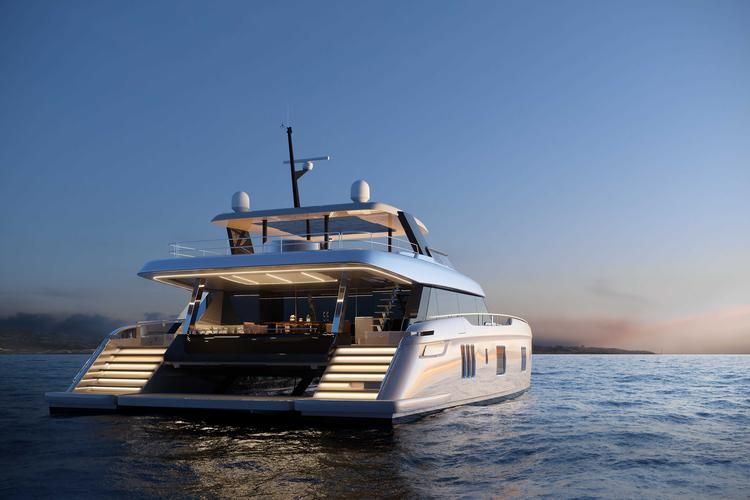
The Sunreef Power 80 is an 80-foot catamaran motor yacht. Designed as a catamaran, it features two hulls and four engine compartments. The first unit was delivered in 2018, and to date, more than thirty have been produced.
This yacht is positioned in the high-end market, with prices ranging from 8 million to 12 million euros; it can also be found on the pre-owned market, typically priced between 5 million and 7 million euros.
Those who can afford one are generally not first-time boat owners. However, when it comes to maintenance, many still fall into common pitfalls.
Key Maintenance Points for the Engine Room
The Sunreef Power 80 is equipped with four MAN or MTU engines, each with a power output ranging from 1,500 to 2,000 horsepower.
The engine room is the heart of the entire vessel. Inadequate maintenance can result in repair costs that will make you wince.
Oil Change Intervals
MAN engines recommend changing the oil every 250 to 500 hours, while MTU engines have slightly different guidelines, with intervals ranging from 500 to 1,000 hours.
A common mistake made by beginners: calculating by time instead of by operating hours.
There are some shipowners who don’t change the engine oil even after three months, convinced that “it’s only been used for a few dozen hours,” However, this perception is incorrect. Oil oxidation begins the moment the container is opened; even if the oil remains unused, its performance will still degrade after six months.
In fact, I once witnessed a boat that hadn’t had its engine oil changed for three years, which resulted in both engines suffering cylinder scoring—and the cost to repair this damage amounted to a staggering 450,000 euros.
Cooling System
Check the seawater filter weekly. This is the area most often overlooked.
In the Adriatic Sea, algae blooms occur during the summer, causing the filters to become clogged. This reduces cooling efficiency, leading to increased engine temperatures and a corresponding drop in power output.
Boats are typically equipped with two seawater filters: one for primary use and the other as a backup. Alternating between them can extend their service life.
Fuel System
The Sunreef Power 80 has a fuel tank capacity of approximately 25,000 liters, providing a range of about 2,000 nautical miles at a cruising speed of 12 knots.
The fine fuel filter is replaced every 100 hours, and the coarse filter every 200 hours.
Many owners, finding this process too troublesome, skip the coarse filter altogether, resulting in the fine filter becoming clogged within three months. Replacing a fine filter costs 200 euros for parts, with labor costs billed separately.
Maintenance Issues Unique to Catamarans
Catamarans differ from monohulls. The structural connection between the two hulls is critical.
Inspection of the Connecting Beam
Inspect the connecting beams every six months. Pay close attention to the welds and bolts.
The connecting beam design of the Sunreef Power 80 is highly mature. However, when used in a marine environment over the long term, metal fatigue is an objective and very real phenomenon.
I once inspected a vessel built in 2019 and found slight cracking on the third bolt of the connecting beam, yet the owner appeared to be completely unaware of the issue.
By the time the issue was detected, it was already three months too late. The cost of reworking and replacing the component amounted to 8,000 euros. Had it been discovered earlier, replacing just a single bolt would have sufficed, costing only a few hundred euros.
Sealant between the hulls
The sealing strips between the two hulls should be inspected once a year.
Water temperatures in the Mediterranean are high in summer, causing the sealant to age rapidly. In winter, low water temperatures cause the sealant to contract.
In one of the most extreme cases I’ve ever seen, a boat went three consecutive years without having the sealant inspected. As a result, the gap between the two hulls widened by as much as two millimeters, allowing seawater to flood into the central compartment.
Repair costs totaled 15,000 euros, including re-sealing, drying, and testing.
Electrical System Maintenance
The electrical system on the Sunreef Power 80 is quite complex, featuring a main generator, an auxiliary generator, a battery bank, and an inverter.
Battery Maintenance
The vessel has four sets of lithium-ion batteries with a total capacity of approximately 100 kWh.
The greatest threats to lithium-ion batteries are high temperatures and deep discharge.
During the Mediterranean summer, cabin temperatures can reach as high as 60 degrees, and under such conditions, the lifespan of lithium batteries may be reduced by 30% to 40%.
During the summer, it is recommended to charge the batteries at least once a day to keep the charge level above 30%; under no circumstances should the charge level be allowed to drop below 20%.
Generator Maintenance
Main generator: 25 kVA; auxiliary generator: 15 kVA.
Generators should be run once every 100 hours—even if the boat is not in use—as batteries are prone to self-discharge, and a running generator can recharge them.
I know one boat owner who hasn’t taken his boat out for two years; all the batteries on board were completely dead, and replacing them cost 35,000 euros.
Hull Exterior Maintenance
Anti-fouling Paint
For the Sunreef Power 80, the hull covers an area of approximately 400 square meters. The antifouling paint must be reapplied every 12 to 18 months.
In the Mediterranean during the summer, water temperatures are relatively high, and marine organisms attach to the hull at a rapid rate. Once the antifouling paint loses its effectiveness, hull drag increases by between 15% and 20%.
What exactly does this increase in fuel consumption mean? For a single vessel, this translates to an additional fuel cost of between 15,000 and 20,000 euros per year.
Propeller Inspection
Inspect the propeller every six months. Check the blades for any dents or deformation.
A deformation of just 0.5 millimeters in the propeller can lead to a 30% increase in vibration; prolonged exposure to such vibration can damage the shaft system and bearings.
In one particularly extreme case—one that defies belief—a propeller blade became entangled in a fishing net. and the owner continued sailing for three months without noticing a thing, completely unaware of the situation. However, the bearings had already suffered wear and tear, and the cost to replace them amounted to as much as 12,000 euros!
Routine Maintenance Checklist
Weekly Tasks:
Check the engine oil level
Check the coolant level
Check the battery voltage
Check the pressure differential of the seawater filter
Monthly Tasks:
Replace the fuel pre-filter
Check the torque on all bolts
Check the condition of the sealant
Test the emergency generator
Quarterly Tasks:
Change the engine oil and oil filter
Inspect welds on the connecting beams
Inspect the propeller
Inspect the hull’s antifouling paint
Annual Tasks:
Out-of-dock hull inspection
Reapply antifouling paint
Comprehensive electrical system inspection
Engine Overhaul Inspection
Estimated Cost Range
Based on the cases I have handled, the annual maintenance costs for a Sunreef Power 80 typically range from 80,000 to 150,000 euros.
This includes:
Engine oil and oil filter: 5,000 euros
Fuel filter: 2,000 euros
Antifouling repaint: 15,000 euros
Battery maintenance: 3,000 euros
Reserve for engine overhaul: 20,000 euros
Other miscellaneous expenses: 30,000 euros
These figures may be higher than many people expect, but compared to the cost of repairs, preventive maintenance is actually cost-effective.
Common Misconceptions Among Beginners
Misconception 1: Scheduled Maintenance Based on Time, Not Hours
Engine maintenance should be based on operating hours, not months. Some boat owners may have sailed for six months but logged only 50 hours, leading them to assume the engine has “seen very little use.” In reality, the engine oil has already oxidized during this period.
Misconception 2: Cheap Parts Are Acceptable
For parts on a boat—especially engine parts—never use aftermarket parts. Take an oil filter, for example: the price difference might be just 20 euros, but it could potentially cause engine damage.
Misconception 3: You Can Handle All Maintenance Yourself
It is recommended to have a professional technician inspect both the electrical and engine systems. I’ve seen numerous boat owners who attempt to wire systems themselves, only to cause short circuits that burn out control modules. Replacing this component costs 5,000 euros, whereas hiring a professional technician to do the job costs just 500 euros—a significant difference in cost.
Misconception 4: Ignoring Minor Issues
If a small leak is left unaddressed, it can turn into a major problem within three months. I’ve seen repair costs range from as low as 100 euros to as high as 1 million euros. The difference between these two extremes lies in whether minor issues were addressed in a timely manner.
Author’s Note
This article was written by Old Chen, who has worked in the maritime industry in the Adriatic Sea for twelve years. He has personally maintained more than thirty high-end yachts, including fifteen Sunreef vessels. The content described in this article is based on experience gained through actual maintenance work and is not a translation of an official manual.
Q: What is the maintenance frequency for the Sunreef Power 80?
For Option A, basic inspections can be conducted weekly, filter replacements are scheduled monthly, and engine oil should be changed quarterly, with a dry-dock inspection taking place at the end of the year. Engine maintenance is scheduled based on operating hours, not calendar time.
Q: Are there any special considerations for summer maintenance in the Mediterranean?
A: In high-temperature and high-humidity conditions, antifouling paint deteriorates more quickly, and battery life is affected. We recommend increasing the frequency of inspections during the summer to check sealants and battery condition once a month.
Q: Should I perform maintenance myself or hire a professional?
A: You can handle basic inspections yourself. However, for the electrical system and engine overhauls, it’s best to consult a professional technician. The money you save might not even cover the repair costs.
Q: What should I look out for when purchasing a used Sunreef Power 80?
B: Pay close attention to engine hours, battery condition, and the welds on the connecting beams. Ensure a complete maintenance record is available. For boats without a maintenance record, exercise extreme caution when purchasing and do not act rashly.
Q: Can maintenance costs be kept under control?
First, preventive maintenance is the most cost-effective approach. Second, a budget of 80,000 to 150,000 per year is reasonable. Third, if maintenance is neglected, a single major overhaul could very likely cost you over 500,000.