
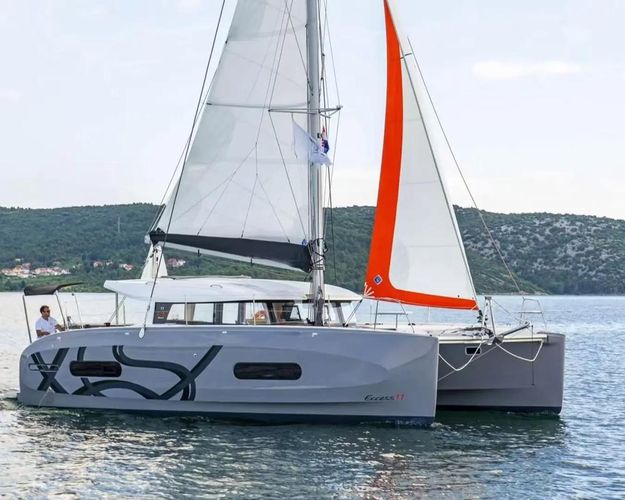
Abstract: When purchasing or placing a catamaran under management with The Catamaran Company in the British Virgin Islands, the initial purchase price is merely a tiny fraction of the total cost—like the tip of an iceberg or a drop in the ocean.Drawing on three years of actual invoices, this article breaks down hidden costs—including management fees, maintenance expenses, insurance premiums, berthing fees, and depreciation—to show how annual expenses can easily exceed $100,000. It also highlights the fine print in contracts that beginners often overlook and the scope for negotiating lower rates.
Author’s Note: I spent seven years working in the sailing industry in the Caribbean, during which time I managed two boats for The Catamaran Company— namely the Lagoon 450 and the Leopard 50. I personally experienced the entire process—from the initial purchase, through the management phase, to maintenance, and finally to the sale.It should be noted that this article is not intended to promote any specific company; all figures mentioned are derived from my own invoices and genuine feedback provided by fellow boaters at the same marina.
First, the conclusion: don’t be fooled by the sales presentation.
That year, standing in The Catamaran Company’s office in Tortola, the salesperson showed me a profit and loss statement indicating that annual management fees would cover the majority of expenses and that the boat would appreciate in value—and I believed it.
Three years later, when I tallied the books, I had lost $60,000.
I’m not saying they were deceptive, but there was simply too much left unsaid on that spreadsheet. Maintenance costs, mooring fees, insurance premiums, downtime during the off-season, aging equipment, and the anxiety of hurricane season—these are the factors that truly make up the lion’s share of the costs.
If you’re thinking about buying a catamaran in the British Virgin Islands and entrusting it to a catamaran company, I urge you to finish reading this article first—the money you save will be enough to cover two years’ worth of fuel.
The Purchase Price Is Just the Entry Ticket
Let’s start with the price of the boat. The new Lagoon and Leopard models represented by The Catamaran Company are priced between $600,000 and $1.2 million, depending on size and specifications. Used boats are relatively cheaper, but the BVI market is quite complex.
I own a Lagoon 450—I bought it used in 2019. At the time, it was three years old, listed at $490,000, and I eventually negotiated the price down to $450,000.On the surface, it seemed like I saved 40,000, but I later discovered that the previous owner had replaced both bilge pumps with cheap alternatives. In the first year after I took ownership, I spent over 8,000 to replace them with the original factory parts.
When buying a used boat, never focus solely on the price; you must always check its maintenance records. Absolutely avoid any boat that lacks a complete maintenance log, no matter how cheap it may be.
There was also a Leopard 50 that I ordered brand-new. The quoted price was 980,000, but after adding air conditioning, a generator, a watermaker, and solar panels, the final price skyrocketed to 1.15 million.The salesperson will tell you these are “essential features,” but in reality, half of them can be installed later, saving you 30 percent on the price.
Management fees are rising every year
The Catamaran Company offers two types of management models: full management and revenue-sharing. Under the full management model, they assist you with managing the vessel while you use it yourself, and you pay an annual management fee.In contrast, the revenue-sharing model involves them helping you rent out the boat, allowing you to receive a share of the rental income, and the management fee is slightly lower.
I opted for the revenue-sharing model. In the first year, the management fee was 18,000; in the second year, it rose to 21,000; and by the third year, it had jumped to 25,000. The contract states that fees are “subject to adjustment based on market conditions,” which essentially leaves the door wide open for increases.
Before signing the contract, be sure to ask very clearly what exactly is covered by the management fee and what is not.In my experience, while the list of “included items” they provided seemed extensive, very few of them were actually applicable. Oil changes incur an extra charge, cleaning the hull costs extra, and they even charge a labor fee just to replace a light bulb.
What’s even more exploitative is that if the boat develops a problem during the peak rental season, the repair costs are deducted directly from your share of the profits—and the prices are 20 percent higher than market rates.I have a fellow boater who, after just one peak season, found that the amount deducted for repairs exceeded his profit share.
Berthing fees are much higher than expected
Berthing fees in the British Virgin Islands are a significant expense. The catamaran company has exclusive berthing spots at Nanny Reef, but there are situations where additional fees are charged.For my catamaran, the annual berthing fee is equivalent to about 12,000 RMB. Due to its size, the annual berthing fee for the “Navigator” catamaran is as high as 15,000 RMB.

During peak season, do you want to anchor in popular anchorage areas? At places like The Baths or Jost Van Dyke, the cost for just one night’s stay ranges from $80 to $120. If you charter the boat a few times a month, these mooring fees alone can easily add up to over a thousand U.S. dollars.
What beginners most often overlook is off-season mooring. September through November is hurricane season, when boats need to take shelter in harbor. Mooring fees double during this time, and you’ll also need to purchase additional hurricane insurance. That year during hurricane season, my mooring fees and insurance cost me nearly 10,000.
Insurance: The BVI insurance market is very complex
Boat insurance in the British Virgin Islands isn’t something you can just buy whenever you want. Insurance companies will check the boat’s age, assess the captain’s experience, review the management company’s records, and also look into whether you’ve had any incidents during hurricane season.
In the first year, my premium was over 8,000; the following year, simply because of an extremely minor scrape, the premium shot straight up to 13,000. The insurance company claimed this was a “risk adjustment,” but in reality, it was simply an excuse to raise the price.
When purchasing insurance, be sure to find a local broker; do not choose an American or European insurance company. Local brokers know which companies are friendly toward the BVI route and which ones will pass the buck when problems arise.The U.S. insurance company I chose dragged its feet for three whole months during the claims process and ultimately paid out only 70 percent.
Additionally, there’s a “navigation area restriction” in the insurance policy: BVI insurance generally covers only the Caribbean region. If you plan to sail to the Bahamas, you’ll need to pay an additional fee; if you want to go to South America, they’ll flat-out refuse to insure you.
Maintenance: A Bottomless Pit
I need to address this point specifically. Maintenance and repairs for a catamaran are significantly more expensive than for a monohull. This is because it’s equipped with two engines, two steering systems, and two electrical systems—and all related components come in duplicate.
For my Lagoon 450, the cost of annual routine maintenance typically ranges from 8,000 to 10,000. This includes oil changes, filter replacements, sail check-ups, hull cleaning, and replacing sacrificial anodes.This amount may not sound like much, but that’s assuming “nothing breaks.”
In the first year, I replaced a generator, which cost 6,000 yuan. In the second year, the air conditioning compressor burned out, costing another 4,000 yuan.In the third year, the sailcloth began to show signs of aging, so I replaced the mainsail and genoa, costing 12,000 yuan. None of these situations were covered under the management contract; they were all additional expenses.
What was most frustrating was that the repair quotes provided by The Catamaran Company were clearly unreasonable: the part costs in these quotes were as much as 30 percent higher than market prices, and their labor rates started at $120 per hour.After this experience, I’ve become more savvy. When minor issues arise, I now choose to purchase the parts myself and then hire a local technician to install them—this approach saves me about half the cost.
Depreciation: The Hidden Loss No One Tells You About
Salespeople won’t tell you that boats are depreciating assets. My Lagoon 450 cost 450,000 to purchase; three years later, its appraised value was 380,000. The situation is even worse for the Leopard 50: it cost 1,150,000 out-of-the-box, but two years later, its appraised value had dropped to 950,000.
When calculating your total expenses, depreciation is an absolute must to factor in.My total expenses over the three-year period were as follows: 60,000 in management fees, 36,000 in berthing fees, 30,000 in insurance, 45,000 in maintenance and repairs, and 15,000 in miscellaneous expenses—totaling 186,000.The income from rent sharing was approximately 90,000. Adding the 70,000 in depreciation, my net loss comes to 116,000.
If we calculate the opportunity cost based on the potential returns that the funds used to purchase the boat could have generated in the stock market—that is, the amount that money could have earned in the stock market—the resulting loss becomes even more daunting.
I’m not saying you shouldn’t buy one, but you need to understand that purchasing a catamaran charter is not an investment—it’s a consumer purchase.The money you spend buys you sunsets over the Caribbean Sea, the freedom to cruise from island to island at your leisure, and precious moments spent enjoying drinks with family and friends on the deck.And only you, deep down, know exactly how much these experiences are worth.
Common Pitfalls for Beginners
Here are a few pitfalls I’ve seen others fall into—take a look and see if any apply to you.
The first pitfall is that the contract does not clearly specify “repair approval authority.” When the management company performs repairs, if the cost exceeds a certain amount, they require your written consent.I have a friend who didn’t notice this clause. Over a three-month period, the management company carried out repairs worth over 20,000 for him—all classified as “emergency repairs”—without him ever even being consulted.
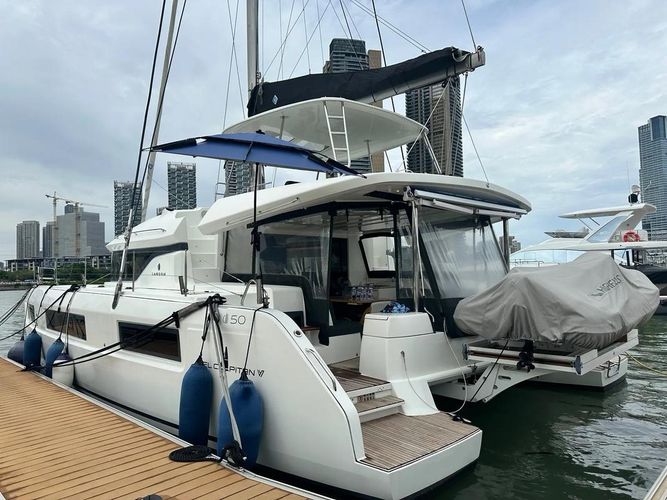
The second pitfall concerns the rent-sharing settlement cycle. The Catamaran Company settles rent-sharing on a quarterly basis, but their billing system is in a state of utter chaos. As the account holder, when I reconciled the accounts during the first year, I noticed that three rental payments had not been credited to me. It took two months of follow-up before they were finally credited. Therefore, I strongly advise you to personally verify your statements every quarter—never skip this step just because it seems like a hassle.
The third pitfall lies in restrictions on crew usage. The management contract typically specifies the number of days per year you are allowed to use the vessel; if you exceed this limit, you will be charged additional fees. For my Leopard 50, the contract stipulates 30 days of personal use per year; exceeding this limit incurs a charge of $300 per day. One year, I used the boat for 38 days and ended up paying an additional $2,400 as a result.
The fourth pitfall involves the commission charged during the sale. The Catamaran Company charges a 10% commission on the sale of used boats, which is the industry standard. However, their contract states “no less than 10%.” My friend was charged a 12% commission when selling his boat, with the justification being “increased marketing costs.” It is essential to clearly and unambiguously establish the commission rate before signing the contract.
Who Is It Suited For?
Having said all these negative things, I don’t deny that this model makes sense for some people.
If you can spend two or three months a year in the British Virgin Islands, enjoy sailing, don’t mind having strangers use your boat, and can afford to lose tens of thousands of U.S. dollars a year in exchange for the experience, then the catamaran company’s management model is a good fit for you.
However, if you’re hoping to cover your costs—or even turn a profit—through rental income, I strongly advise you to abandon that idea as soon as possible. The yacht charter market in the British Virgin Islands is extremely competitive, with a stark distinction between the off-season and peak season; the income from charter fees is nowhere near as promising as the sales pitch suggests.
If you’re simply looking to take the occasional Caribbean vacation, you’re better off renting a boat outright. Renting a Lagon 450 for a week costs approximately 8,000 to 12,000; renting it for three weeks a year would cost just over 30,000—which is far more economical than owning a boat.
Q: Is it possible to negotiate the management contract with The Catamaran Company?
It is possible to negotiate, but there isn’t much wiggle room. You can try to lower the management fee a bit; I’ve seen someone successfully negotiate it down from 24,000 to 21,100.Labor costs for repairs are also negotiable; you should request a fixed rate rather than allowing them to charge “market price.” The commission rate must be clearly specified in writing—do not leave any wiggle room with phrases like “no less than.”
Q: Should I buy a new or used boat?
Depending on your patience and budget, a new boat offers peace of mind, but the initial cost is higher, and depreciation is most severe during the first three years. A used boat is relatively cheaper, but the BVI used boat market is complex. It’s best to find an independent surveyor to conduct a thorough inspection—don’t skimp on the 2,000 inspection fee.
Q: What about hurricane season?
Hurricane season in the British Virgin Islands runs from June through November, with the peak period falling between August and October. The management company will arrange for the boat to enter a harbor to ride out the storm, but you’ll need to pay additional berthing fees and hurricane insurance premiums. Some boat owners choose to sail their vessels to the Southern Caribbean or Panama for shelter, though the cost of that voyage is also quite high.
Q: Can rental income really cover the costs?
Among the people I know, not a single one has ever achieved that. In the best-case scenario, rental income might just cover the berthing and insurance costs, but it won’t even cover the management fees.The profit and loss statement provided by the sales representative is based on an ideal occupancy rate and the highest daily rental rate; a more realistic estimate would be to calculate it at 70% of those figures, which is a relatively reliable approximation.
Q: What if I don’t use a management company and manage the boat myself?
If you don’t live in the BVI, I wouldn’t recommend it. Managing the boat yourself means you’ll have to coordinate repairs, find crew, and resolve tenant issues remotely—and the time difference alone is enough to cause you a lot of headaches.I have a fellow boater who tried managing the boat on his own, but after six months, he ended up entrusting it to a management company because he simply found it too exhausting.
After crunching the numbers, would you still want to buy a boat? If the answer is yes, it means you have a genuine passion for sailing.If you’re still on the fence, I suggest you rent a boat first to get a feel for it for a quarter before making a decision. After all, the Caribbean breeze won’t blow any less just because you don’t own a boat—not even a bit.