
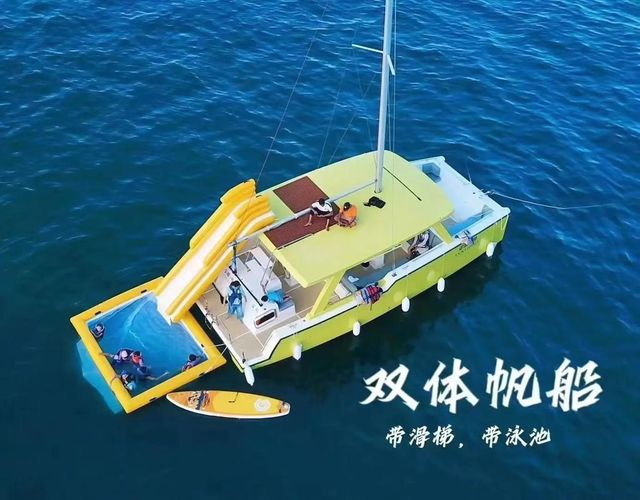
It’s important to note that when it comes to owning an 18-foot catamaran, the purchase price is just the beginning.The costs of mooring, maintenance, insurance, towing, and even upgrades—each of these expenses gradually and imperceptibly drains your wallet.This article is based on my personal experience over three years of sailing throughout Florida, the Bahamas, and the Great Lakes. I’ll lay out in detail exactly where every penny went, which expenses can be cut, and which ones are absolutely essential—all clearly explained for you.For those of you who are planning to buy a boat or have just purchased one, reading this article before you spend any money will help you avoid many pitfalls.
Author’s Note: I am a Florida-registered sailing enthusiast who has owned an 18-foot catamaran for three years, logging over 4,000 nautical miles across the Gulf of Mexico, the Bay of Biscay, and the Great Lakes region.All cost data comes from my personal records, marina bills, and boat yard repair invoices—these are not official statistics, but they are absolutely accurate.
First, let me explain why I chose an 18-foot catamaran
Three years ago, at the Miami Boat Show, I saw this 18-foot catamaran for the first time. To be honest, my initial reaction was: “How can a boat be this small?”
However, something the salesperson said made me think. He asked: “Can you tow it by yourself? Does your garage have room for it? Can you just hop in and go whenever you want on the weekends?”
The most striking advantage of an 18-foot catamaran isn’t its performance, but the freedom and spontaneity it offers. You don’t need a permanent dock, nor do you need to hire anyone to help—all it takes is an SUV to tow it back and forth.I live in Orlando. When I want to head out to any lake on the weekend, I check the weather forecast the day before, set off at 6:00 a.m. the next morning, and by 9:00 a.m., I’m already out on the water.
That’s a feeling a big boat just can’t give you.
Boat Price: Used Is the Way to Go
A new boat? Forget it.
I looked up market prices for 2024. For a brand-new, 18-foot catamaran—like the Hobie Tandem Island or one with similar specifications—the out-the-door price generally falls within the range of $8,000 to $12,000. If you add in taxes and shipping costs, the total easily exceeds $10,000.
The one I purchased was secondhand—a 2019 model that I bought in 2021 for $5,200.The original owner was a retired elderly gentleman who had launched the boat only three times in the two years since he bought it; there wasn’t even any barnacle growth on the hull. A boat like this is truly worth buying.
A common mistake beginners make is acting on impulse when they see a low price on a used boat, only to discover after the purchase that the canvas has deteriorated, the ropes are frayed, and the bearings are rusted.My advice is to focus on inspecting these three areas when viewing a boat: first, check the edges of the sails for fraying; second, look for rust spots on the tiller; and third, check the hull for signs of repairs. If there are issues with any of these three areas, repairs will cost at least several hundred dollars.
Docking Fees: The Biggest Hidden Cost
If you think buying a boat means you can launch it for free, you’re being too naive.
At a marina in Key Largo, Florida, I inquired about prices. To dock an 18-foot catamaran there, the monthly rental ranges from $180 to $250. Please note that this is the rate for a small boat; larger boats cost even more.
But I didn’t choose a marina; I opted for dry storage.
The benefit of dry storage is that the boat isn’t submerged in water, so nothing grows on the hull, and maintenance costs are lower. My current storage location is north of Orlando, and the monthly fee is $85, which covers washing and a basic safety inspection.
Over the course of a year, storage costs come to $1,020.
Let’s compare: if you were to store it at a marina, it would cost between $2,160 and $3,000 a year—enough to buy a whole new set of sails.
Insurance: You have to buy it, but don’t overpay
Many people think small boats don’t need insurance—that’s the biggest misconception.
While sailing in the Bahamas, I encountered a sudden storm. A boat about the same size as mine—simply because it wasn’t insured—had to pay $3,800 out of pocket for repairs after its mast broke.
My policy, underwritten by Progressive, is specifically designed for small sailboats. It costs $320 per year and covers collisions, theft, and third-party liability. Is that a high price to pay? Compared to the repair costs that could result from a single accident, it’s actually much cheaper.
My practical advice is to make sure you ask whether towing is covered before purchasing insurance. Last year, I ran aground on Lake Okeechobee and paid $180 for a tow. I later found out that my insurance actually included this service—I’d wasted my money.
Maintenance: Do It Yourself and Save Half
Sailboat maintenance can be both difficult and simple.
My annual maintenance bill looks something like this:
| Item | Cost (USD) | Frequency |
|---|---|---|
| Hull Cleaning | 60 (I buy the cleaner myself) | Once a month |
| Canvas Care Spray | 35 | Once per quarter |
| Rope Replacement | 80 | Once a year |
| Bearing Lubrication | 25 | Every six months |
| Mast inspection | 120 (have someone do it) | Once a year |
The total maintenance costs for the entire year are approximately between $600 and $700.

If you hire someone to do everything, the cost will at least double. I have a friend who owns the same type of boat and spends $1,400 a year on maintenance—simply because he’s not even willing to wash the boat himself.
For basic tasks like cleaning the hull and replacing ropes, you can learn to do them yourself—there are countless tutorials on YouTube. However, for technically demanding tasks such as mast inspections and sail repairs, don’t even think about cutting corners; hire a professional with experience to handle them.
Destination Expenses: Costs Vary Wildly by Location
This is where the real differences lie.
Over the past three years, I’ve traveled to four major regions, and the costs in each place were completely different.
Local lakes in Florida
This is the most affordable option. On a typical day, expenses generally fall within the $20 to $50 range, which covers launch fees, parking fees, and a simple meal. At Lake Apopka—a spot I visit frequently—the launch fee is just $10, parking is free, and there are public restrooms and picnic areas nearby.
Florida Coastline
Using the Gulf of Mexico as a route, starting from Tampa and heading toward Naples, a three-day trip would cost approximately $200 to $300. Most of the expenses go toward marina fees, which range from $30 to $50 per night, with the rest spent on provisions.
The Bahamas
This is the most expensive place I’ve ever sailed to, but also the most worthwhile.
Before heading to the Bahamas, you’ll need to prepare:
Exit permit and customs declaration: $150
Return entry fee: $50
Dockage fees: $40 to $80 per night
Drinking water and food supplies: About $100 to $150 for three days
An emergency rescue service—either SeaTow or BoatUS—with an annual fee ranging from $150 to $200.
For a five-day trip to the Bahamas, the total cost would likely fall within the range of $600 to $900.This may sound expensive, but when you consider the waters in that region, you’ll find it’s well worth the cost.
The Great Lakes Region
Last summer, I took a trip to the Great Lakes and discovered that it’s much cheaper there than in Florida. There are many public boat launch sites around Lake Michigan; many of them are free, and docking fees are only $20 to $40 per night.
But there’s one catch: the water temperature. The water in the Great Lakes is bone-chillingly cold; even in July, it’s only about 15 degrees. Without a wetsuit, you simply wouldn’t be able to handle it.On my first trip, I had no experience, and after just half an hour in the water, my lips turned purple from the cold—it was an absolute nightmare.
Annual Total Bill: Let’s Do the Math
Adding up all the costs above, my annual fixed expenses are roughly:
| Item | Annual Cost (USD) |
|---|---|
| Storage Fee | 1,020 |
| Insurance | 320 |
| Maintenance | 650 |
| Gas and Towing Maintenance | 400 |
| Launching fees and miscellaneous expenses | 300 |
| Total | 2,690 |
If I add up the expenses incurred for each trip to my destinations—and I make 20 to 30 trips a year—my total annual expenses fall within the range of $4,000 to $5,500.
To put this in perspective: the annual cost of maintaining an 18-foot catamaran is roughly equivalent to buying a brand-new iPhone, plus an iPad, or a trip to Europe.
Is it worth it? That depends on how you look at it.
For me, spending a weekend hauling the boat to the lake on my own, listening to the sound of the water while reading a book—that’s an experience money simply can’t buy.
Five Details Beginners Most Often Overlook
Trailer Tires
Last year, I had a flat tire on I-75 because the trailer tire had been in use for five years without ever being replaced.Replacing the tire and paying for the tow cost a total of $260. After doing some research, I learned that it’s recommended to replace trailer tires every three years, even if they don’t appear to show any signs of wear.
The Slope of the Launch Ramp
Not all boat ramps are suitable for an 18-foot catamaran; some are too steep. When backing the trailer onto such a ramp, the boat can slide down on its own. I encountered this very situation on my first visit to a public launch site, which nearly caused the boat to fall. I recommend checking the satellite imagery of the ramp on Google Maps before setting out, or calling local boaters to ask for advice.
Sail Trimming
Sail adjustment on an 18-foot catamaran is completely different from that on a larger boat. While larger boats require precise tuning, smaller boats emphasize quick response.When I first bought the boat, I kept adjusting the sails the way I would on a larger vessel, but I just couldn’t get the speed up. Later, a seasoned sailor told me that with a small boat, you just need to get “roughly ready to set sail”—don’t linger too long at the dock.
Batteries and Electronics
The battery capacity for small boats is limited. I use a 12V, 35Ah lithium battery, which is sufficient for charging my cell phone and powering the GPS.However, be very careful not to use high-power devices on board—for example, electric kettles or electric blankets—as they will drain the battery in a short amount of time.
Seasonal Storage
If you live in an area where freezing occurs in the winter, the boat must be taken out of the water for storage. A friend of mine in the Great Lakes region told me that winter storage costs there range from $200 to $300—much more expensive than in Florida. Furthermore, if the boat isn’t completely drained of water, the repair costs resulting from a frozen hull cracking open will make you cry.
My Money-Saving Tips
Over the past three years, I’ve gathered a few solid money-saving tips:
First, join a local sailing club. I joined a club similar to the one in Orlando, which costs $150 per year. This covers free boat launches, free parking, and a monthly technical workshop. Just the boat launch fees alone save me over $200 a year.
Second, prioritize used parts. I bought a nearly brand-new set of sails on Facebook Marketplace for just $120—the original price was over $400. The seller was a veteran sailor upgrading his larger boat, and the sails had been used fewer than ten times.
Third, I taught myself basic maintenance—skills you can learn on YouTube, such as tying knots, making small repairs to canvas, and replacing bearings. During my first year, I paid someone to do repairs a few times, which cost me over $400; by the second year, I was doing it myself and only spent money on materials.
Fourth, choose off-peak times to go out on the water. Weekend marina fees in Florida are 30% to 50% higher than on weekdays. If my schedule allows, I try to go out on weekdays whenever possible—that way, there are fewer people and the costs are lower.
Q: How many people can an 18-foot catamaran accommodate?
According to the official specifications, it can accommodate 4 to 6 people; however, based on my personal experience, it’s most comfortable with 2 to 3 people. Once the number exceeds four, the boat’s center of gravity becomes noticeably unstable, steering becomes sluggish and unresponsive, and with more people comes more gear, making the storage space completely insufficient.
Q: Is it suitable for a beginner to buy an 18-foot catamaran right away?
I think it’s quite suitable. An 18-foot catamaran is much easier to handle than a larger boat and has a wider margin for error. The first time I took it out, the wind was quite strong, and the boat heeled over about 20 degrees, but it quickly righted itself on its own. If it had been a larger boat, I might have been too scared to move in that situation.
Q: Can it be used for fishing?
It’s possible, but not ideal. The deck of a catamaran is flat, so there aren’t any specific fishing spots, and the boat sways and rocks much more noticeably than a monohull.I’ve tried it a few times myself; while the number of fish caught wasn’t too low, I did drop my fishing rod into the water twice. If you want to focus seriously on fishing, I recommend purchasing a monohull boat or a specially designed fishing boat.
Q: Is it safe to sail an 18-foot boat from Florida to the Bahamas?
To be honest, there is a certain degree of risk involved. I’ve made the trip twice, both times under exceptionally good weather conditions, with wave heights and wind speeds never exceeding one meter. However, if you lack sufficient experience with offshore navigation, I do not recommend attempting it.The Gulf Stream flows quite rapidly, and in the event of sudden weather changes, an 18-foot boat will find it extremely difficult to respond effectively. If you plan to make the trip, it’s best to travel with an experienced fleet.
Q: What kind of driver’s license is required to tow a boat?
In the United States, a standard driver’s license is sufficient in most states to tow an 18-foot boat. However, you must be aware of each state’s speed limits—for example, Florida has a speed limit of 65 miles per hour for towing, while California’s limit is 55.Speeding fines can be quite hefty—a friend of mine was once fined over $400 in California.
When it comes to boating, how much you spend is entirely up to you. Some people can have a thoroughly enjoyable experience for just a few thousand yuan, while others, even after spending tens of thousands, still end up feeling overwhelmed and disorganized. The key is to clearly understand your own needs and not let salespeople’s pitches sway you.
I’ve documented the ups and downs I’ve experienced over the past three years in the hope that this will help you save some money and avoid unnecessary detours.If you’re currently considering purchasing an 18-foot catamaran or have already done so, please feel free to share the details of your expenses in the comments section—perhaps your past experiences can help benefit others.