

I've owned a yacht for three years.
It’s not one of those massive yachts owned by the super-rich.
It’s just a 40-foot used cruiser moored at a marina in South Florida.
A lot of people ask me, “Is it worth it?”
Every time I hear that question, I pause for a few seconds.
It’s not because I’m hesitating.
It’s because of the bills.
Let’s start with those heart-pounding moments
The first time I set out to sea in my own boat was one early July morning.
The sea’s surface looked like a crumpled piece of blue silk.
The engine wasn’t loud, but its vibration sent a tingling sensation through my chest.
The sun crept up from behind the Miami skyline, and its orange-red light bathed the entire deck.
In that moment, I felt it was all worth every penny.
Have you ever imagined that kind of freedom?
No flight schedules.
No hotel reservations.
No noise from other people.
Just you and the endless expanse of water.
To take the kids on a trip, I headed to the Bimini Islands, and it was at that very moment—on that particular weekend—that they saw dolphins leaping behind the boat for the very first time.
The older one screamed, and the younger one grinned like a fool.
My wife leaned against the side of the cockpit, holding a cup of coffee, saying nothing.
That kind of quiet is priceless.
But here are the things no one tells you
In the first year after buying the boat, I spent $8,000 on engine repairs.
It wasn’t a major overhaul.
Just a water pump and a few O-rings.
Eight thousand.
US dollars.
You might say I got ripped off.
Maybe.
But that’s just the way things are in the yachting world.
If any part breaks, shipping, labor, and parts markups start at triple the normal price.
I know a friend in San Diego who bought a used sailboat and thought he’d gotten a great deal.
As it turned out, he spent 12,000 on mooring fees and maintenance in the first year alone.
His wife told him, “Either sell the boat or get a divorce.”
So he sold the boat.

Dock fees are a silent vampire.
My current marina costs $1,100 a month.
That’s not expensive.
In Miami, that’s considered cheap.
I have a friend on Long Island, New York, who pays $2,500 a month.
Even if you don’t take your boat out for a year, you’re still charged that amount.
It’s like renting an apartment—but at least with an apartment, you can go inside and hang out.
Not so with a boat.
It just sits there, exposed to the wind and sun, slowly deteriorating.
There’s a set of data to support this: a 2023 report by the Boat Builders Association of America indicates that the average annual cost of ownership for a recreational yacht is roughly 10 percent of the purchase price.
If you buy a boat for 100,000, you’ll need to set aside 10,000 each year to maintain it.
Over ten years, that’s enough to buy another boat.
The Three Most Common Mistakes Beginners Make
First, buying a boat that’s too big.
Many first-time buyers assume that bigger is always better.
But they soon discover that mooring fees are expensive, fuel consumption is high, and the boat is difficult to handle.
When backing into a slip, you’ll feel like tearing the dock down.
Second, neglecting the pre-purchase inspection.
I know a guy in Houston who looked at a boat—it looked great on the outside and was clean on the inside.
He paid for it on the spot.
Three months later, the engine was a total loss.
The repair estimate came to 23,000.
He later found out that the boat had previously been submerged in seawater, and the inside of the engine had long since rusted through.
Third, underestimating the weather.
In Florida, the weather changes right at 3:00 p.m. every afternoon.
Dark clouds roll in from the west, the wind suddenly picks up, and the waves jump from two feet to five feet.
If you’re inexperienced, you’ll panic in a situation like that.
And panic can easily lead to accidents.
So is it really worth buying?
I’ll be honest.
If you’re trying to save money, don’t buy one.
Renting a boat and going out to sea ten times a year might cost 5,000.
Maintaining a boat for a year costs at least 15,000.
But if saving money isn’t what you’re after—
That feeling—assuming that’s what you’re looking for—is setting sail from the harbor at 4 a.m., watching the stars slowly fade away as the sky begins to lighten.
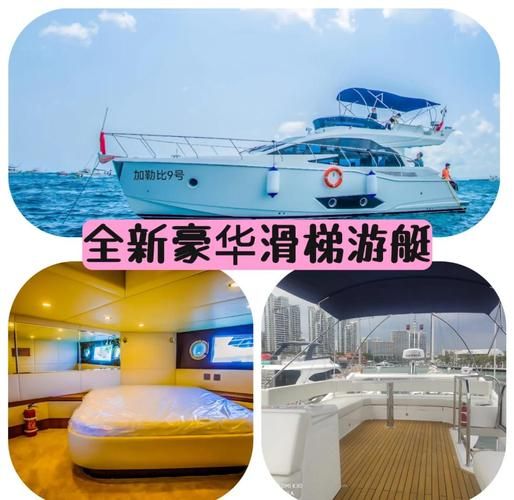
If what you’re after is spending the night at anchor, surrounded only by the sound of water and the wind.
If what you hope for is that, even after your children have grown up, they’ll still remember that summer when Dad took them to a deserted island.
Then, perhaps it’s worth it.
A Few Facts You Should Know
In 2022, a report by the U.S. Coast Guard stated that there were approximately 12 million registered recreational yachts in the United States that year.
However, there are more than 4,000 yacht-related accidents each year.
Seventy percent of these are due to operational errors.
Another statistic comes from BoatUS.
They analyzed their members’ repair records.
The most common issues were dead batteries and fuel system problems.
These two issues account for more than 40 percent of all service requests.
So, if you’re seriously thinking about buying a boat,
Learn how to read a voltmeter first.
Learn how to change the oil filter.
First, learn to stay calm in rough seas.
Frequently Asked Questions
Q: Should I buy a new boat or a used one?
Well, the answer is this: it depends on your budget. A brand-new boat is more hassle-free, but it depreciates quickly. A used boat is cheaper, but you’ll need to be mentally prepared for repairs. My advice for first-time boat buyers is to look for a well-maintained used boat priced between 30,000 and 50,000. That way, even if you end up losing money on it, it won’t be a big deal. Once you’ve learned enough, you can always upgrade later.
Q: Diesel or gasoline engine?
The answer is that diesel engines are durable and offer good fuel economy, but they come with high maintenance costs. Gasoline engines are relatively inexpensive, but they have a shorter service life. If you’ll mainly be operating in coastal waters, a gasoline engine will be sufficient.If you plan to sail offshore, a diesel engine is more reliable.
Q: Can someone with no experience learn to operate a boat on their own?
Answer: Yes, it’s possible, but I recommend taking a safety course first. The U.S. Coast Guard offers free online courses, or you could ask an experienced friend to take you out on the water a few times. Don’t go out on your own without guidance—I’ve seen plenty of people crash into the dock on their first time out on the water.
Q: Do boats really lose value?
A: Yes, they do—and quite rapidly. A brand-new boat typically depreciates by 30 to 40 percent in its first three years. Used boats tend to hold their value a bit better, though this depends on how well they’ve been maintained.Never treat a boat as an investment. It’s nothing more than a giant toy. And speaking of toys, they’re specifically designed to cost you money.
Q: I live inland. Is it worth buying a boat?
A: If you live more than a two-hour drive from the water, I wouldn’t recommend it. The reason is that you’ll eventually get fed up and won’t bother making the trip. Many inland boat owners go out on the water fewer than five times a year. But the costs—mooring fees, insurance, and maintenance—remain just as high. Under these circumstances, you’re better off renting a boat.
One last thing.
A yacht is not a necessity.
They are a luxury.
Not a luxury in terms of price.
It’s a luxury in terms of time and patience.
If you’re ready,
Then go for it.
The ocean is waiting for you there.