
Note: The author of this article is an amateur boat owner in Europe and the United States with 15 years of experience in yacht operation and maintenance, during which time he owned and resold two 60-foot yachts. This article is compiled using actual records of ownership costs, repair invoices, and industry-standard statistics. Its purpose is to provide potential buyers with a thorough financial reference, free from any ties to specific brands or sales personnel.
Abstract:
Deciding whether to purchase a 60-foot yacht is not as simple as just looking at the list price. This article provides a detailed breakdown of actual ownership costs, including insurance premiums, mooring fees, routine maintenance expenses, and those intangible, hidden costs.By comparing data collected from different regions, we expose financial pitfalls that beginners often overlook, helping you make a rational decision.
1. That Number Is Just the Tip of the Iceberg
Let’s be honest.
At first, you’re sitting in the yacht dealer’s office for the very first time. Your eyes land on a quote listing a price in the millions of dollars, and right then, your heart starts racing.
That feeling is wonderful.
But when you get home and pull out your calculator, you’ll discover something else entirely.
Many people think that once they buy a boat, it’s all over.
They couldn’t be more wrong.
That’s just the beginning.
It’s just like owning a dog.
Buying a dog is easy; raising one is hard.
A 60-foot boat is no toy.
It’s a floating luxury home at sea.
It’s also a money pit.
Today, I want to talk about the costs salespeople won’t tell you about.
The numbers that keep you awake at night.
2. Mooring fees: Your boat is “renting”
location.
On the U.S. East Coast, such as in Miami or the Hamptons.
A 60-foot boat moored at a prime marina.
How much does that cost per year?
Check this out.
$20,000 to $40,000.
Yes, you heard that right.
That’s just the rent.
Electricity isn’t included.
Water isn’t included.
Some marinas also charge an additional “view fee.”
Because your boat is blocking someone else’s ocean view.
Ironic, isn’t it?
If you go to Europe, like the Mediterranean.
Prices double during peak season.
I once stayed at the port of Baialta for a month.
When the bill arrived, I thought the post office had sent it to the wrong person.
Table 1: Estimated Annual Basic Mooring Fees (USD)
| Region | Off-Season Monthly Fee | High Season Monthly Fee | Average Annual Total Cost |
|---|---|---|---|
| U.S. East Coast | 1,500 | 3,500 | 28,000 |
| Caribbean | 2,000 | 4,500 | 36,000 |
| Mediterranean (Summer) | 2,500 | 6,000 | 48,000 |
Data source: Compiled from publicly available quotes from MarinaDirect and local marina associations; for reference only.
Take a look.
And that doesn’t even include trailer transport.
If you change locations every year.
Towing fees can run into the thousands per trip.
Twice a year.
That easily adds up to over ten thousand.
3. Insurance: Don’t skimp on this
Many people try to handle insurance on their own.
They find an agent and shop around.
And the result?
For a 60-foot boat, the premiums are steep.
Typically, it amounts to 1% to 1.5% of the boat’s value.
Let’s say your boat is worth 3 million.
The premium would be 30,000 to 45,000.
Don’t think that’s expensive.
Think about storms.
Think about accidental collisions.
Once, while my boat was being towed, the propeller struck a dock pile.
The repair bill was $8,000.
If I hadn’t had insurance?
I’d have to pay out of pocket.
Did it hurt?
It really did.
The insurance company will also require you to install the latest alarm system.
A GPS tracker.
That’s another few hundred dollars.
These are all hidden hurdles.
4. Maintenance: A Mechanic’s Nightmare
Engines.
Two diesel main engines.
A major overhaul is required every 500 hours.
A 60-foot boat has high fuel consumption.

How much fuel does it consume per hour at cruising speed?
About 100 gallons.
Yes.
100 gallons.
If it’s operated for 200 hours a year.
20,000 gallons of fuel.
At $3.50 per gallon.
$70,000.
That’s the operating cost.
That doesn’t include maintenance.
Engine oil.
Filters.
Driveshaft lubrication.
Hull cleaning.
Anti-fouling paint.
Apply bottom paint once a year.
Materials and labor.
$5,000 to $8,000.
Plus those minor issues.
The air conditioner is broken.
The fridge is leaking refrigerant.
A clogged toilet.
Find a reliable technician.
His hourly rate is $150.
Plus parts.
For minor repairs and maintenance, it’ll cost at least a few thousand dollars a year.
Table 2: Annual Routine Maintenance Budget Allocation
| Item | Estimated Cost Range | Remarks |
|---|---|---|
| Fuel | 60,000–90,000 | Depends on frequency of use |
| Regular Maintenance | 5,000–8,000 | Engine oil, oil filters, etc. |
| Hull maintenance | 5,000–10,000 | Cleaning, waxing, painting |
| Electrical/Mechanical Repairs | 3,000–6,000 | Contingency Fund for Unexpected Breakdowns |
| Miscellaneous | 2,000–4,000 | Rope and Life-Saving Equipment Replacement |
Note: Data is based on the average figures from yacht club annual financial reports.
5. Crew: Do You Need Help?
Can one person operate a 60-foot boat?
Theoretically, yes.
In practice, it’s exhausting.
Especially when docking.
No assistant.
You have to balance like an acrobat.
So, many people hire a captain or a part-time crew member.
The monthly salary ranges from $3,000 to $5,000.
That’s 40,000 to 60,000 a year.
That’s a huge fixed expense.
If you don’t hire anyone,
then you’ll have to learn it yourself.
Spend a few thousand dollars on classes.
Get licensed.
Time is money, too.
6. Depreciation: The Invisible Killer
Buy a new car, and its value drops to 20% of the original price the moment you drive it off the lot.
Buy a yacht, and it’s even worse.
A 60-foot yacht can depreciate by as much as 10% in the first year.
A 3 million boat.
A year later, it’s worth 2.7 million.
Five years later, it may be worth only half as much.
This isn’t an investment.
It’s a luxury purchase.
Many people fantasize that boats will appreciate in value.
Unless it’s a limited-edition antique boat.
Otherwise, don’t get your hopes up.
Think of it as a vacation home.
Spend money on happiness every year.
That’s enough.
7. The Ultimate Question: Is It Worth It?
I often ask myself that.
Spending 200,000 to 300,000 dollars a year on a boat.
Just for a few months of good weather.
Is it worth it?
When I’m out at sea, watching the sunrise.
Sipping champagne.
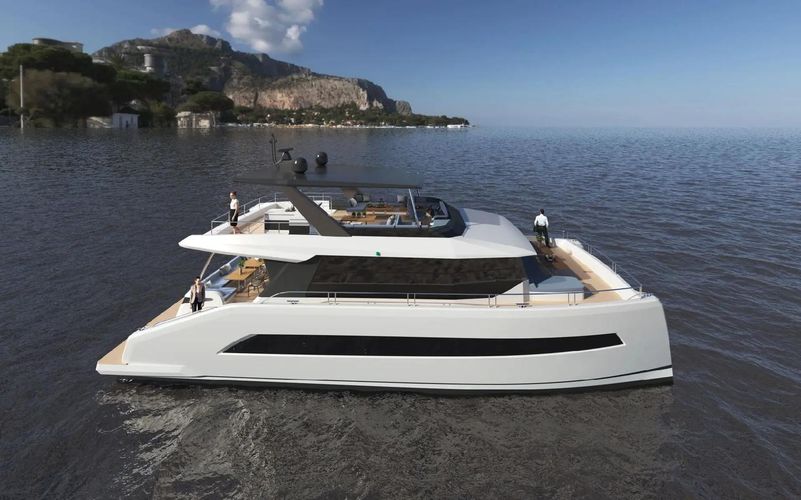
Listening to the waves lapping against the hull.
In that moment, I feel it’s worth it.
But when I’m at the repair shop, waiting for parts to arrive.
looking at the bill,
I felt it wasn’t worth it again.
That’s just reality.
There’s no perfect answer.
There are only choices that are right for you.
If you love the ocean,
and are willing to make the sacrifice,
Then buy it.
If you’re just doing it to show off,
Give it up right away.
Pride doesn’t put food on the table.
Nor can it be used as a boat.
Q&A: Stupid Questions Beginners Often Ask
Q: Can I buy a used one?
A: Of course.
But used boats come with more issues.
It’s like buying an old house.
The plumbing might be worn out.
The electrical system might short out.
I recommend hiring a third-party surveyor.
It costs $2,000 to have them inspect the vessel.
It could save you $20,000 in potential headaches.
It’s a worthwhile investment.
Q: Where should I store my boat in the winter?
A: If you’re in the Northern Hemisphere.
It’s too cold in winter.
The seawater freezes.
You have to haul the boat ashore.
Or move it to a warmer place.
Towing fees plus storage fees.
That’s another major expense.
Some boat owners simply sell their boats in the summer and buy new ones in the winter.
But that’s too risky.
Not recommended for beginners.
Q: Do we really need a boat this big?
A: A 60-foot boat is a bit too big for two people.
Cleaning it is exhausting.
You’ll never finish wiping down all the dust on the deck.
If it’s just for occasional get-togethers,
A 40-foot boat might be a better fit.
It’s smaller, cheaper, and easier to maintain.
Don’t let vanity get the better of you.
Q: How are electricity costs calculated?
A: A generator.
You’ll need it.
Especially when running the AC at night.
It runs on fuel.
It’s noisy.
It vibrates a lot.
Nowadays, some people are switching to lithium-ion batteries.
High initial investment.
But in the long run, it’s quiet and eco-friendly.
This is also the trend.