
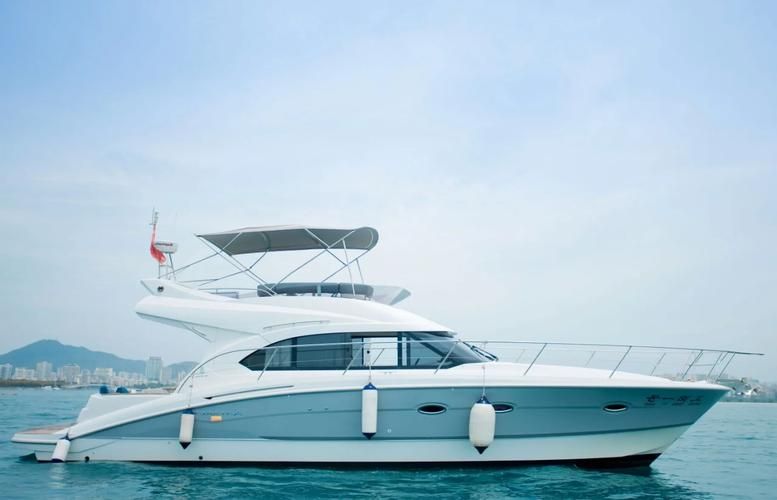
To be honest, when I saw the phrase “Bali 4.1,” what instantly popped into my head wasn’t some high-end, glamorous yacht magazine cover—but rather myself standing at the pier on Zakynthos Island in Greece, clutching a cup of iced Americano that was about to melt, staring at a large white ship there, set against the backdrop of the Temple of Poseidon—a scene that was both elegant and, at the same time, seemed to carry a hint of “clunkiness.”
Yes, clunky.
That’s because its deck is so wide—truly, incredibly, and excessively wide—that you have to be extremely careful not to miss a step while walking on it, and it makes the boat feel like an apartment floating on water.
Today, let’s set aside those dry, boring spec sheets—the “length, width, and height,” “displacement,” and other such details—because, as you know, that information is a dime a dozen on the official website.What I want to explore right now is this: assuming you’re actually planning to charter a Bali 4.1 for a cruise in 2026, how much will it actually cost you? Also, why do some people think it’s outrageously expensive, while others consider it the ultimate value for money?
First, let’s face a harsh reality.
The “Bali Catamarans” brand has a nickname in the industry: “Sofa Cat.” Why is it called that? It’s because the layout of its cabins is so much like that of a home.The living room is enormous, the dining table seats eight people, and the bedrooms are as spacious as hotel suites. For family getaways, this is absolutely a godsend.However, for seasoned deep-sea anglers who are all about speed and thrills, this could turn into a nightmare. The reason? It’s slow. Really slow.
So, who is your target audience?
If you’re taking your parents, your kids, or even a whole extended family to the Mediterranean or the Caribbean for a vacation, and you’re looking to “kick back,” hoping to sunbathe on the deck without being jostled by others, and hoping not to hear the couple next door arguing at night, then the Bali 4.1 is the perfect choice for you.
But if you’re a young couple dreaming of chasing dolphins by boat and craving the sensation of speeding like the wind and darting like lightning, then you’d better switch to a different model as soon as possible.The Bali 4.1’s cruising speed ranges from about 6 to 7 knots, and when fully loaded, it might even struggle to reach 6 knots. Don’t count on it to carry you at a speed fast enough to chase the sunset—it’s only capable of letting you watch the sunset slowly and elegantly.
What exactly is the price in 2026?
This brings us to the most crucial question. The price is not fixed; it’s as dynamic as a living thing, fluctuating based on factors such as the season, location, and whether a captain is included.
I’ve compiled the latest market rates for 2026. Let’s compare a few popular destinations—don’t be put off by the effort; you need to have a clear and precise understanding of the costs involved.
| Destination | Base Daily Rental Rate (Euros) | Skipper Fee/Day (euros) | Estimated Fuel Cost (per day) | Other Miscellaneous Fees (Cleaning/Insurance) | Estimated Total Cost per Day |
|---|---|---|---|---|---|
| Greece (Aegean Sea) | 1,200–1,500 | 150–200 | 100–150 | 100–200 | ~1,600–2,100 |
| Croatia (Adriatic Sea) | 1,300–1,600 | 120–180 | 80–120 | 120–180 | ~1,600–2,000 |
| Caribbean (Antigua) | 1,800–2,200 | 200–250 | 150–200 | 200–300 | ~2,300–3,000 |
| Thailand (Krabi) | 900–1,200 | 80–120 | 50–80 | 80–120 | ~1,100–1,500 |
Note: The prices above are reference prices for the mid-to-high season in 2026. During the off-season, prices may drop by 20%–30%, while during the peak season (July–August), they may rise.
See what I mean?
For the same boat, the price difference between Greece and the Caribbean is as much as double. This isn’t due to the boat itself, but rather to operating costs.Logistics, port taxes, and labor costs in the Caribbean are indeed very high. In Thailand, while prices are relatively lower, you’ll need to factor in visa requirements, airfare to get there, and the region’s hot and humid climate.
There’s a major pitfall here that beginners are most likely to fall into.
Many people look only at the “daily rental rate” and think that 1,200 euros a day is quite a bargain—after all, split among four people, it’s only 300 euros each.
How naive.
You’ve forgotten to factor in the captain.

In most European waters, the law strictly requires a licensed captain. The captain’s salary, plus room and board, is a significant expense. Moreover, the captain is not a nanny— he doesn’t help cook, clean the bathroom, or tell jokes—he’s a professional responsible for safety and navigation. Do you expect him to spend extra time entertaining you? Sorry, that’s his personal time, and you’ll need to tip him extra or negotiate separately.
Fuel costs are another hidden expense.
The Bali 4.1 is equipped with two engines—typically two Yanmar or Volvo Penta units, each with a power output of about 50 to 60 horsepower. That might not sound very powerful, right? However, when you need to sail against the sea breeze and current, or when maneuvering into a tight spot in a narrow harbor, fuel consumption can skyrocket in an instant.
Once, when I was in Greece, we cruised at high speed the entire way one day so we could arrive before sunset at a popular beach. Later that evening, while refueling, I glanced at the fuel gauge and felt my heart sink. That day, we spent an extra 150 euros on fuel.If you’re the frugal type, that amount of money would be enough to treat yourself to two pretty decent seafood dinners on shore.
So, is the Bali 4.1 really worth the price?
My conclusion is: yes, but only for a specific group of people.
If what you’re looking for is a “sense of space,” it’s unbeatable. Take a look at the current Lagoon 42 or the Fountaine Pajot Elba—neither offers as much open space as the Bali 4.1.Bali’s design philosophy is “bringing the land to the sea.” Its swing-out bridge is incredibly practical—you can simply open the awning at the stern to create a semi-outdoor living room.On a summer night, you can sit there comfortably, sipping wine and gazing at the stars—it’s a truly irreplaceable experience.
However, if what you’re looking for is a “sense of control,” you’ll be disappointed.
The Bali 4.1’s dual-wheel steering design requires you to anticipate turns more carefully. Unlike monohull sailboats, it isn’t nearly as responsive. In strong winds and rough seas, its roll is much less pronounced than that of a monohull, which is an advantage.However, in narrow waterways, its inertia can leave you scrambling. I’ve witnessed several novice skippers nearly crash into pier pilings after misjudging its turning radius. That moment of embarrassment is enough to make you blush for three days.
There’s another detail that’s easily overlooked: air conditioning.
In the summer, temperatures in Greece and Croatia often soar past 35 degrees. Is the air conditioning system standard on the Bali 4.1? Not necessarily. Some charter companies treat air conditioning as an “optional extra,” charging an additional 50 to 80 euros per day.
Be sure to clarify this when making your reservation.
A Bali 4.1 without air conditioning is like a giant steamer at midday.This is especially true for the lower deck cabins. Although there are numerous vents, without air conditioning to counteract the heat, the stifling atmosphere will make you want to leave the boat entirely and seek refuge in a café on shore with a fan.
Finally, let’s talk about new trends for 2026.
An increasing number of charter companies are offering a service called “semi-inclusive,” In this service, the rental fee covers basic insurance and the captain, but does not include fuel or food. In fact, this model is relatively more transparent—you can go to local supermarkets to buy seafood yourself, or even purchase directly from local fishermen, ensuring both freshness and better prices.
The “all-inclusive” packages of the past often concealed problems that were hard to spot. The quality of the ingredients varied widely, and prices were often unrealistically high. Nowadays, the best experience comes from taking control of the menu yourself.
I’ve also tried my hand at cooking myself—and cooking on a ship is actually quite fun. Using that massive kitchen counter, I carefully chop the ingredients, pan-frying the fish to perfection, and then serving the dishes at the outdoor table—though space was limited, that feeling of cooking like a picnic in the great outdoors is something even a five-star hotel simply cannot offer!
To sum it up:
Renting the Bali 4.1 isn’t just about renting a boat—it’s about renting a lifestyle.
It’s not for thrill-seekers, but it’s perfect for families looking to relax.
As for pricing, you’ll need to plan your budget carefully. Don’t just look at the daily rental rate—be sure to factor in the captain’s fee, fuel costs, air conditioning expenses, and cleaning fees.
Also, remember to book in advance. By 2026, as post-pandemic tourism recovers, availability for high-quality boats will become increasingly scarce. Especially during the summer vacation season, well-maintained boats may be fully booked up to half a year in advance.
We hope that these candid insights will help you save a considerable amount of money that might otherwise be wasted, and that you’ll have a truly enjoyable and relaxing time out on the vast ocean.
Q&A: The Most Frequently Asked Questions*Q: Do I need a license to sail the Bali 4.1?
A: In most European countries, chartering a sailboat typically requires an International Yacht Skipper’s Certificate (ICC) or a national advanced yacht license from that country.If you do not meet these requirements, you’ll have to pay the skipper’s fee—this is a clear legal requirement, and there’s no room for loopholes or cutting corners.
Q: Can I do laundry on board?
A: Most Bali 4.1 yachts are equipped with a washing machine, but its capacity is very small—it can handle at most a few T-shirts and undergarments at a time. Don’t even think about washing thick winter coats. We recommend packing light to keep your trip hassle-free.
Q: What is the minimum water depth required for mooring?
According to Mr. Jia, the Bali 4.1’s hull sits at a depth of approximately 1.3 to 1.5 meters underwater.This means you won’t be able to anchor at particularly shallow sandy beaches. In some small coves in Greece, you may have to anchor in deeper waters and use a dinghy to transport people and supplies. This is something you must take into account when planning your route; otherwise, you’ll run into a lot of trouble.
Q: How is the sound insulation?
A: To be honest, it’s just so-so.Due to the large deck area, wind noise and the sound of the water are relatively noticeable and distinct. If you’re resting or sleeping in the lower cabins, you may hear footsteps from the deck above. We recommend bringing earplugs, especially for those who are light sleepers.
Q: Will there be new models in 2026?
A: Bali’s newest models are the Bali 4.8 and Bali 4.6. The 4.1 belongs to the previous generation of classic models.The advantages include low maintenance costs, easy-to-find parts, and relatively stable resale value. If you’re not chasing the latest technology, the 4.1 remains an excellent value-for-money choice.