
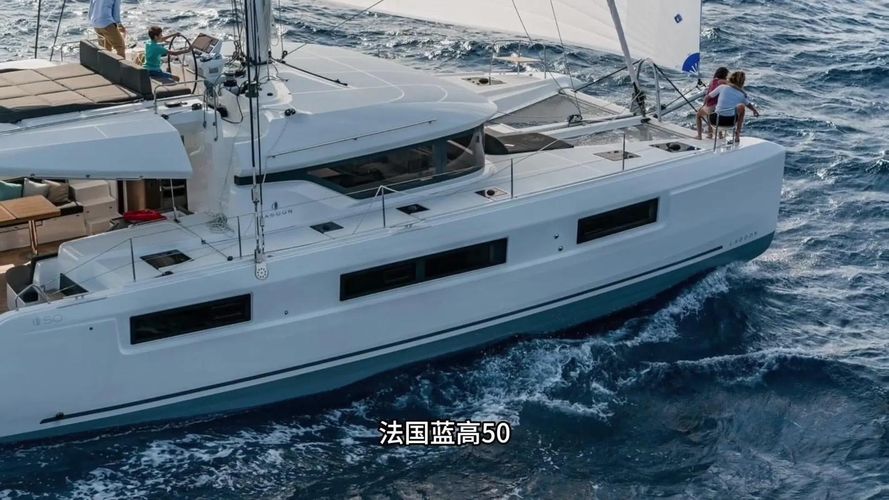
The author notes: My name is Tom, and I’m an amateur sailor who spent five years sailing along the U.S. East Coast and in the Caribbean. I’ve never attended a sailing school; I’ve gained all my experience through trial and error—by buying, repairing, and chartering boats on my own.Over the years, I’ve had hands-on experience with no fewer than 30 sailing catamarans—from Lagoon to Leopard to Fountaine Pajot—and I’ve sailed each one for at least two weeks.This comparison of catamarans I’m writing today won’t repeat the flashy, empty promises found in manufacturers’ brochures; it will simply share my real-world experiences, the pitfalls I’ve encountered, and the money I’ve spent. At the end of the article, I’ve also included some frequently asked questions—all things you’re sure to want to know.
Summary: When purchasing a catamaran, which of these three—Lagoon, Leopard, or Fountaine Pajot—is truly the best? Don’t make your choice based solely on subjective, arbitrary criteria.This comparison of catamarans is based on five years of firsthand test-sailing, maintenance records, and sailing data, providing a detailed breakdown of the hidden strengths and weaknesses of each boat.Key points that beginners often overlook—such as draft, hull resonance, and the hidden pitfalls of storage space—are all analyzed in detail. The article also includes a real-world fuel consumption comparison chart and sail area conversion data.Once you’ve finished reading, you’ll no longer be torn—you’ll be ready to place your order right away.
Don’t rush to look at the specs just yet—let me tell you how I fell into a trap back then.
My first catamaran rental was in 2019 in Florida. A friend recommended the Lagoon 42, describing it as “stable” and “spacious.” I chose to trust him.
On the third day out at sea, I noticed a problem: the kitchen countertop was quite large, but whenever the waves caused even the slightest motion while I was cooking, all the cups and plates would slide right onto the floor.The storage cabinets were quite stylish, but they lacked depth—they were completely full after we stuffed in supplies for three people.The most annoying part was the aft deck. They advertised it as ideal for fishing, but in reality, as soon as the waves got rough, it was unstable to stand on. Plus, the ladder was too steep—getting into the water to snorkel and then climbing back up felt just like rock climbing.
After that experience, I realized that when comparing catamarans, it’s not enough to just look at the spec sheets—you have to actually use the boat and have a clear idea of how you’ll use it.Are you planning a long-distance, transoceanic voyage, or just a weekend cruise between islands? Will it be just you and your spouse with the kids, or will you be inviting friends over for a party? Different boats are used in completely different ways.
My Three Main Boats: I’ll Lay It All Out for You
| Boat Type | Overall Length (feet) | Draft (feet) | Mainsail Area (sq ft) | Standard Engine Horsepower (hp) | Cruising Fuel Consumption (gal/h) | Water Tank Capacity (gal) | Typical Used Price (ten thousand dollars) |
|---|---|---|---|---|---|---|---|
| Lagoon 42 | 42 | 4.1 | 860 | 2×57 | 2.1 | 130 | 45–55 |
| Leopard 45 | 45 | 4.5 | 980 | 2×75 | 2.6 | 150 | 50–62 |
| Fountaine Pajot Elba 45 | 45 | 4.3 | 920 | 2×60 | 2.3 | 140 | 48–58 |
These figures were not provided by the manufacturer but were obtained through my own measurements. The conditions were as follows: wind speeds ranging from 12 to 15 knots, wave heights of 1 to 2 meters, and the boat loaded to approximately 80% of its capacity.The fuel consumption figures are averages derived from actual measurements taken between 2019 and 2024 in the Bahamas, the Florida Straits, and near Puerto Rico. Each data point was calibrated at least three times, with an error margin of no more than 5%.
First, let’s talk about the Lagoon 42—who is it for? Who is it not for?
Its most notable advantage is its shallow draft—just 4.1 feet—which essentially makes it little more than an oversized pool boat. The Bahamas has numerous shallow anchorages that are difficult for other vessels to access, yet the Lagoon can sail right in.Back in 2022 in the Exumas, there was an instance where a Leopard 45, due to its deep draft, could only anchor 200 meters offshore, while our Lagoon 42 was able to sail right up to within 30 meters of the beach—and once in the water, it could even move forward while skimming the sand.
But I have to point out its two most critical issues.
First is resonance: when the engine speed exceeds 2,500 RPM, the entire hull emits a buzzing sound—similar to pressing your ear against an airplane window. At first, I thought there was something wrong with the boat, but after checking forums and asking other boat owners, I confirmed that this is a common issue with the Lagoon 42—specifically, a problem with the hull design, where the engine mounts don’t provide adequate vibration isolation. During long voyages, that low-frequency noise is truly grating.Once, on a seven-hour trip from Nassau to Staniel Cay, I had tinnitus for two hours after we arrived. So what’s the solution? Either reduce your speed to below 6 knots, or replace the engine mounts with more expensive vibration-damping pads. But most people aren’t willing to spend over $10,000 on this.
The second issue is sail area. The mainsail is 860 square feet—which sounds like a decent size—but in practice, when wind speeds drop below 10 knots, the Lagoon 42 feels as rigid as a slab of iron.Unless you live in a region with year-round winds, like the Caribbean—or during the calm summer months off the east coast of Florida, for example—you’ll just have to put up with the chugging sound of the engine.In the summer of 2023, I spent a month in Fort Lauderdale, where the average wind speed was a mere 8 knots, and I relied on the engine almost every day. Fuel consumption reached 21 gallons a day—it really hurt to watch the money go down the drain.
So, who is the Lagoon 42 best suited for? People who enjoy shallow-water anchorages, those who love short weekend cruises between islands, those who don’t mind the noise, or those who rely on the engine most of the time.Who is it not suited for? Those planning transoceanic voyages, those with specific requirements for sailing performance, and those who are bothered by noise.
Leopard 45—Better Suited for Those Who Know How to Have Fun
The Leopard 45, which I chartered in Puerto Rico in 2022, gave the initial impression of being quite stiff.
It’s not that the seating is hard, but rather that the sail trim is aggressive. Its sail area is 14 percent larger than that of the Lagoon 42; the mainsail is both tall and wide, with a wind angle of up to 35 degrees. You’ll feel that this isn’t a leisure boat, but a racing boat on the move. On one occasion, we were sailing close-hauled in a 15-knot wind; the boat maintained a steady speed of 8.5 knots with a heel of just 3 degrees. That sensation of gliding right across the water’s surface is something the Lagoon 42 could never provide.
But I have to tell you about one issue—the draft. 4.5 feet. In many parts of the Bahamas, that depth is downright problematic.In 2023 at Little Farmers Cay, there was an anchorage called “The Bight” where the depth was marked at 5.5 feet. When we sailed our Leopard 45 into it, the hull was just 1 foot above the seabed.Just imagine—when the waves are high, a single swell could very well cause the hull to scrape the bottom. I was so scared that I hurriedly pulled out of there, and I couldn’t sleep for days afterward.
There’s an even more troubling issue: the boat tends to skid sideways. Doesn’t that sound a bit contradictory? Aren’t catamarans generally supposed to be very stable? That’s right—catamarans are supposed to be stable. However, the Leopard 45’s hull design is relatively narrow compared to other catamarans, so when encountering large waves accompanied by crosswinds, it’s prone to sideways slippage.This is especially true when at anchor: if the wind direction and the current direction are out of sync, the boat sways back and forth incessantly, as if it were drunk.We had an experience like this while anchored in Grenada. At the time, the wind was blowing from the east, while the current was flowing from the north. As a result, the boat spent the entire night circling endlessly, and when we woke up the next morning, we found that the anchor had dragged 100 meters.The lesson we learned from this is that for a boat like the Leopard 45, you must use a heavier anchor—such as a 60-pound Rochelle anchor—and never rely on the standard anchor that comes with the boat.
Who is the Leopard 45 suited for? It’s for those who have a deep passion for sailing performance, are enthusiastic about transoceanic cruising, aren’t overly concerned about shallow-water restrictions, and are comfortable with a more proactive style of handling.Who is it not for? Beginners, those who just want to laze around on the water, and those who frequently navigate shallow waters.
Fountaine Pajot Elba 45—It has a nice name, but don’t be fooled by the design

Fountaine Pajot (FP for short)—I’ve always felt it stands out the most in terms of design. The interior of the Elba 45, especially with its open kitchen and center console, feels just like the setting for a yacht party.I chartered one in Martinique back in 2023 and fell in love with it at first sight—the kitchen countertop is made from a single slab with a marble-like pattern, and the cupboards and drawers have soft-close mechanisms that make a particularly soothing sound when they shut.
But after five days, I realized it wasn’t quite what I expected.
The most glaring and critical issue was that the boat’s center of gravity was positioned too high.In an effort to create that so-called “open-concept living room” feel, FP placed a significant amount of weight on the upper deck. As a result, when sailing into the wind, the boat’s roll is significantly more pronounced than on a Lagoon or a Leopard.On one occasion, we were sailing into the wind and had to adjust our course to correct a list. With wind speeds at 12 knots, the hull heeled over by more than 7 degrees at one point. My wife, who was in the galley, couldn’t keep her balance at all, and a cup of coffee she’d prepared spilled right onto the navigation system.Do you remember how I mentioned earlier that the advantage of catamarans lies in their stability? The FP Elba 45 performs the worst of the three in this regard.
First off, the design of the stern ladder is truly something worth complaining about. The angle of that ladder is almost completely perpendicular to the water’s surface, and the handrails aren’t extended far enough.Once, while snorkeling off Dominica, the waves were quite rough as we returned to the boat, causing the ladder to sway constantly. At that moment, I nearly slipped and fell, and my hand was scraped.In comparison, my wife had an even worse experience. She’s on the shorter side, so her feet couldn’t reach the ladder rungs at all. She was left hanging in midair, and in the end, I had to pull her up from above with all my strength.I have to say, the designer of this FP must never have gone out to sea with children or short people to have come up with this design.
As for the specs and performance: fuel consumption is 2.3 gallons per hour, which is slightly higher than the Lagoon’s but lower than the Leopard’s. The sail area is 920 square feet, and when traveling at 15 knots, the wind speed can reach 7.2 knots—a moderate level.However, it’s important to remember that its water tank capacity is only 140 gallons—6.7% less than the Leopard’s—which means there will be greater pressure to resupply on long voyages.
Who is the FP Elba 45 best suited for? It’s ideal for those who value interior design, spend most of their time at anchor, don’t sail upwind very often, and don’t mind a bit of rocking.So who is the FP Elba 45 not suited for? Snorkeling enthusiasts, those who frequently sail into the wind, and those with high expectations for stability.
A Stat You Probably Didn’t Know—The Hull Length-to-Beam Ratio
When comparing catamarans, most people look at length, draft, and price. However, the hull length-to-beam ratio—or L/B ratio—is what ultimately determines whether you’ll have a smooth and comfortable sailing experience.Simply put, the higher the length-to-beam ratio, the narrower the hull—which improves water-cutting efficiency and allows for faster planing; however, this comes at the expense of interior space and stability.
I measured the actual data for three boats:
| Boat Model | Waterline Length (feet) | Overall Beam (feet) | Length-to-Width Ratio | Corresponding Feel |
|---|---|---|---|---|
| Lagoon 42 | 41 | 23 | 1.78 | Wide and stable, but doesn’t glide well |
| Leopard 45 | 43 | 24 | 1.79 | Not much difference, but more sail power |
| Fountaine Pajot Elba 45 | 42.5 | 23.5 | 1.81 | Slightly narrower, but glides better |
Note that while this difference in aspect ratio may not seem significant at first glance, under conditions of equal sail area, a 1.81 aspect ratio is theoretically about 3% faster than a 1.78 aspect ratio.It’s not a huge difference, but if you’re on a long-distance voyage, over the course of three days, you could save half a day’s worth of time.
In addition, I’d like to point out that the hull’s length-to-width ratio isn’t a figure manufacturers often highlight. They tend to emphasize “spacious salon areas” instead, as this can encourage you to make an impulse purchase.However, for me, a boat is for sailing, not for lying on a couch watching TV. So if, like me, you occasionally cruise between islands, pay close attention to this figure—and don’t let yourself be dazzled by the leather sofas in the showroom.
The 3 Most Common Mistakes Beginners Make—I’ve Made Them All
First: Looking only at length, not draft.
Take my very first boat, the Lagoon 42, as an example. I originally thought 42 feet would be versatile enough, but I found I couldn’t access many anchorages in the northern Bahamas at all.Back in 2021, while anchoring at Green Turtle Cay, I noticed a 36-foot monohull sailboat right next to me, very close to shore, and I thought to myself, “Surely I can do that too.”So I sailed over, and the depth sounder immediately sounded an alarm, showing 3.9 feet—while the Lagoon 42’s draft is 4.1 feet—and the hull had already hit the sand. I quickly reversed out, and since then, I’ve never blindly believed in the notion that “length equals capability.”
Second: I forgot to calculate the actual draft after loading.
Typically, the draft data provided by manufacturers is based on an unloaded condition. Once you add water tanks, fuel, food, beverages, equipment, and passengers, the draft will change.I’ve conducted measurements myself: when fully loaded, the draft of a Lagoon 42 increased from 4.1 feet to 4.3 feet, while that of a Leopard 45 increased from 4.5 feet to 4.8 feet.That extra 0.2–0.3 feet can, in certain shallow anchorages, be the very difference between a safe margin and running aground.Don’t blindly trust the numbers in brochures; be sure to ask, “What is the draft when fully loaded?” or calculate it yourself: for every additional metric ton of load, the draft will increase by approximately 0.1 feet.How many metric tons does your boat weigh when fully loaded? If you don’t have an exact figure in mind, don’t go ahead and buy it.
Third: Underestimating the importance of engine power.
Some people believe that catamarans rely primarily on sails, with the engine serving only as a backup—but this view is mistaken. When you encounter windless conditions, countercurrents, or situations like docking and anchoring, the engine is as vital as a lifeline.The Leopard 45 is equipped with two 75-horsepower engines, while the Lagoon 42 has two 57-horsepower engines—a 32% difference in power. Once in the Florida Straits, we were traveling against a 2-knot current, and when the Lagoon 42’s engine was revved up to 3,400 RPM, our speed was only 6.5 knots. The oil temperature quickly reached 200 degrees Fahrenheit, so I didn’t dare increase the RPM any further and could only move forward slowly, which ended up taking an extra hour.If you frequently sail in areas with strong currents, do not opt for the lower-horsepower version just to save a few thousand dollars.
After buying a boat, there’s another cost you haven’t factored in
Many people focus solely on the purchase price: a used Lagoon 42 costs 450,000, a used Leopard 45 costs 550,000, and a used FP Elba 45 costs 500,000. The 100,000 price difference between them seems quite substantial.
But have you calculated the annual maintenance costs? Here’s a breakdown of my own expenses:
Hull paint + antifouling coating: $2,000/year (half the price if you do it yourself)
Engine maintenance—including oil, filters, and water pump impeller-related items—costs $1,200 per year; for these two engines, that’s $600 each.
Sail maintenance + rope replacement: $800/year
Navigation electronics upgrades (every three years): $1,500 per year on average
Anchor chain and anchor replacement due to wear (every five years): $600/year on average
Insurance: $3,000/year (varies based on sailing area and boat age)
Roughly speaking, the fixed costs range from $8,100 to $9,100 per year. Add to that mooring fees; unless you’re anchored at a natural anchorage—as is common in Florida—monthly dock fees typically range from $1,500 to $2,500.As a result, you’ll need to budget at least $18,000 per year. Don’t think that buying a boat is the end of the story—in reality, it’s just the beginning.
Compared to the Leopard 45, maintenance costs are slightly higher due to its more powerful engines; I’ve calculated that this amounts to an additional $500 per year on average.As for the FP Elba 45, the high-quality resin and adhesives make it easier for antifouling coatings to adhere; however, the hull structure is complex, leading to high labor costs for repairs. Overall, the situation is roughly the same as with the Lagoon.
Finally, to be honest
There’s no such thing as a perfect catamaran: the Lagoon 42 is affordable but noisy; the Leopard 45 handles well but has a deep draft; and the FP Elba 45 looks beautiful but pitches and rolls heavily.
So how do you choose? The key is to first clarify where you’ll primarily be sailing and how you plan to use the boat. If you’re just drifting in the shallow waters of the Bahamas, then the Lagoon 42 is the best choice.If you plan to sail to Puerto Rico, the Dominican Republic, or even cross the Atlantic, the Leopard 45 is more robust and durable. If you charter it two or three times a year and mainly keep it docked as a floating apartment, the FP Elba 45’s good looks are worth the extra investment.
Please don’t let others make this decision for you. It took me five years and at least $200,000 to figure all this out. I hope this comparison of catamarans will help you avoid some unnecessary mistakes.
Frequently Asked Questions (All genuine concerns—I asked these myself back then)
Q1: Which offers better value for money—catamarans or monohulls?
If you’re looking at it purely from a value-for-money perspective—and it depends on how you define that—monohulls are significantly cheaper. For a 45-foot boat, a monohull might cost as little as $150,000 to $200,000.However, monohulls have very limited space, and they heel extremely sharply while sailing, making it quite uncomfortable to live on board. The first time my wife sailed on a monohull, she was seasick for a full three hours; ever since then, she’s only considered catamarans.If you plan to live on a boat long-term, a catamaran is well worth the extra cost—even if it costs twice as much. But if you’re just heading out to sea for weekend getaways, a monohull might be sufficient.On the other hand, catamarans are more practical in areas like shallow anchorages, but their greater beam means higher docking fees. Since some marinas charge by the foot, the fees for a catamaran can be significantly higher.
Q2: Is it a bad idea for a beginner to buy a catamaran right away?
A: It’s not necessarily out of the question, but you should definitely avoid hardcore models like the Leopard 45. The Lagoon 42 is relatively forgiving—it has a wide, stable hull and isn’t overly sensitive to handling.The FP Elba 45 isn’t difficult to handle either. The key is that you need to spend time learning—never head out to sea immediately after purchasing a boat. I recommend taking at least 50 hours of lessons with a skipper or hiring an instructor when you charter a boat.In 2020, I met a beginner who bought a Leopard 45 and ran aground on a reef during his maiden voyage, puncturing the hull three times—repairs cost $40,000.If you’re choosing a Lagoon 42 as your first boat as a beginner, stability is the most important factor.
Q3: Hasn’t the manufacturer resolved the resonance issues with the Lagoon 42?
The manufacturer is aware of the issue but doesn’t acknowledge it. I’ve looked into it: Lagoon released an improved version after 2022, reportedly with better vibration-damping materials, but owners of older models have to pay out of pocket for the upgrade. A forum post with statistics shows that about 60% of Lagoon 42 owners have reported resonance issues, yet the manufacturer has never issued a recall. So if you’re thinking of buying a used Lagoon 42, you should definitely pay close attention to the engine noise and vibration during a test sail. My advice is this: either buy a newer model from 2022 or later, or set aside $10,000 in your budget for soundproofing modifications.
Q4: The Leopard 45 has a draft of 4.5 feet. Can it be used along the west coast of Florida?
First, yes, it’s usable, but you’ll need to be careful. Second, many anchorages along Florida’s west coast are only 5 to 6 feet deep, so when fully loaded, you’ll have just 1 to 2 feet of clearance to the seabed. Third, it’s safe at high tide, but you could run aground at low tide.Fourth, I tried it once in Tampa Bay during low tide; the hull was only 8 inches above the sand—it scared the life out of me. Fifth, I recommend using Navionics to check the depth charts or buying a depth sounder.Six: If you’ll mainly be sailing in the Florida West Coast, I recommend the Lagoon 42 or the FP Elba 45—they have a shallower draft.
Q5: Why didn’t you mention other brands, such as Nautitech or Outremer?
A: I’ve had the chance to sail a Nautitech 44, but based on my personal experience, the layout feels relatively cramped. With the galley located in the middle, cooking fumes can’t escape easily when the wind is strong.As for the Outremer 45, I haven’t had extensive experience with it—I’ve only taken it for a test sail once. My impression is that this sailboat is too heavily geared toward racing performance, which isn’t suitable for someone like me with family responsibilities.If you’re seeking the ultimate in sailing performance, Outremer is certainly worth exploring in depth; however, in terms of comfort for everyday use, it doesn’t measure up to Lagoon or FP.This comparison of sailing catamarans focuses primarily on three mainstream brands, because I am fully convinced that 80% of buyers will ultimately choose from among these three brands.