
Abstract: Would you think you’re getting a good deal by spending a few thousand dollars on a used small boat? That’s exactly what a lot of people think, but in the first year alone, the cost of repairs actually ended up being more than the price of the boat. I’ve been into boating for eight years now and have owned four boats in total—I’ve tried them all, from cheap to expensive.This article isn’t going to cover those useless “Top 10 Must-Knows Before Buying a Boat” lists. Instead, I’m going to share the pitfalls I’ve fallen into, the engines I’ve repaired, the low-quality decks I’ve replaced, and some hidden costs that beginners can’t even imagine.Read this first, then decide whether you’re ready to buy.
Author’s Note: My name is Jason, and I’m an ordinary office worker living in Florida.Over the past eight years, I’ve bought four used small boats, ranging from a 14-foot aluminum dinghy to a 26-foot cruising sailboat. I’m not a captain or a boat mechanic—just a die-hard enthusiast who’s spent a fortune on this hobby. These experiences and figures are all drawn from my own bills and hard-learned lessons.
Just how cheap are these boats?
If you search Facebook Marketplace or Craigslist, you’ll find plenty of boats for $2,000. Some come with a trailer; others are sold with the engine included. It looks pretty tempting, doesn’t it?
That’s exactly how I bought my first boat—a 1993 Bayliner, 16 feet long, equipped with a two-stroke Mercury engine producing 90 horsepower.The seller claimed it had “just been serviced,” and the asking price was $3,200. I paid for it on the spot.
So how did it turn out? During the first week, the starter motor burned out, so I had to replace it—which cost $400. By the second week, I discovered the fuel tank was completely full of water, so I had to have the tank flushed and the fuel lines replaced, which cost another 300. Then, in the third week, the engine actually suffered cylinder scoring, and the repair shop quoted 2,800.
I ended up sailing that boat a total of three times.
That’s exactly what happens with those cheap boats: the low price you see isn’t a bargain—it’s a trap. The value of a boat equals its current condition minus the money you’ll end up spending on it later.Many people don’t understand this principle; I only figured it out after paying my dues.
Just how much will maintenance cost? You need to be mentally prepared.
Don’t be fooled by claims online that say, “It only costs a few hundred yuan a year”— That applies only to boats that sit in a garage year-round and are used just twice a year. If you actually plan to use yours more frequently, the resulting bills are sure to leave you shocked and uneasy.
I calculated the expenses for my fourth boat. It’s a 2005 model, 19 feet long, a center-console style, equipped with a 150-horsepower four-stroke Yamaha engine.I paid 12,000 for it—not the cheapest, but not exactly expensive either. Over the course of two years, I kept track of every expense.
In the first year, I spent a certain amount on an oil change and another 320 on maintenance. I applied the antifouling paint to the hull myself, which cost 200 in materials. A small crack appeared in one spot, causing a leak, and the repair cost 1,100. one of the electronic displays broke, and replacing it cost 900; a sensor in the engine triggered an alarm, and the repair and parts totaled 650; annual insurance was 500; and monthly mooring fees were 180. Adding up all these miscellaneous expenses, the total for the first year came to 5,600.
Compared to the first year, the second year was slightly better. I replaced the tires and bearings, which cost 400 yuan; I also replaced the propeller, which cost 180 yuan; and I had a comprehensive maintenance check done, which cost 600 yuan. The mooring fee remained the same as before, but the insurance premium went up.Total expenses for the second year came to 2,900 yuan.
This doesn’t include fuel costs, trailer registration fees, or the money you spend on various equipment.
So there you have it. A boat worth 12,000 yuan cost over 8,000 yuan in maintenance and upkeep over two years. And this is actually under the circumstances where I handled most of the work myself. If you were to entrust all maintenance and upkeep to a boat yard, the bill would more than double—and likely far exceed that amount.
A Few Things Beginners Most Often Overlook
I’ve seen so many people who, when buying a boat, only inspect the exterior—checking if the paint is shiny or the seats look brand-new—but these things are completely useless.
What you need to check is the engine’s age and hours on the clock. A ten-year-old engine, even with only 100 hours of use, will have rubber components that have already deteriorated, whereas a five-year-old engine with 500 hours of use might actually be in better condition. I once saw someone buy a boat that looked 90 percent new, but it had a two-stroke engine with shockingly high fuel consumption. A single 40-mile round trip cost him a hundred dollars in fuel, and he sold the boat not long after.
The condition of the hull also needs to be inspected. One key point to watch for is whether the fiberglass has blistered; if it has, that means water has seeped in, and repairs can cost tens of thousands of yuan. For aluminum boats, check whether the welds have cracked. Boats with a wood-core structure are the most likely to be a rip-off— as they may look perfectly fine on the surface but be completely rotten on the inside. When I bought my second boat, the deck looked intact, but when I pressed down on it, it gave way—the inside was completely rotten. The quote for replacing the entire deck, plus labor, came to 4,500.

Trailers can be a major pitfall, too. Many people don’t take them seriously when they’re included as a free gift with a boat purchase, only to find later that the tires have blown out and the bearings have burned out. Replacing the entire axle assembly, including the tires, ends up costing several hundred dollars.
Real-Life Example: A Friend’s Lesson
Tom, who lives next door to me, is a classic example. He spotted a sailboat online priced at $2,000. The boat was 22 feet long and appeared to be in good condition, so he bought it right away, intending to take it out for a sail over the weekend.
During the first week, he was shocked to discover a crack in the mast; by the second week, he was startled to find that the cabin had begun to leak; and by the third week, he was stunned to realize the engine wouldn’t start at all.He struggled with these issues for half a year, spending over $2,000, but in the end, the boat still wouldn’t run. He then listed it for sale online and ended up selling it for only $1,500. As a result, he lost $2,000 and wasted half a year of his time.
Tom told me that if he’d known better, he would have spent $5,000 on a boat in better condition—which would have actually saved him money.
He’s right—a cheap boat doesn’t necessarily save you money, and a more expensive one doesn’t necessarily cost more. What you need to focus on is the total cost of ownership: the price of the boat plus the first year’s maintenance costs equals the actual cost, and that figure is the key to determining whether you can afford it.
What kind of boat saves money? You have to know how to choose.
If you’re on a tight budget and want to keep costs down, there are a few options to consider.
First, buy an aluminum boat. Aluminum boats are lightweight and easy to repair; if there’s a scratch or dent, a simple weld will do the trick. In contrast, if a fiberglass boat is damaged, you’ll have to find a professional repair shop to handle it.Aluminum boats are designed for smaller, more fuel-efficient engines, making them easier to tow.I own a 14-foot aluminum boat equipped with a small 15-horsepower engine, which cost me about 3,000 yuan in total. Annual maintenance costs are less than 300 yuan, and it’s perfectly adequate for taking me out fishing.
For your second boat, go with a four-stroke engine. Not to mention that while two-stroke engines are a few dozen jin lighter and cheaper, they consume a lot of fuel, are very noisy, and many lakes now prohibit their use. In contrast, four-stroke engines are fuel-efficient and quiet, with longer maintenance intervals. In my opinion, don’t skimp on that small price difference by buying a two-stroke engine—it’s not worth it in the long run.
Third, when buying a boat, choose a model with a large installed base. Brands like Bayliner, Sea Ray, and Grady-White have a large number of boats on the water, making spare parts very easy to find.If you buy a less common boat, you might have to wait as long as two months to replace a part, and it will cost nearly twice as much.For example, a friend of mine bought a European-brand boat; whenever something broke, he had to order parts from Italy, which ended up taking three months and costing as much as 4,000.
Fourth, learn basic maintenance yourself—changing the oil, replacing the oil filter, and swapping out the spark plugs. These tasks aren’t difficult at all. and there’s no shortage of tutorials on YouTube. If you leave everything to the boat yard, even a simple maintenance service starts at 300 yuan, whereas doing it yourself costs less than 100 yuan. I’ve already learned how to replace a water pump impeller, which saves me 800 yuan a year.
Real-World Data Comparison: Total Two-Year Costs for Boats in Different Price Ranges
Drawing on my own experience and data provided by some friends, I’ve conducted a comparison. While this shouldn’t be taken as an absolute standard, it can give you a general idea.
| Boat Type | Purchase Price | First-Year Maintenance | Second-Year Maintenance | Total Cost Over Two Years |
|---|---|---|---|---|
| 14-foot aluminum boat + 15 HP | 3,000 | 400 | 300 | 3,700 |
| 16-foot fiberglass + 90 HP | 5,000 | 1,800 | 1,200 | 8,000 |
| 19-foot Central Control + 150 HP | 12,000 | 5,600 | 2,900 | 20,500 |
| 22-foot cruising sailboat | 6,500 | 2,800 | 2,100 | 11,400 |
The aluminum boat—the total cost for that one over two years was actually less than 4,000 yuan— The sailboat may seem inexpensive, but its maintenance costs are high because items like sails and rigging need to be replaced. The 19-foot boat is the most expensive due to its large engine displacement and the high cost of replacement parts.
Therefore, my advice is this: if your budget is under 5,000, go straight for an aluminum boat or a low-horsepower fiberglass boat. For boats costing more than 5,000, you should set aside at least 30 percent of the purchase price for the first year. Don’t spend all your money on the boat itself; save some for repairs.
Regarding Insurance and Mooring
—these two expenses, many people don’t factor in. Cheap boat insurance might cost around 100 to 200 a year, but if you dock your boat at a marina, it’s quite common to pay 200 to 300 a month. If you store your boat in your own backyard on a trailer, you’ll save that expense.
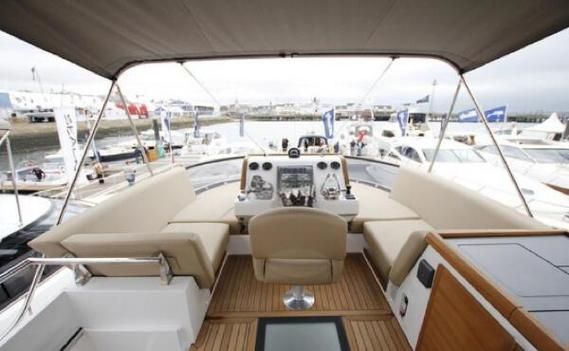
Here’s a real-life example: there’s a guy who bought a 30-foot sailboat and moored it at a marina, which cost him 400 a month. However, over the course of a year, he only went out to sea five times. So, if you do the math, the mooring fees alone cost nearly 1,000 per trip. So tell me, is it really worth it?
Therefore, the first thing to do is think carefully in advance about how you plan to store it. If you have space to park a trailer, then buy a small boat. If you have a suitable spot at the dock, then buy a large boat. Never buy a large boat only to realize after you bring it home that you have nowhere to store it.
Is there a way to save even more money?
Yes. But there’s a catch.
You could buy a project boat—one with a broken engine or in need of a major overhaul—which is very inexpensive. —you can get one for as little as $1,000—but you’ll need technical skills, time, and space. I know a mechanic who specializes in buying these boats, fixing them up, and reselling them; he makes over $10,000 a year doing this. However, I wouldn’t recommend this approach for the average person.
You can also buy off-season boats—purchasing them in the winter and selling them in the summer. Here in Florida, prices tend to be lower from November through February. I have a friend who bought a boat worth $10,000 in December, and by May, that same boat sold for 14,000. However, you’ll need a place to store it.
At the same time, there’s another approach: opting for used rather than new boats, but choosing classic models. Some boats from the ’70s and ’80s were built to a higher standard than those made today. The fiberglass hulls are thicker, and the engines are more durable. Plus, they aren’t expensive—though they might not look quite as stylish.I have a friend who sails a Mako built in the 1970s, and it’s in better condition than my 2005 model.
Frequently Asked Questions
Q: Is a boat costing two or three thousand worth buying?
Absolutely, but you must be prepared to spend a similar amount on repairs. If you’re skilled at repairs, buying one and gradually fixing it up yourself is a great option. If you have no repair skills, then I recommend buying a higher-priced boat that’s in better condition.
Q: Should I repair or replace a broken engine?
It depends on the type of engine. For low-horsepower two-stroke engines, it’s usually more cost-effective to replace them with new ones outright. For high-horsepower four-stroke engines, repairs are generally cheaper than replacement. I once replaced a 50-horsepower engine with a brand-new one, which cost me 5,000 yuan total, including installation.The quote for repairing that old engine was 3,000 yuan, so I decided to replace it without hesitation.
Q: Is it normal to spend so much money in the first year?
It’s normal, especially with lower-priced boats. The previous owner usually won’t tell you exactly where the problems lie.Once you buy it and start using it, those issues will inevitably surface. After getting through the first year and fixing some of the more serious problems, you’ll run into fewer issues going forward.
Q: Is it worth buying a boat just to keep it in the yard without using it?
No, it’s not worth it. Boats suffer most when left idle, because if the engine sits unused for a long time, its seals will age, and if water accumulates in the hull, mold will easily form. I’ve seen people who bought a boat and left it idle for as long as two years without ever taking it out on the water; when they finally sold it, the price was lower than what they’d paid for it.
Q: How do I know if I can afford it?
Do the math: one-third to one-half of the boat’s purchase price goes toward the first year’s maintenance costs; insurance and monthly mooring fees total about 200 to 300; and fuel costs range from 20 to 50 per hour. Add these up—if you can afford it, go ahead and buy; if not, keep saving. Never force yourself to make a purchase.